US event agencies highlight Data Measurement, Leadership, & Infrastructure moves
Background and Context
The US event and experiential marketing sector is entering a phase where data, logistics, and leadership visibility are shaping long-term planning. Agencies and production partners are adjusting their capabilities around measurable outcomes, large-scale show support, and executive participation in headline events. These shifts cut across corporate meetings, trade shows, festivals, and branded experiences, all of which increasingly depend on technology-heavy setups and reliable on-site labor.
While many recent industry updates focus on short-term scheduling and venue news, several developments emerging in late 2026 point toward deeper structural changes. From new measurement platforms to expanded staging facilities and high-profile keynote announcements, the decisions made now are likely to influence how US audiences experience major events in the coming years.
For event technology and AV professionals, these moves highlight where agencies are investing: more robust analytics, more dependable technical staffing, and closer alignment between C-suite leaders and flagship events. Together, these trends are setting expectations around how production quality and audience engagement are quantified and delivered.
Key Announcement
Among the recent developments, US-based experiential and event firms have outlined initiatives that touch both the strategic and operational sides of event delivery. One agency has introduced a new return-on-investment (ROI) measurement approach for brand activations and live experiences in the US market. The system is designed to give clients clearer insight into how on-site interactions contribute to larger business goals, spanning attendee engagement, lead generation, and broader marketing impact.
In parallel, a major consumer technology show scheduled for 2027 has confirmed that a co-chief executive from autonomous driving company Waymo will deliver a keynote address. Although that event sits several show cycles away, the confirmation underscores how event organizers are locking in prominent technology voices early, particularly in sectors like mobility, artificial intelligence, and connected infrastructure.
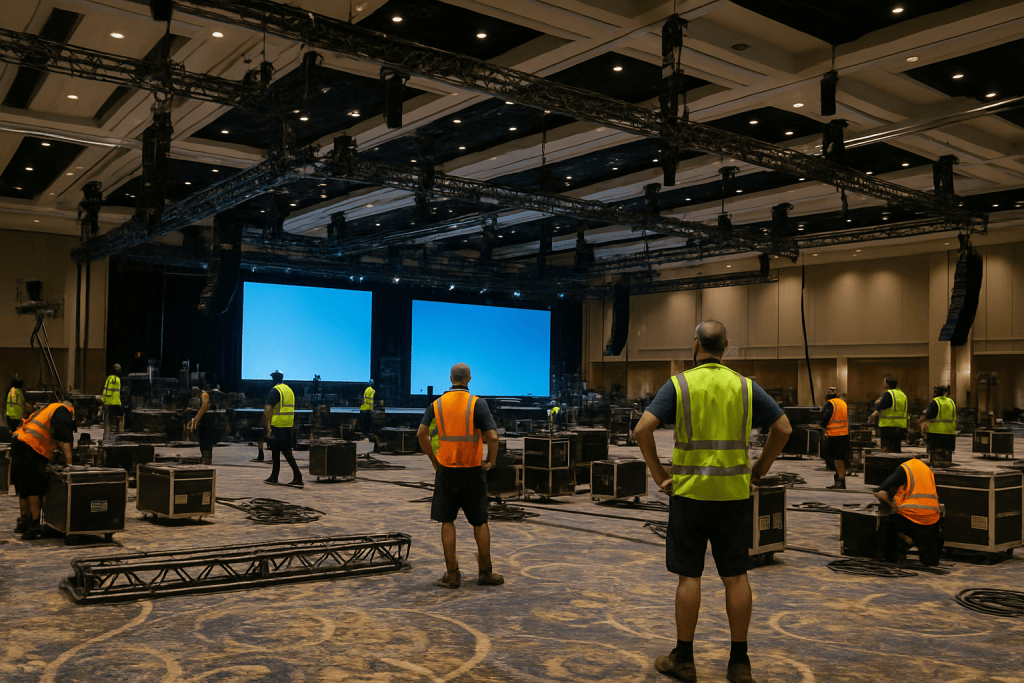
On the production side, national event labor and staging provider Rhino Staging has brought a new facility online in the US. The site is aimed at supporting large-format productions, including concerts, corporate events, and sports-related shows that rely on significant staging, rigging, and AV support. The expansion is intended to increase capacity for crews and equipment, offering additional flexibility for dense event calendars and overlapping load-in schedules.
These updates sit within a broader pattern of agencies and suppliers refining their service mix. More detailed information on Rhino Staging’s capabilities and locations is available through the company’s official website at rhinostaging.com.
Industry Impact
For the event technology community, the push toward more formal ROI measurement could change how projects are scoped and evaluated. If agencies can consistently link AV design, interactive installations, and on-site digital tools to measurable outcomes, technology decisions may be driven as much by analytics as by creative direction. This could increase demand for integrated data capture solutions, such as sensor-enabled experiences, attendee tracking tools, and unified reporting dashboards.
The confirmation of a Waymo co-CEO as a future keynote speaker at a major US tech show also sends a signal about content direction. Topics related to autonomous vehicles, advanced software, and data infrastructure are likely to feature heavily in program planning and exhibit design, which will influence what AV setups, networking requirements, and experiential zones are needed on site.
Rhino Staging’s new facility adds capacity at a time when many US markets are dealing with compressed timelines and overlapping events. Greater access to trained stagehands, riggers, and technicians can ease pressure on AV integrators and rental houses that depend on reliable local labor. It may also make it easier for organizers to plan more ambitious stage designs and multimedia installations, knowing there is additional back-end support for builds, strikes, and maintenance.
Why This Matters
For organizers, agencies, and AV suppliers, these developments point to an industry that is becoming more data-driven, more complex, and more reliant on specialized partners. ROI tools are pushing event teams to think beyond immediate audience response and consider longer-term metrics tied to sales, brand perception, and digital follow-up. This will likely increase the importance of designing experiences that generate usable data without disrupting the attendee journey.
The early confirmation of high-profile technology leaders as keynotes illustrates how strategic content planning now stretches over several years. For production teams, this means anticipating not only audience size but also the technical needs associated with keynote-level presentations—such as high-resolution video, robust streaming infrastructure, and carefully managed lighting and audio for broadcast and in-room audiences.
At the same time, the opening of new staging and labor facilities underscores how physical infrastructure underpins all of these ambitions. No matter how advanced the content or data strategy may be, large-scale events still rely on crews who can set up stages, hang lighting, configure sound systems, and maintain safety standards over long show days.
Taken together, the latest moves by agencies, technology leaders, and production providers indicate that the US event industry is investing in both the visible and behind-the-scenes elements of modern live experiences. For professionals working in event technology and AV, staying aligned with these shifts—particularly around measurement, planning horizons, and labor capacity—will be critical to delivering the next generation of in-person and hybrid events.