Immersive Tablescapes: Using Micro-Projection Mapping for Elite Gala Dinners
Introduction
Luxury gala dinners have evolved far beyond elegant décor, premium catering, and sophisticated entertainment. Corporate award ceremonies, fundraising galas, luxury brand launches, diplomatic receptions, and high-end incentive events increasingly compete on the quality of the guest experience rather than the scale of production alone. While large projection mapping installations and LED stages remain dramatic centerpieces, attention is shifting toward smaller, more intimate experiences that transform the dining table itself into an interactive storytelling platform.
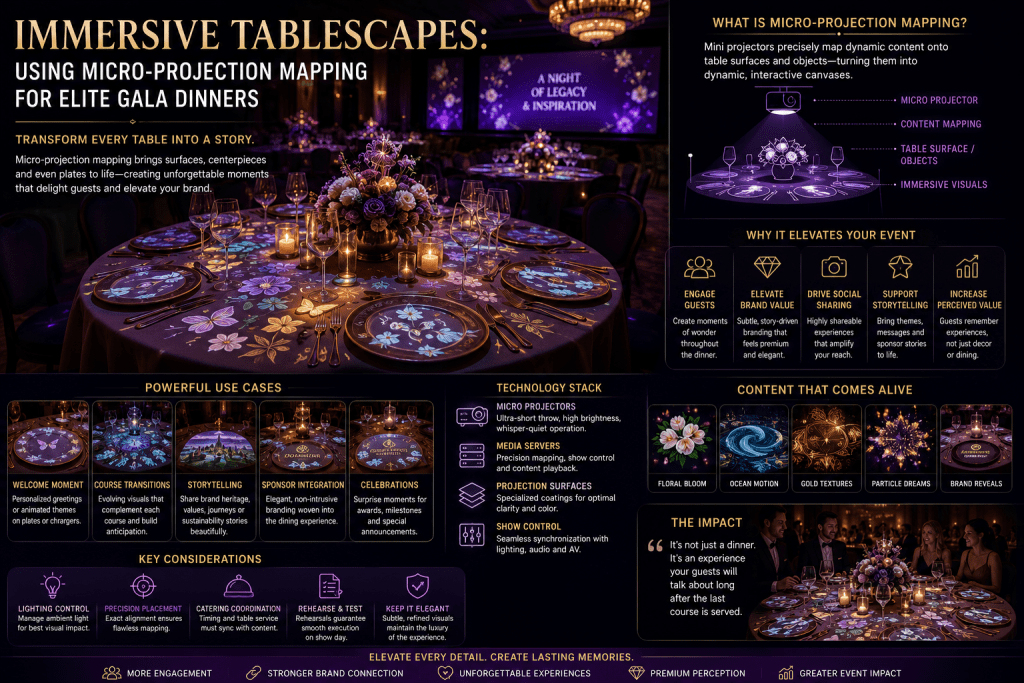
Micro-projection mapping represents one of the most innovative developments in premium event design. Instead of projecting onto buildings or large scenic structures, miniature high-resolution projectors map digital content directly onto dining tables, plates, centerpieces, serving platters, or custom table décor. Carefully synchronized animation, lighting, and culinary presentation create the illusion that food, flowers, and decorative elements come alive throughout the meal.
For luxury event planners, micro-projection mapping is not simply decorative technology. It enables storytelling, strengthens sponsor branding, enhances culinary presentation, supports entertainment, and creates highly shareable guest experiences without overwhelming the intimate atmosphere of a formal dinner. Success, however, depends on careful integration of projection technology, table design, lighting, catering operations, and show control.
Why Tables Are Becoming the New Immersive Canvas
Traditional gala production focuses visual attention toward the stage. Guests spend much of the evening looking away from the space where they actually spend most of their time—the dining table. Micro-projection mapping reverses this dynamic by transforming the table into an active part of the event narrative.
Rather than remaining static throughout the evening, tables can evolve continuously as courses are served, speakers take the stage, sponsors are introduced, or entertainment progresses.
This approach creates several engagement advantages:
- Continuous guest interaction throughout dinner
- Enhanced emotional connection to the event theme
- Premium brand perception
- Increased social media sharing
- Greater attention during slower meal service periods
Instead of competing with stage presentations, immersive tablescapes complement them by extending storytelling directly to every guest.
Understanding Micro-Projection Mapping
Micro-projection mapping applies the same geometric correction principles used in large-scale projection mapping but at tabletop scale.
Small projectors mounted above dining tables project precisely aligned visuals onto:
- Table surfaces
- Charger plates
- Decorative runners
- Floral installations
- Serving platters
- Sculptural centerpieces
- Branded display elements
Specialized media servers compensate for object geometry, ensuring animations align perfectly despite irregular shapes and varying heights.
Unlike conventional decorative lighting, mapped content interacts directly with physical objects, creating realistic illusions of movement, transformation, texture, and depth.
Core Technology Architecture
Creating reliable immersive tablescapes requires coordination between several production systems.
Projection Hardware
Ultra-short throw or compact laser projectors are commonly selected because they deliver high brightness while minimizing installation space.
Selection depends upon:
- Throw distance
- Brightness requirements
- Resolution
- Lens flexibility
- Installation height
- Noise levels
For luxury dining environments, quiet operation is particularly important.
Media Servers
Projection mapping software manages:
- Geometric correction
- Edge blending
- Animation playback
- Multi-projector synchronization
- Timeline programming
- Cue triggering
Media servers also synchronize table projections with stage presentations, music, and lighting.
Show Control Systems
Professional show control software coordinates projection content with:
- Lighting consoles
- Audio playback
- Video systems
- Kitchen service timing
- Speaker presentations
- Live performances
This synchronization ensures the dining experience feels intentional rather than fragmented.
Designing Effective Immersive Tablescapes
Technology alone does not create memorable experiences.
The most successful installations prioritize narrative over visual complexity.
Course-Based Storytelling
Each dining course can introduce a new visual chapter.
For example:
- Animated gardens before appetizers
- Ocean imagery accompanying seafood
- Abstract fire effects during grilled entrées
- Luxury branding during dessert
- Celebration animations before awards
These transitions create anticipation throughout the evening without distracting from dining.
Interactive Centerpieces
Projection can transform floral arrangements and sculptural centerpieces into dynamic visual objects.
Examples include:
- Flowers appearing to bloom
- Butterflies landing on arrangements
- Floating particles
- Seasonal transitions
- Animated sponsor logos
- Architectural miniatures
Because physical décor remains present, the illusion feels more realistic than purely digital displays.
Plate-Level Experiences
One of the most dramatic applications involves projection directly onto charger plates before food arrives.
Guests may witness:
- Personalized welcome messages
- Animated menus
- Cultural storytelling
- Branded introductions
- Countdown sequences
- Interactive reveal effects
Once the course is served, attention naturally shifts from projection to the cuisine.
Integrating Culinary Presentation
The culinary experience should remain the primary focus throughout dinner.
Projection mapping should enhance—not overshadow—the food.
Successful collaborations between chefs and production designers often involve projection that introduces each course before plates arrive rather than projecting directly onto prepared food for extended periods.
This maintains food quality while preserving visual impact.
Projection can also highlight:
- Ingredient origins
- Sustainability stories
- Regional culture
- Wine pairings
- Chef introductions
These additions enrich storytelling without requiring lengthy spoken explanations.
Operational Considerations
Micro-projection installations demand considerably more precision than conventional room projection.
Lighting Design
Projection requires careful ambient light control.
Designers should balance:
- Guest comfort
- Food presentation
- Photography requirements
- Projection visibility
Warm dining environments often require localized dimming during key projection moments while maintaining adequate illumination for dining.
Table Layout Precision
Even minor shifts in table placement can disrupt projection alignment.
Furniture positioning should remain fixed after calibration.
Floor markings and installation templates help maintain consistency during venue setup.
Catering Coordination
Service staff must understand projection timelines.
Unexpected movement of:
- Plates
- Glassware
- Centerpieces
- Cutlery
during projection sequences can compromise the illusion.
Production rehearsals involving catering teams are therefore essential.
Brand Storytelling Opportunities
Luxury brands increasingly use immersive dining experiences to reinforce identity.
Instead of displaying logos continuously, projection mapping can communicate brand values through narrative experiences.
Examples include:
- Automotive brands visualizing engineering precision
- Fashion brands showcasing textile inspiration
- Luxury travel companies presenting destination journeys
- Watchmakers illustrating craftsmanship
- Technology companies demonstrating innovation themes
This subtle storytelling approach often feels more premium than conventional sponsorship graphics.
Measuring Guest Engagement
Although immersive tablescapes are primarily experiential, organizers can still evaluate their effectiveness.
Useful metrics include:
Social Sharing
Track:
- Event hashtags
- Guest-generated videos
- Photography volume
- Social impressions
Table projections frequently become one of the evening’s most photographed elements.
Dwell Attention
Observation studies can measure:
- Guest attention during transitions
- Conversation pauses
- Visual engagement
- Audience reactions
These insights help optimize pacing for future events.
Sponsor Recall
Post-event surveys can evaluate whether projection-based storytelling improves:
- Brand recognition
- Message retention
- Emotional connection
Compared with static branding, narrative projection often produces stronger recall.
Challenges and Limitations
Micro-projection mapping introduces several production challenges.
Glassware can create unexpected reflections.
Tableware changes between rehearsals and show day may require recalibration.
Projectors require unobstructed sightlines despite floral arrangements and serving staff.
Venue ceilings may limit projector placement.
Finally, luxury dining demands subtlety.
Overly complex animation can distract guests from conversation and cuisine.
The most successful immersive tablescapes use restrained visual storytelling that enhances atmosphere without dominating it.
Future Trends
Several innovations are expected to expand immersive dining experiences.
Artificial intelligence may generate adaptive visual content that responds to guest behavior or event pacing.
Computer vision systems could automatically adjust projections if plates or centerpieces move slightly during service.
Ultra-compact laser projectors will reduce installation complexity while improving brightness and color accuracy.
Longer term, projection mapping is likely to integrate with synchronized tabletop audio, programmable lighting, scent technology, and interactive mobile experiences to create fully multisensory dining environments.
Conclusion
Micro-projection mapping is redefining luxury gala dining by transforming tables from static decorative elements into dynamic storytelling platforms. Rather than relying solely on spectacular stage production, organizers can create memorable guest experiences where every place setting becomes part of the narrative. When carefully integrated with culinary presentation, lighting, entertainment, and brand messaging, immersive tablescapes enhance engagement without compromising the elegance expected of premium events. For elite gala dinners, the most effective projection mapping is not the largest or brightest—it is the most thoughtfully integrated, creating subtle moments of surprise that elevate the dining experience and leave lasting impressions long after the final course has been served.