Eventist Collective powers hospitality at 2026 British Grand Prix
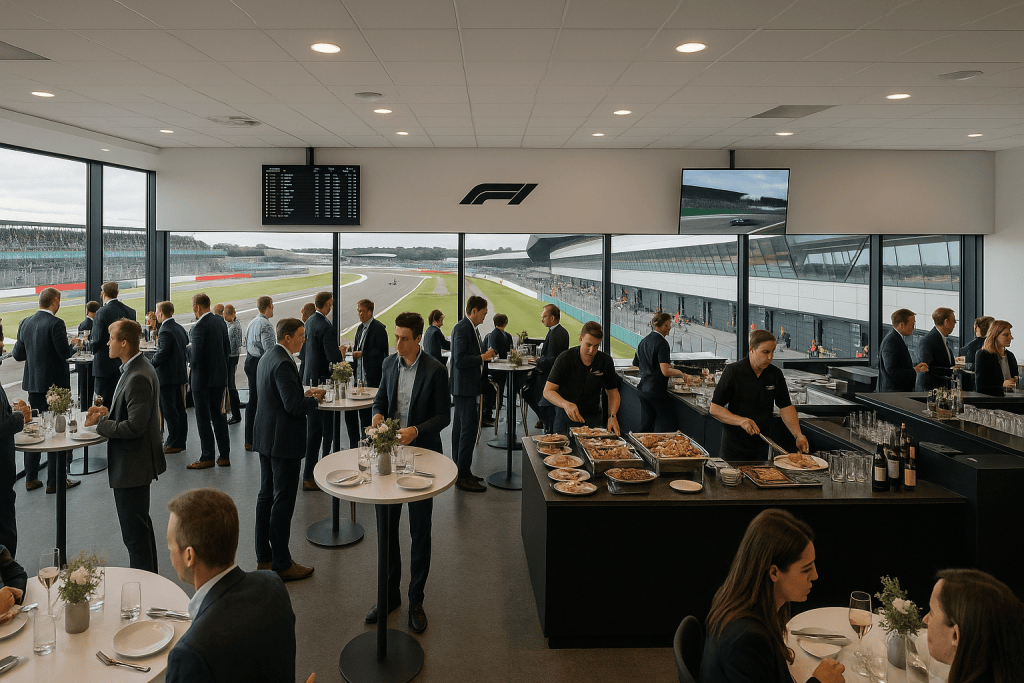
Eventist Collective coordinated an integrated hospitality and catering programme for Silverstone’s 2026 British Grand Prix, deploying several of its specialist brands to support guest services across multiple premium spaces and wider circuit operations.
The events and catering group combined the capabilities of AP&Co, Food by Dish and Tapenade to manage food and beverage, service delivery and operational logistics. The approach was applied across key hospitality environments including the Fusion Lounge, NOVA Glamping and other trackside areas designed for high-spend spectators and corporate guests.
Background and industry context
Formula 1 grands prix have increasingly become full-scale live entertainment experiences, with hospitality products and curated environments playing a central role in commercial returns. Circuits such as Silverstone are expanding not only seating and viewing options, but also premium lounges, trackside clubs, and off-track accommodation to attract both corporate buyers and experience-focused fans.
This evolution is reshaping how food and beverage, front-of-house service and back-of-house logistics are specified and delivered. Multi-day events, variable attendance patterns and complex guest journeys demand integrated operations that can flex to different audiences while maintaining consistent standards across tiers of hospitality.
For suppliers, that often means moving beyond traditional catering contracts towards multi-brand, multi-venue frameworks that unify menu design, service teams, supply chains and service-level agreements under a single operational umbrella. At major international motorsport events, the need for speed of service, high throughput and strict safety regimes adds further pressure on planning and execution.
Key developments at Silverstone 2026
Within this context, Eventist Collective’s 2026 British Grand Prix programme centred on a coordinated deployment of its group brands. AP&Co, Food by Dish and Tapenade were tasked with delivering complementary roles across the site, with a view to standardising quality while tailoring experiences to different audience segments.
At the Fusion Lounge, one of Silverstone’s premium hospitality environments, the group focused on upscale dining and bar service, supporting guests with a blend of seated and roaming hospitality formats. This required detailed scheduling of kitchen operations, front-of-house staff and bar teams to align with race schedules and peak service times before, during and after on-track sessions.
NOVA Glamping, positioned as an elevated accommodation and social space, introduced another layer of operational complexity. Here, the catering provision extended beyond traditional race-day service to cover breakfast, evening dining and casual F&B across multiple days. This created a hospitality model more aligned with festival-style operations, demanding robust stock management, varied menu planning and continuous service capabilities.
Beyond these flagship spaces, the group also supported wider circuit operations, contributing to the overall F&B ecosystem at the event. That included ensuring consistency of product and service standards in locations with varying guest expectations and price points, and aligning those operations with Silverstone’s broader commercial and brand objectives for the Grand Prix weekend.
Across the sites, Eventist Collective implemented an integrated operational approach with shared back-of-house resources, coordinated logistics and unified management oversight. While specific technologies used were not disclosed, such programmes typically involve centralised ordering, real-time stock visibility, and coordinated staffing systems to cope with high volumes and strict service windows.
Industry impact
This multi-brand deployment under a single group structure reflects wider trends in live event and sports venue operations, where organisers increasingly seek a single partner capable of servicing diverse hospitality environments at scale.
For large sports properties, the benefits include simplified contracting and vendor management, the ability to harmonise standards across multiple venues, and improved data consistency across F&B operations. For suppliers, a group-led structure allows different brands to play to their strengths—such as fine dining, high-volume service or experiential concepts—while benefiting from shared infrastructure and strategic planning.
At an event such as the British Grand Prix, success is measured not only by guest satisfaction, but also by operational resilience. Coordinated multi-brand delivery can support better contingency planning, more efficient deployment of staff across venues and faster response to changes in attendance, weather conditions or race scheduling.
The Silverstone project underlines how catering and hospitality providers are positioning themselves as integrated partners in event delivery, rather than standalone suppliers. That positioning is increasingly relevant as circuits and rights-holders refine their premium offerings and consider year-on-year innovations in both product and operations.
Why this matters for event professionals and technology providers
For event organisers and venue operators, the model demonstrated at Silverstone highlights several operational and technology considerations:
- Integrated planning across venues: Multi-venue sports and entertainment events benefit from centralised planning that connects menus, staffing levels, logistics and guest flows across all hospitality touchpoints.
- Scalability of service: With attendance varying by day and session, hospitality operations must scale up or down quickly. Shared resources across brands and spaces can provide the necessary flexibility.
- Data-informed decision-making: Although specific tools were not detailed, modern F&B operations increasingly rely on data from point-of-sale, inventory and workforce systems to guide purchasing, pricing and staffing ahead of and during the event.
- Consistent guest experience: As premium products diversify—glamping, lounges, clubs and trackside viewing—maintaining a coherent standard of service and quality becomes a strategic priority.
- Collaboration with tech vendors: Hospitality partners at large-scale events often need integrated platforms for ordering, payment, staff scheduling and communication. Technology providers serving this segment will find growing demand for solutions that connect these functions across complex sites.
For technology companies in the event sector, projects of this nature create opportunities around analytics, crowd and service flow optimisation, mobile ordering, digital guest communications and operational dashboards that allow both venue operators and catering partners to respond quickly to real-time conditions.
Conclusion
By coordinating AP&Co, Food by Dish and Tapenade across Silverstone’s Fusion Lounge, NOVA Glamping and wider circuit operations, Eventist Collective used its group structure to deliver a unified hospitality programme at the 2026 British Grand Prix.
While the focus of the initiative was on catering, service and operational delivery, the approach reflects broader shifts in how major sports and live events manage premium guest experiences. As circuits, organisers and rights-holders continue to expand hospitality offerings, the demand for integrated, technology-supported delivery models is likely to grow, positioning catering and operations partners as key contributors to both the fan experience and event revenue strategies.