Sennheiser Spectera supports complex RF demands on Puscifer and A Perfect Circle tours

Background and context
Touring productions are facing increasingly dense RF (radio frequency) environments, driven by the growing number of wireless microphones, in-ear monitors, and control systems used on modern shows. Large-scale rock and alternative acts are among the most demanding, often running high channel counts across consecutive tours with minimal downtime.
In this context, engineers are seeking RF solutions that can be quickly adapted for different venues, countries, and shared festival stages, while remaining stable and predictable. Sennheiser’s Spectera platform is one of several tools emerging to address these issues through advanced coordination, monitoring, and spectrum efficiency.
Key announcement
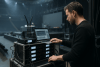
Sennheiser reports that its Spectera RF management platform has been deployed on back-to-back tours with Puscifer and A Perfect Circle, providing a real-world test of its scalability and workflow in demanding live environments.
According to the manufacturer, the same underlying Spectera configuration was adapted across two consecutive touring productions with different show designs and RF needs. The system handled multiple layers of wireless audio, including microphones and in-ear monitoring, alongside other RF-dependent production elements.
Engineers working on these tours used Spectera to coordinate available spectrum, manage channel assignments, and monitor RF performance over the full length of each run. The platform was used to navigate varied venue types, from mid-sized rooms to arenas, where spectrum congestion and local regulations can vary significantly from city to city.
Sennheiser indicates that the tours required frequent reconfiguration of RF setups as they moved between markets and shared bills. Spectera’s data-driven planning and monitoring were used to adjust frequencies, maintain redundancy, and respond to changes in the local RF landscape without redesigning the system from scratch.
More information on the Spectera platform and its feature set is available via Sennheiser’s official website.
Industry impact
The use of a single RF management environment across two separate touring acts highlights a growing shift in how live sound teams approach spectrum planning. Rather than building isolated frequency plans show by show, productions are increasingly turning to unified platforms that can scale across multiple tours, legs, or production packages.
By applying the same RF framework to both Puscifer and A Perfect Circle, engineers were able to stress-test how well Spectera coped with changes in channel count, stage layout, and venue type. This kind of continuity can reduce setup time, streamline troubleshooting, and support more consistent performance from one tour to the next.
- Higher channel densities are becoming standard on rock and alternative tours.
- RF environments differ widely across regions, demanding flexible tooling.
- Touring engineers are prioritizing software-based planning and monitoring.
For manufacturers, deployments like these tours offer feedback on how coordination platforms behave in real touring conditions, beyond controlled test environments or single-artist runs.
Why this matters
For event technology professionals, the consecutive use of Spectera on Puscifer and A Perfect Circle tours underscores a broader trend: RF management is becoming as central to touring infrastructure as mixing consoles and networked audio.
As spectrum availability tightens and productions demand more wireless channels, tools that can be reused, scaled, and adapted between artists may help reduce risk and complexity. For touring companies, rental houses, and systems integrators, platforms like Spectera suggest a path toward standardized RF workflows that can travel from one project to the next with fewer unknowns.
While each production will still require custom planning, the experience reported on these tours indicates that a stable RF backbone can support rapid reconfiguration and shared resources, particularly in multi-artist or festival environments. For the live events sector, that kind of scalability may become a key differentiator as wireless usage continues to grow.