RF coordination tool supports demanding back-to-back rock tours
Background and context
Running two major rock tours back-to-back places heavy demands on wireless audio planning, especially as venues become more crowded with RF activity. Touring productions must coordinate microphones, in-ear systems, and other wireless devices while navigating local frequency regulations and unpredictable interference.
This challenge was recently tested on consecutive tours by Puscifer and A Perfect Circle, both projects led by vocalist Maynard James Keenan. The shows shared key members of the production and audio teams, who needed a repeatable strategy to manage complex RF setups across arenas and theatres in different cities.
With limited setup time from load-in to soundcheck, the crew required tools that could quickly analyse RF environments and adapt frequency plans from one show to the next.
Key announcement
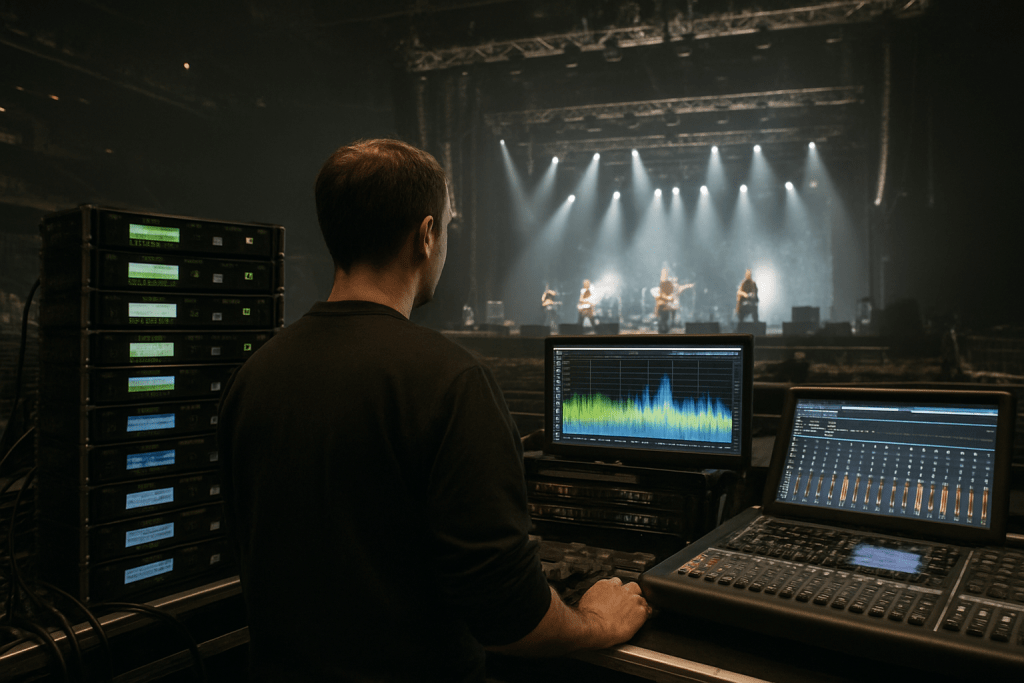
Audio teams on the Puscifer and A Perfect Circle tours deployed Sennheiser’s Spectera RF coordination software to handle spectrum planning and live RF adjustments throughout the runs. Spectera is designed as a cloud-connected tool that helps engineers visualise, allocate, and monitor wireless frequencies for touring and installed systems.
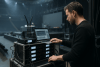
On these tours, RF technicians used Spectera to build and update detailed RF plots for each show, taking into account both tour-owned equipment and venue-supplied wireless systems. The software was used to:
- Pre-plan frequency coordination for multiple acts sharing the same stage
- Adapt frequency schemes for local spectrum conditions at each stop
- Track wireless channel usage across microphones, in-ear monitors, and ancillary devices
- Store and refine show files as the tour progressed
Because the tours were routed close together in time, the team could reuse and modify coordination templates between Puscifer and A Perfect Circle, rather than starting from scratch in every city. According to Sennheiser, Spectera’s shared project structure enabled engineers to carry forward data from one leg of the tour to the next.
Further details on Spectera’s feature set and deployment options are available on Sennheiser’s official product pages at sennheiser.com.
Industry impact
The use of a centralised RF coordination platform on two consecutive tours underscores how touring audio practice is shifting from ad-hoc frequency planning toward data-driven workflows. As regulatory environments tighten and 5G services expand, production crews increasingly face congested and unpredictable RF conditions in urban venues.
By logging RF scans and coordination plans from show to show, tools like Spectera create a historical record that engineers can reference when revisiting markets or planning similar productions. This can reduce setup time, improve reliability, and make it easier to manage multiple artists or support acts on the same RF infrastructure.
For manufacturers, deployments on high-profile tours serve as real-world tests of how coordination platforms perform under tight schedules, changing environments, and high channel counts. For production companies, the experience highlights the value of standardising on a single coordination environment across different tours and crews.
Why this matters
Event technology professionals are under increasing pressure to deliver uninterrupted wireless audio in crowded spectrum conditions. The Puscifer and A Perfect Circle runs illustrate how software-based RF coordination can support this requirement across extended touring cycles.
For sound companies and RF engineers, the case demonstrates several emerging priorities:
- Centralised RF data management for multiple tours and venues
- Faster turnarounds between load-in, system checks, and showtime
- Scalable coordination for productions with several acts sharing stage and infrastructure
- Better long-term insight into frequency usage patterns across regions
As tours grow more complex and spectrum access becomes more constrained, tools that support scalable RF planning are likely to become standard in the touring and large-scale event sectors. The back-to-back deployment of Sennheiser’s Spectera on these rock tours offers a current example of how such platforms are being integrated into everyday production workflows.