Sennheiser Group outlines 2026 broadcast and event audio strategy for IBC
Background and context
The International Broadcasting Convention (IBC) in Amsterdam remains one of the key events where audio and video manufacturers outline their roadmaps for broadcasters, streaming platforms, and live production companies. For the professional audio sector, the show has increasingly become a place to discuss IP workflows, remote production, and the convergence of broadcast and live event technologies.
The Sennheiser Group, which includes brands focused on professional audio solutions, has traditionally used IBC to present updates across wireless systems, location sound, and broadcast audio. As workflows shift toward networked infrastructures and more flexible production environments, the company’s presence at IBC 2026 is positioned against this backdrop of change.
Key announcement
At IBC 2026, Sennheiser is expected to concentrate on tools for professional broadcast and live production, spanning wireless microphone systems, location and ENG audio, and solutions for immersive and object-based sound. While detailed product lists and specifications have not been fully disclosed in advance, the focus is clearly on supporting end users working in hybrid production environments, where on-site, remote, and cloud-based workflows need to coexist.
The manufacturer is likely to highlight improvements in spectrum efficiency and reliability for wireless systems, an ongoing concern in crowded RF environments such as major events, sports broadcasts, and large-scale entertainment productions. Developments in IP-based audio transport and integration with broadcast control systems are also part of the broader direction being signalled for 2026.
In addition, Sennheiser is placing emphasis on solutions designed for immersive audio formats and multi-channel production. This reflects the rising demand from broadcasters and streaming platforms for enhanced viewer experiences, from sports arenas to concert broadcasts. Further information and technical documentation are typically made available through the company’s official website at sennheiser.com.
Industry impact
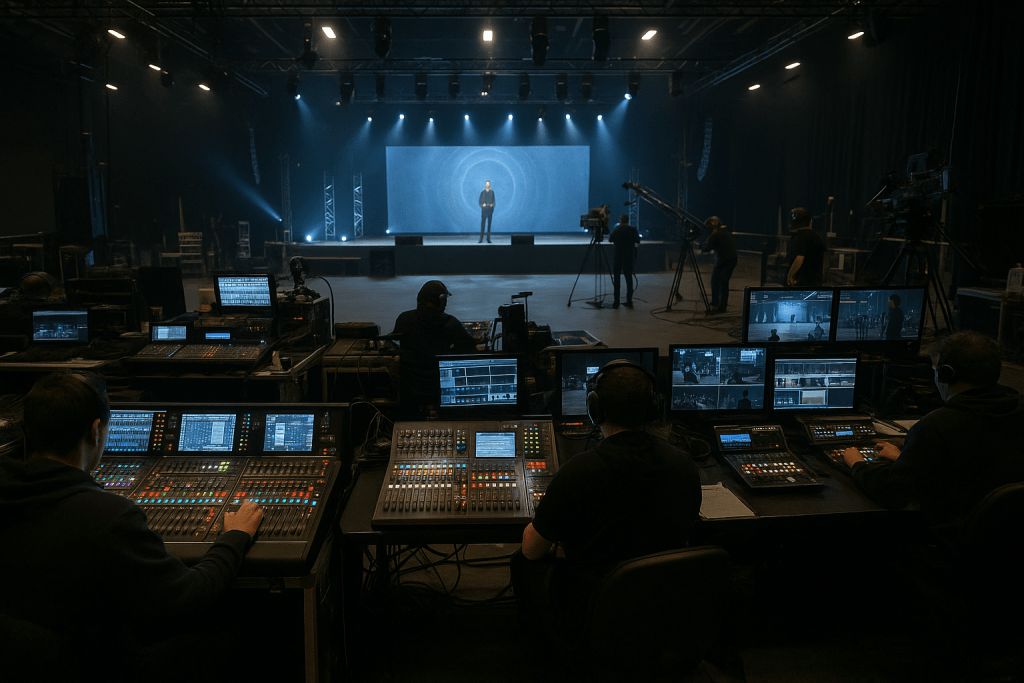
The themes expected from Sennheiser at IBC 2026 align with wider shifts in the broadcast and live events industries. As production teams face pressure to deliver more content with smaller on-site crews, reliable wireless and networked audio systems have become essential for both traditional broadcast studios and remote production setups.
For event technology providers, rental companies, and systems integrators, incremental updates to RF performance, interoperability, and network integration can have a direct effect on how easily multi-venue or touring productions can be planned and executed. Enhancements in immersive and object-based audio tools may also influence how venues, OB trucks, and control rooms are designed over the next few years.
Because IBC serves as a meeting point for broadcasters, streaming services, and live production firms, Sennheiser’s 2026 announcements are likely to be evaluated not only on sound quality, but also on how well they integrate into IP infrastructures, remote workflows, and emerging standards.
Why this matters
For professionals working in event technology, the developments previewed and launched at IBC often set expectations for the tools that will be available in the coming production cycles. Audio solutions that can operate reliably under spectrum constraints, connect seamlessly to IP networks, and support immersive formats are becoming baseline requirements rather than niche features.
Sennheiser’s planned focus at IBC 2026 underscores how audio vendors are responding to these demands. Broadcasters and live event operators are looking for systems that reduce setup time, integrate with existing infrastructure, and offer long-term support for changing standards.
- Broadcast engineers may see new options for consolidating wireless and wired audio into unified, networked workflows.
- Live event companies could benefit from tools that simplify multi-stage and multi-venue coordination, particularly in RF-heavy environments.
- Content creators working with immersive formats may gain additional flexibility in capturing and delivering richer audio experiences.
As the industry continues to converge around IP-based, flexible production models, the direction taken by major audio manufacturers at IBC 2026 will help shape investment decisions and technical planning across both broadcast and live events in the years ahead.