How Professional Sports Venues Are Shaping Corporate Meetings and Retreats
Background and context
Professional sports venues and franchises are becoming more active players in the corporate events market. Beyond game-day hospitality, many now offer tailored experiences designed for meetings, retreats, and incentive programs.
This trend reflects a broader shift in corporate event planning, where organizers look for ways to blend strategic work with experiential activities. Sports settings provide built-in themes of performance, resilience, and teamwork that align with common business objectives.
As companies compete for employee engagement and meaningful in-person time, sports-backed programming is emerging as an alternative to traditional hotel ballroom agendas.
Key announcement
Across major leagues and venues, organizations are expanding their corporate offerings to include a mix of on-field and off-field experiences. These can range from structured workshops to informal wellness activities connected to professional teams and athletes.
Typical program elements now available include:
- Team-building sessions that use sports drills or game-style challenges to practice communication and collaboration.
- Strategy workshops hosted in stadium clubs or meeting rooms, often with behind-the-scenes tours as part of the agenda.
- Keynote talks or panel discussions featuring current or former athletes, coaches, or performance staff focusing on leadership, mindset, and high-pressure decision-making.
- Mind-body wellness components such as yoga on the field, guided stretch sessions, or light fitness activities led by trainers associated with the venue.
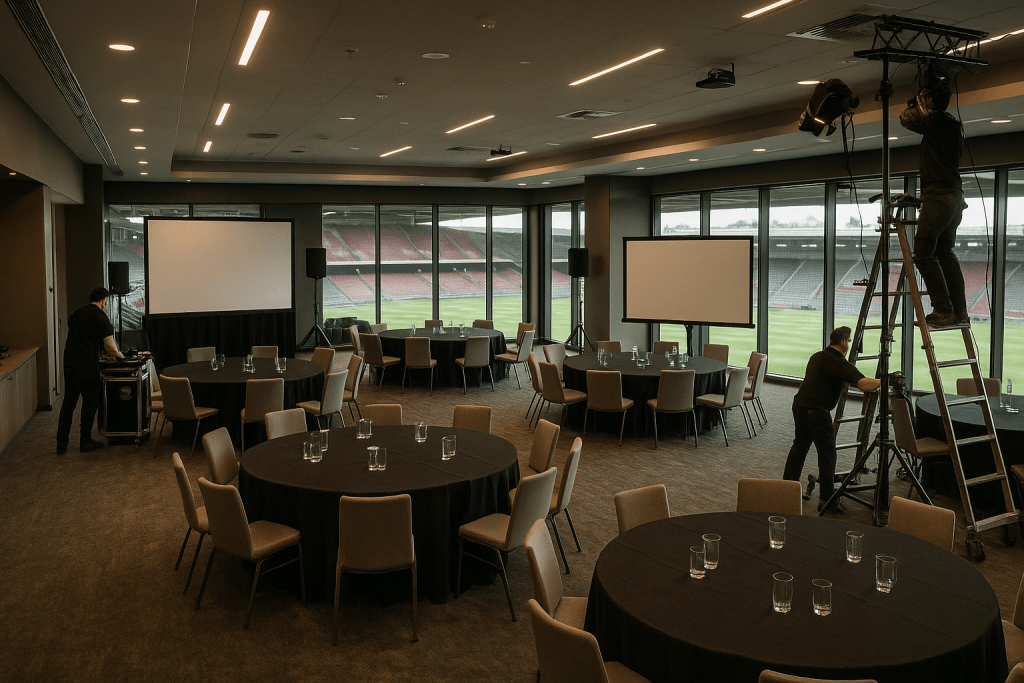
- Access to premium seating areas repurposed as meeting spaces, with integrated AV and catering suited to corporate needs.
- Interactive experiences like batting practice, penalty kicks, or skills zones that can be built into break times or social segments.
Many venues promote these options through dedicated corporate event pages on their websites, outlining available spaces, capacities, and add-on experiences that can be combined into a full-day or multi-day program.
Industry impact
For the event and meeting industry, the use of professional sports environments opens additional inventory in markets where traditional conference space is in high demand. Stadiums and arenas can host general sessions, workshops, and receptions during non-game days, often with large-scale AV infrastructure already in place.
Production teams can tap into existing house systems—LED boards, sound reinforcement, and in-house technical crews—to deliver more immersive presentations without starting from scratch. This can be particularly useful for companies aiming to create high-energy kickoffs or closing sessions.
At the same time, sports-based programs can support hybrid or recorded content. Many venues are equipped for broadcast, allowing meeting organizers to capture speaker sessions or stream select elements to remote participants.
According to venue marketing materials and corporate booking pages, interest in these offerings tends to peak around sales meetings, annual kickoffs, and leadership retreats, where the performance narrative of sports resonates with business messaging.
Why this matters
For planners, incorporating professional sports into a corporate meeting or retreat is less about the game itself and more about leveraging the environment and expertise that surround it. The combination of purpose-built AV, flexible seating, and performance-focused storytelling offers an alternative to conventional meeting formats.
Employees increasingly expect offsites to provide something they cannot get from standard office meetings or video calls. Sports venues offer distinct settings and activities that can make strategic content more memorable, while still supporting core requirements like breakout rooms, reliable technology, and structured agendas.
As organizations continue to recalibrate their in-person event strategies, professional sports properties are likely to remain part of the conversation. Planners who understand how to align these experiences with clear business outcomes—rather than treating them purely as entertainment—will be best positioned to make effective use of what these venues now provide.
More information on corporate experiences and venue capabilities is typically available on each team or venue’s official website, where planners can review layouts, technical specs, and sample packages before engaging directly with sales teams.