Canadian event sector highlights: Trail running, Pride, and outdoor cinema shape summer calendar
Background and context
Canada’s live events sector continues to lean heavily on outdoor formats, destination experiences, and community-focused programming during the summer season. A mix of sports, cultural, and advocacy events is drawing both local audiences and visitors, while producers refine formats learned during recent years of disruption.
Against this backdrop, several notable projects—including a major trail running event at Mont-Tremblant, Capital Pride in Ottawa, and the Toronto Outdoor Picture Show—are illustrating how organizers are approaching programming, logistics, and audience engagement across the country.
Key announcement
One of the higher-profile developments is the Boréalys Mont-Tremblant by UTMB event, which positions the Quebec resort town as a North American hub for long-distance trail running. The event is part of the UTMB World Series, a global circuit of endurance races that combine elite competition with destination tourism.
Set in the Laurentian Mountains, the race series uses varied distances and terrain to attract both professional athletes and recreational runners. For local tourism authorities and regional partners, the event extends the Mont-Tremblant brand beyond winter sports and into four-season outdoor experiences.
In Ottawa, Capital Pride continues to evolve as a multi-day festival that spans parades, performances, community programming, and advocacy. The event involves complex street closures, mobile staging, and distributed audio systems to serve both large-scale parade crowds and smaller, neighborhood-based events.
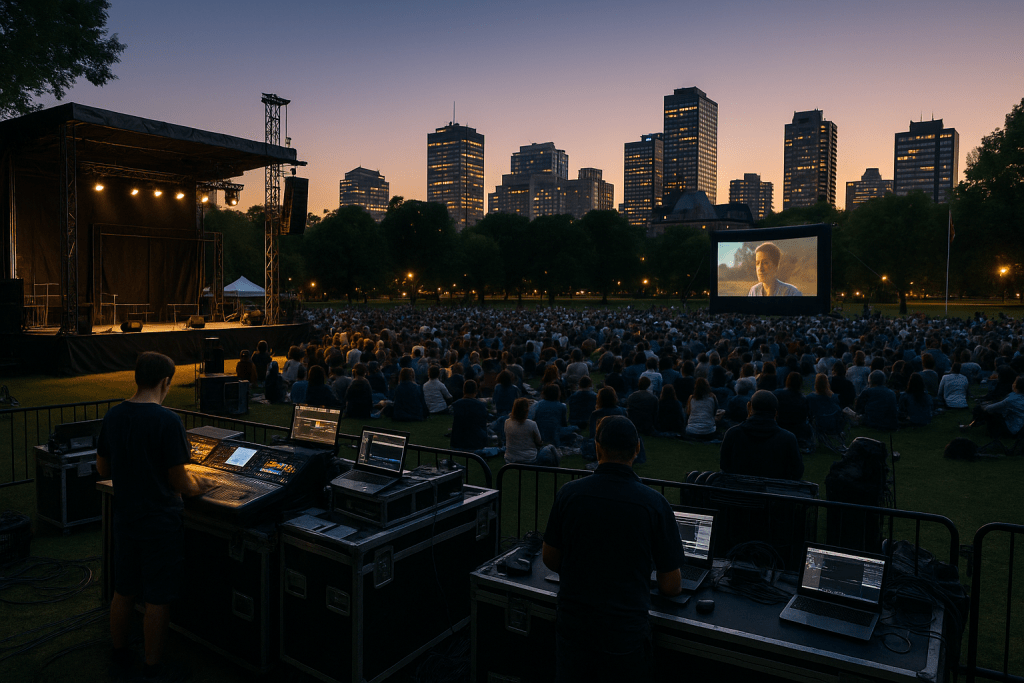
Meanwhile, the Toronto Outdoor Picture Show (TOPS) is expanding the model of open-air cinema with a curated film program presented across multiple city parks. The series relies on temporary AV infrastructure—projection, sound reinforcement, and lighting—adapted to different outdoor environments and changing weather conditions.
Industry impact
Together, these events highlight several operational trends relevant to Canadian event professionals. Outdoor and hybrid-format programming remains strong, with organizers leveraging parks, waterfronts, and mountain destinations to create flexible, high-capacity venues.
For production companies and AV providers, events like Boréalys Mont-Tremblant by UTMB and TOPS require robust, mobile setups that can be assembled and disassembled quickly, often in locations without permanent infrastructure. This includes portable power solutions, wireless audio, and projection systems capable of handling variable light and weather.
Capital Pride underlines ongoing demand for inclusive, city-wide programming that engages multiple communities. From a technical perspective, this means distributed sound systems, multiple stages, and a mix of fixed and roaming content capture to support both onsite audiences and digital storytelling or media coverage.
Destinations and municipalities are also using these events as anchors for tourism and economic activity, coordinating transport, hospitality, and city services around peak event days. That coordination requires closer planning with event producers on crowd flow, safety, and accessibility.
Why this matters
For event planners, production teams, and venues, the current Canadian calendar points to a few clear priorities. There is growing value in formats that can scale outdoors and move across multiple sites, as seen with regional festivals and film series that operate in different neighborhoods or natural settings.
Technical resilience is also becoming central to planning. Weather, terrain, and dispersed audiences demand gear and workflows that are portable yet stable, from AV and staging to connectivity and power. Vendors able to offer modular solutions are likely to remain in demand.
Finally, events such as Capital Pride demonstrate that audiences increasingly expect programming that reflects social issues and community identity, not just entertainment. That expectation influences everything from site design and accessibility choices to the way content is captured and shared.
For more details on specific event formats, schedules, and participant information, readers can refer to the official sites for each festival or race series, including their dedicated event pages and registration portals.