Showlite adapts services to meet shifting exhibition demands
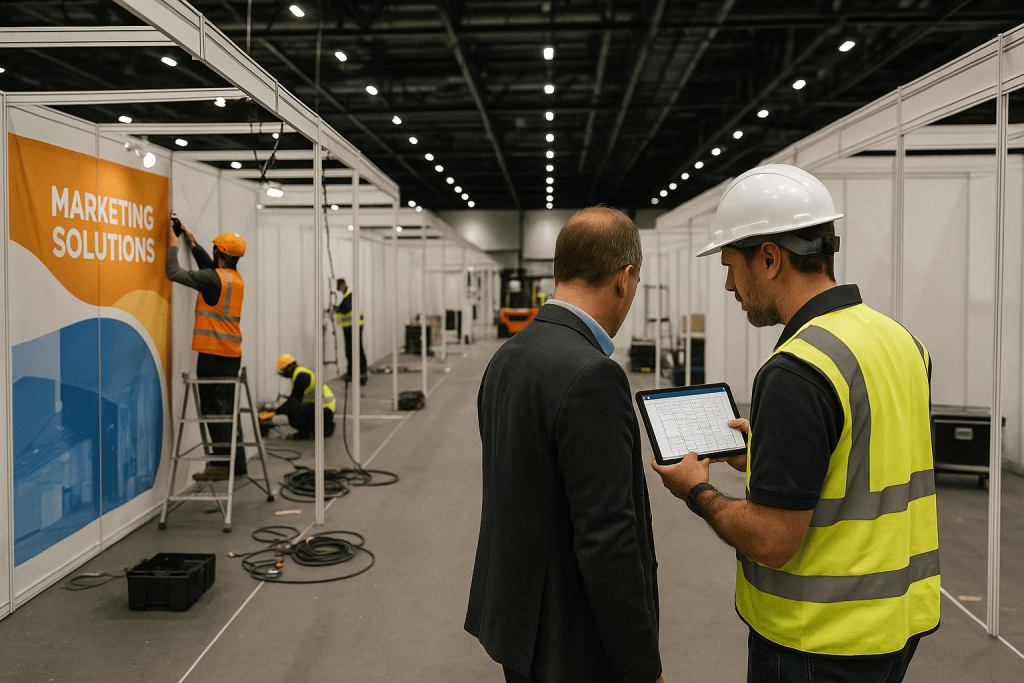
Exhibition organisers are facing a convergence of pressures: shorter planning cycles, rising exhibitor expectations, greater budget scrutiny and an ongoing need to streamline operations. In response, full-service contractor Showlite is positioning its offer around flexibility and operational support, aiming to help organisers remain agile in an increasingly complex exhibition market.
The company, long active in the UK and European trade show ecosystem, has been expanding and refining its services to align with how exhibitions are planned and delivered today. Rather than focusing solely on build and logistics, Showlite is emphasising integrated support – from exhibitor-facing services through to on-site coordination – designed to reduce friction for organisers as event formats and requirements continue to evolve.
Background and industry context
The exhibitions sector has undergone notable changes over the past few years. Organisers are being asked to deliver more value with fewer resources, while exhibitors expect a smoother experience, clearer communication and measurable return on investment. Alongside this, many events are operating on compressed timelines, with late bookings, last-minute floor plan changes and evolving content formats becoming common.
These shifts have increased the operational burden on organisers, who must manage a wider mix of stakeholders and suppliers under tighter deadlines. Service providers that once worked largely in the background – such as contractors handling electrics, shell schemes, graphics and feature builds – are now playing a more visible role in how organisers manage exhibitor journeys, health and safety compliance and on-site efficiency.
Within this environment, there is growing demand for contractors who can act as collaborative partners rather than simply executing a specification. Organisers are looking for suppliers who can anticipate requirements, integrate smoothly with their own teams and support exhibitors with clear and responsive communication in the run-up to each event.
Key developments in Showlite’s approach
Showlite describes itself as a full-service exhibition and event contractor, providing a range of core services that typically include electrics, shell scheme solutions, bespoke and modular stand builds, feature areas and graphics. While these are familiar components in most trade show environments, the company’s current focus is less on individual products and more on how they are delivered and coordinated.
One area of emphasis is agility in planning and deployment. Organisers report increasingly compressed lead times between initial brief and show open, with late-breaking exhibitor sign-ups and specification changes now common across many sectors. Showlite has been adapting processes and project management practices to accommodate this volatility, aiming to turn around layout adjustments, stand modifications and electrical requirements more quickly while maintaining compliance with venue and safety regulations.
The company is also placing greater weight on exhibitor-facing services. This includes providing clear ordering information, responsive support channels and on-site assistance that can help resolve issues without requiring constant organiser intervention. The intention is to reduce the volume of operational queries reaching organiser teams by equipping exhibitors with direct access to the contractor’s specialists.
On-site, Showlite’s remit typically spans installation, testing and handover of services ahead of show opening, followed by support during tenancy and breakdown. The business is positioning its on-site teams as an extension of the organiser’s operations function, with an emphasis on quick decision-making and transparent communication as issues emerge during build and live days.
Industry impact and operational implications
As exhibition models adapt, the way contractors integrate into event operations can have a direct impact on the overall exhibitor and visitor experience. A contractor able to respond swiftly to change requests, support late bookings or troubleshoot power and build issues on-site can significantly reduce operational risk for organisers.
For exhibitors, streamlined contractor processes can also affect satisfaction and rebooking decisions. Clear timelines, accurate invoicing, predictable delivery and accessible support are increasingly seen as part of the overall value of participating in a show, not just background logistics. When contractors coordinate efficiently with venue teams and organiser operations, it can reduce delays on the show floor and contribute to more professional presentation standards.
The shift toward more agile, partnership-based models may also influence how organisers select and manage their supplier rosters. Rather than appointing contractors purely on cost or legacy relationships, there is a growing emphasis on service reliability, communications discipline and the ability to handle fluctuating requirements without compromising safety or quality.
Why this matters for event professionals and technology providers
For organisers, the way contractors structure their services is increasingly linked to strategic priorities such as exhibitor retention, net promoter scores and operational resilience. A contractor that can flex to handle shorter timelines, while still offering clear processes and robust reporting, can help organisers manage risk across multiple shows in a portfolio.
This evolution also intersects with event technology. As organisers deploy exhibitor portals, online ordering tools and digital floor plan systems, contractors like Showlite need to integrate their information flows with these platforms. Consistent data on stand specifications, power orders, graphics requirements and health and safety documentation can reduce duplication of effort and minimise errors.
Technology providers serving the exhibitions market may find opportunities in deeper integration between organiser systems and contractor workflows. This could include improved exhibitor self-service for ordering services, more transparent status tracking for build and installation, and better analytics on service utilisation across events. Contractors that embrace digital workflows and data sharing are better positioned to support these developments.
For exhibitors, improved coordination between contractors, organisers and technology platforms translates into fewer surprises and a more predictable experience. As more events emphasise sustainability, modularity and reuse of materials, contractors capable of advising on energy-efficient solutions, reconfigurable structures and responsible disposal will play a growing role in helping organisers achieve environmental targets as well.
Conclusion
The exhibition market is unlikely to return to slower, more predictable planning cycles. Instead, organisers are adjusting to a landscape where agility, transparent communication and reliable operational partners are critical. Showlite’s current positioning as a full-service contractor focused on responsiveness and exhibitor support reflects this broader shift in expectations.
For event professionals and technology providers, the evolution of contractor roles underlines the importance of closer collaboration across the exhibition delivery chain. As timelines compress and expectations increase, suppliers who can combine technical capability with flexible, integrated service models are set to become central to how successful exhibitions are planned and executed.