Sony Alpha Universe scales creator events across Latin America
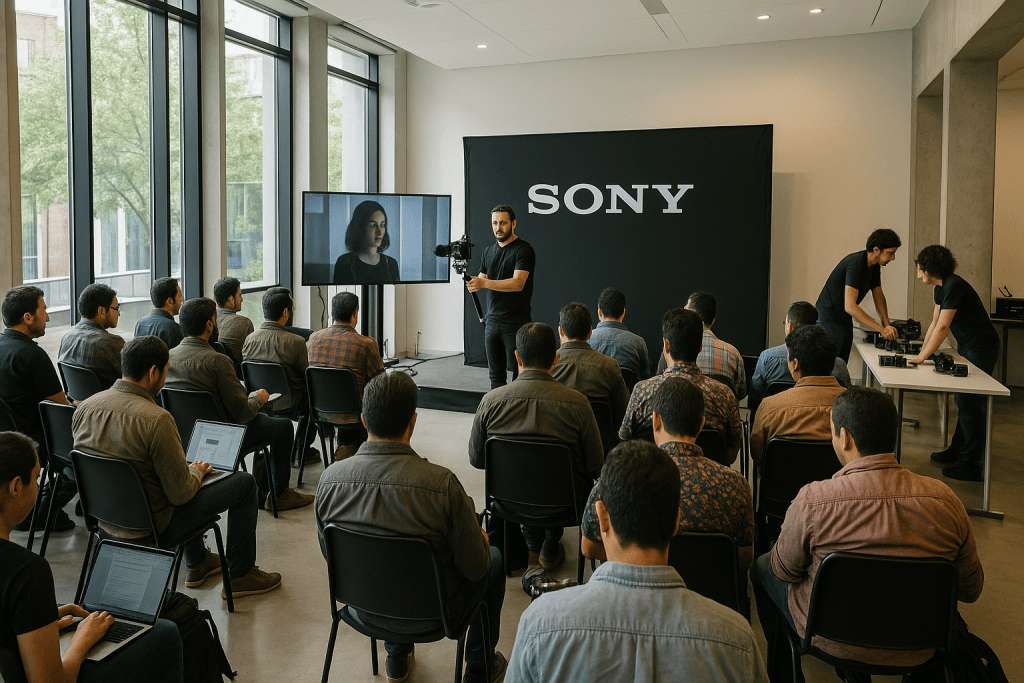
Sony has significantly expanded its Sony Alpha Universe program across Latin America, building a structured calendar of photography workshops, filmmaking masterclasses and hands-on product sessions that now exceeds 300 events and 9,000 participants in the region.
Led in Latin America by Angelo Marconi and Álvaro Fernandez, the initiative has evolved from a series of local activations into a coordinated regional operation designed to support content creators, strengthen brand loyalty and gather data to inform Sony’s market strategy.
Background and industry context
Technology brands have increasingly turned to experiential and education-led programs to reach professional and aspiring creators. As camera systems, lenses and content workflows grow more advanced, users expect not just products, but practical guidance, community access and ongoing support.
In Latin America, this trend is intensified by a rapidly growing community of photographers, videographers and hybrid creators who rely on events for skills development and networking. For manufacturers, structured event programs have become a key way to demonstrate new products, gather feedback, and maintain visibility in a competitive landscape that includes both dedicated camera systems and high-end smartphone imaging.
Sony Alpha Universe was created as the brand’s global community platform for visual storytellers, with local teams adapting the concept to their own markets. In Latin America, that adaptation has focused heavily on in-person and hybrid experiences, connecting creators with Sony ambassadors, technical experts and each other.
Key developments in the Latin American program
Under the stewardship of Marconi and Fernandez, Sony Alpha Universe in Latin America has scaled from a smaller set of engagements to a region-wide calendar of more than 300 events, reaching around 9,000 attendees. The program comprises a mix of formats, including:
- Photography workshops for different skill levels and genres, from portrait and street to sports and wildlife.
- Filmmaking and content creation masterclasses covering camera operation, lighting, audio and post-production workflows.
- Hands-on product experiences where participants can test new camera bodies, lenses and accessories in real-world scenarios.
Events are organised across multiple Latin American countries, with localised content and speakers chosen to reflect the specific needs of each market. While the series began with primarily in-person sessions, the program has also woven in digital components over time, providing live streams, recorded sessions and online follow-ups in selected cases to extend reach beyond those able to attend on site.
The program is also used as a structured channel for Sony to strengthen relationships with key creators, from established professionals to emerging influencers. By involving these creators as speakers, mentors, or featured guests, the events double as a platform for peer-to-peer knowledge sharing and as a feedback loop for product teams.
Building a data-informed regional operation
A central feature of the Latin American rollout has been a more systematic approach to data. Rather than treating each workshop or masterclass as a standalone activity, the Sony Alpha Universe team in the region tracks participation, topics, formats and engagement patterns across the entire program.
This data supports several functions:
- Identifying which event formats and subjects attract the strongest attendance and repeat participation.
- Understanding regional differences in interest, such as stronger demand for video content in some markets and still photography in others.
- Informing where to allocate resources, including which cities to prioritise for in-person events and where digital formats may be more effective.
- Capturing feedback on new products and features that can be relevant for marketing and product planning teams.
By consolidating this information at a regional level, the team is able to refine the calendar, test new concepts and scale successful formats more quickly, while reducing repetition or low-impact activities.
Industry impact and lessons for event programs
The growth of Sony Alpha Universe in Latin America illustrates how a technology brand can move from sporadic demonstrations to a more mature, programmatic event strategy. For the broader event and exhibition sector, several aspects are noteworthy:
- Consistent calendar: Instead of one-off launches, the program operates as an ongoing series, creating a predictable touchpoint for creators and partners.
- Education at the core: Workshops and masterclasses are positioned as skill-building opportunities, helping participants achieve tangible improvements in their work while also deepening product understanding.
- Community-building focus: Events are used to connect attendees with each other as much as with the brand, fostering an ecosystem where users share best practices and experiences.
- Regional coordination with local flavour: Standardised frameworks are adapted to local markets, combining central strategy with country-specific implementation.
- Measurement and iteration: Event performance is monitored so that successful concepts can be replicated, and underperforming approaches can be revised or retired.
These elements reflect a broader shift in how technology-led brands engage with audiences, moving from traditional trade shows or short-lived pop-ups to sustained, data-driven communities.
Why this matters for event professionals and technology providers
For event organisers, agencies and platform providers working with technology and creative brands, the expansion of Sony Alpha Universe across Latin America signals several practical opportunities and challenges.
First, the program underscores demand for hybrid learning experiences that combine hands-on demonstrations with structured education. Event technology vendors offering registration systems, content management, analytics, or hybrid delivery tools can play a role in supporting similar regional initiatives that require consistent execution at scale.
Second, the emphasis on data-informed decision-making highlights the importance of integrating event technology stacks. Being able to collect and interpret participant behaviour across hundreds of events requires interoperable tools for registration, attendance tracking, feedback collection and content engagement analytics.
Third, the program reinforces the value of community-centric design. Events aimed at professional and enthusiast audiences increasingly need mechanisms for ongoing engagement, from follow-up content to online groups or recurring series. Providers who can help brands build these long-term communities, rather than standalone events, are likely to find sustained demand.
Finally, the multi-country nature of the Latin American operation points to the importance of localisation. Language support, regional compliance, payment options, and culturally relevant content all become essential when scaling a program beyond a single market.
Conclusion
The Latin American expansion of Sony Alpha Universe demonstrates how a brand-led creator program can evolve into a large-scale, regionally coordinated event operation. With more than 300 events and 9,000 participants, the initiative combines education, product immersion and community-building, supported by a data-led approach to planning.
As technology and creator-focused brands continue to seek deeper engagement with their audiences, similar models are likely to influence how future workshops, roadshows and hybrid experiences are structured. For event professionals and technology suppliers, the case underscores the importance of scalable infrastructure, robust analytics and a sustained community strategy in delivering value to both attendees and sponsoring brands.