One World Group marks shift beyond pure tech rental
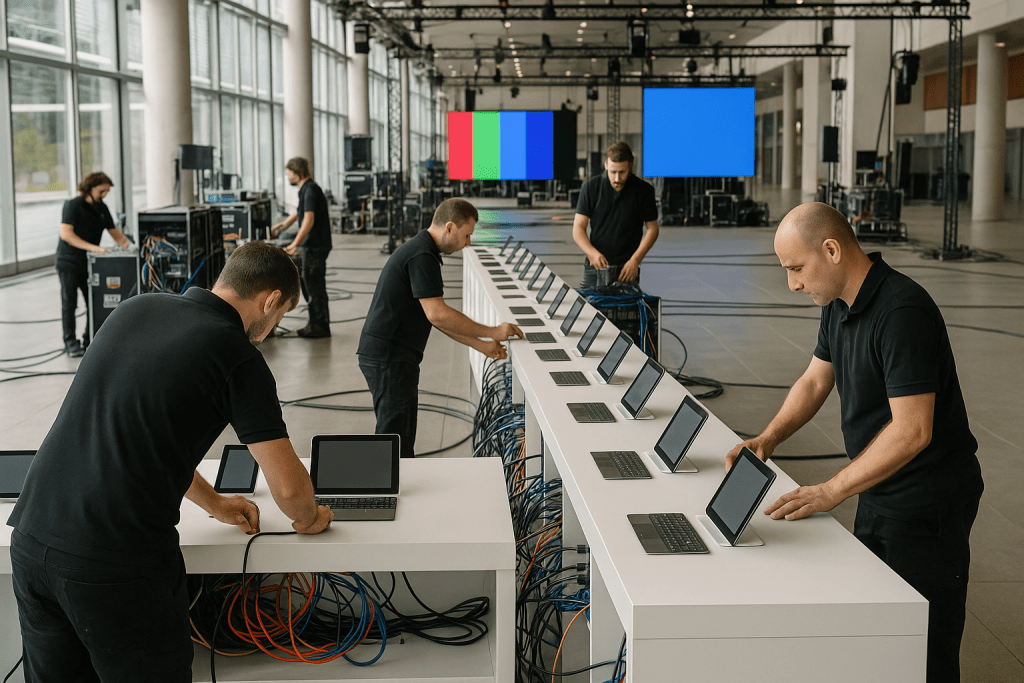
One World has introduced a new overarching identity, One World Group, signalling a strategic move to broaden its role in the event technology ecosystem after more than a decade and a half in the global technology rental market.
The rebrand reflects the company’s ambition to be recognised not only for providing hardware but also for delivering a wider range of technology-led services to event organisers, agencies, venues and exhibitors worldwide.
Background and industry context
For 16 years, One World has been active in the international event technology and equipment rental space, supplying devices and technical infrastructure to support conferences, exhibitions, corporate meetings and live brand experiences. During that period, the events sector has undergone significant change, driven by rapid advances in digital tools, connectivity, data analytics and hybrid delivery models.
The pandemic-era acceleration of virtual and hybrid formats, followed by the resurgence of in-person events, has placed greater emphasis on integrated solutions that combine hardware, software, connectivity and on-site services. Organisers are increasingly seeking partners that can help them design, deploy and manage technology across the full event lifecycle rather than working with multiple single-purpose vendors.
In this context, technology rental – once a standalone specialism focused on logistics and inventory – is now often only one component of a broader technology strategy for events. Providers in this segment are under pressure to respond with expanded capabilities, including managed services, platform integrations and support for both physical and digital audience experiences.
Key developments in the One World Group launch
The introduction of One World Group formalises the company’s evolution from a business primarily associated with short-term hardware rental into a more diversified event technology partner. The new group structure is positioned to encompass multiple service areas, extending beyond the provisioning of devices.
While technology rental remains a core element of its offering, the wider organisation is framed around delivering more holistic support to event stakeholders. This includes integrating technology into event operations, supporting content delivery and audience engagement, and enabling more flexible, scalable solutions for different event formats.
The launch of the One World Group brand is accompanied by a dedicated website, signalling a clearer separation between the company’s historic positioning and its broader strategic direction. The group identity is intended to make it easier for clients to understand the full scope of services now available and to align the business with changing expectations in the event and exhibition market.
Details of any internal divisions, sub-brands or new service lines under the One World Group umbrella have not been fully disclosed, but the move indicates a deliberate shift in how the company presents itself to international clients, partners and suppliers.
Industry impact and market positioning
The move by One World to adopt a group structure mirrors a wider trend in the event technology sector, where companies that began with focused offerings – such as AV hire, IT rental or streaming tools – are expanding laterally into adjacent services. This reflects both client demand for simplified procurement and the commercial need for providers to differentiate in a crowded marketplace.
By repositioning as One World Group, the company is signalling an intention to compete not only with pure-play rental firms, but also with integrated event technology and services providers that operate across multiple regions and event types. This may intensify competition in areas such as on-site technology management, digital infrastructure for large-scale events, and support for hybrid and multi-location formats.
For organisers, this type of consolidation can have both practical and strategic consequences. A group model can offer a single point of contact and potentially more consistent service across different territories, while also concentrating expertise around planning, delivery and post-event analysis. At the same time, it raises expectations around accountability and performance, particularly for complex or mission-critical events.
Why this matters for event professionals and technology providers
Event professionals are increasingly tasked with delivering experiences that are technically sophisticated, data-aware and resilient across multiple channels. The shift by One World towards a group structure built around broader event technology services underscores several ongoing changes affecting buyers and suppliers alike:
- Integrated sourcing: Organisers may be able to streamline vendor management by working with partners that can combine hardware, connectivity, support and integration services under one contract.
- Service-led expectations: As rental-focused companies reposition, expectations move from simple equipment availability towards advisory, design and operational support, with an emphasis on reliability and user experience.
- Scalability for hybrid formats: The need to support both in-person and remote participants can benefit from providers that can bridge on-site infrastructure with digital delivery platforms and tools.
- Risk and resilience: A group structure with diversified capabilities can potentially offer more robust contingency planning, cross-trained teams and standardised processes for events of varying size and complexity.
For other technology providers, particularly those focused on a specific niche, One World Group’s repositioning is a reminder of the pressure to clarify value propositions. Some may choose to broaden their service lines, while others may respond by doubling down on specialisation and forming partnerships with complementary firms.
Conclusion
The launch of One World Group marks a notable transition for a company with 16 years of history in technology rental for events, signalling its intention to operate as a more comprehensive event technology partner. While the full extent of the group’s expanded capabilities will become clearer over time, the move aligns with a broader industry shift towards integrated, service-led offerings.
As event organisers and venues continue to navigate evolving formats, audience expectations and technology stacks, developments such as this highlight how providers are reshaping their structures and brands to remain relevant. For buyers, the emergence of group-based models offers the potential for more joined-up support, but also raises the importance of careful vendor evaluation to ensure that expanded portfolios translate into tangible value on the show floor, in the conference room and across digital channels.