Telepresence Holograms: The ROI of Beaming International Executives to Live Stages

Introduction
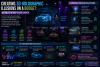
International keynote speakers and executive appearances have long been among the most expensive components of major conferences, product launches, investor meetings, and global corporate events. Airfare, accommodation, visa processing, executive security, scheduling conflicts, and travel-related downtime often make a single appearance both logistically complex and financially significant. At the same time, audiences increasingly expect live interaction rather than pre-recorded video messages, placing organizers in a difficult position when global executives cannot attend in person.
Telepresence holograms have emerged as a practical alternative that bridges the gap between physical presence and traditional video conferencing. Using advanced projection techniques, high-resolution LED displays, transparent projection films, or holographic illusion systems, organizers can project a life-sized representation of a remotely located executive onto a live stage. Unlike a conventional video call displayed on a large screen, the executive appears to occupy the presentation space, interacting naturally with hosts, moderators, and visual content.
Although the technology is often associated with spectacle, its real business value lies in operational flexibility and measurable return on investment (ROI). Organizations are increasingly evaluating telepresence holograms not simply as premium production features but as strategic tools that reduce travel costs, improve executive availability, expand event reach, and support sustainability initiatives. Understanding that ROI requires looking beyond equipment costs to the broader economics of executive participation.
Understanding Telepresence Holograms
The term “telepresence hologram” can be misleading because most event deployments do not use true holography. Instead, they combine real-time video transmission with optical illusion techniques that create the appearance of a three-dimensional speaker standing on stage.
Typical implementations include:
- Pepper’s Ghost projection systems
- Transparent projection films
- Fine-mesh projection screens
- Transparent LED displays
- High-resolution LED stage environments
- Mixed reality stage integration
Behind the scenes, the remote executive is filmed in a controlled studio or corporate location using professional lighting, cameras, and low-latency transmission systems. The live video feed is synchronized with the stage environment so the projected speaker appears life-sized and spatially integrated with presenters, stage graphics, and audience sightlines.
The goal is not to convince attendees that a true hologram exists, but to create a presentation experience that feels significantly more engaging than conventional remote video participation.
Why Organizations Are Exploring Telepresence
Executive schedules have become increasingly global. Senior leaders often oversee operations across multiple regions while balancing investor meetings, customer visits, board responsibilities, and internal communications. Attending every strategic event in person is rarely practical.
Traditional video conferencing provides accessibility but often diminishes audience engagement. Large projection screens isolate remote speakers from the physical stage, making conversations feel disconnected and reducing opportunities for dynamic interaction.
Telepresence addresses several business challenges simultaneously:
- Eliminates international travel for selected appearances
- Reduces scheduling disruptions
- Enables same-day participation in multiple global events
- Supports sustainability targets by reducing travel emissions
- Improves speaker availability for high-value sessions
For multinational organizations hosting regional conferences throughout the year, these advantages can accumulate into substantial operational savings.
Building the ROI Framework
Evaluating telepresence holograms requires comparing the total cost of deployment against both direct and indirect business benefits.
Direct Cost Savings
International executive travel often includes:
- Business or first-class airfare
- Hotel accommodation
- Ground transportation
- Security arrangements
- Visa processing
- Administrative coordination
- Opportunity cost of travel time
For senior executives traveling internationally, these costs can easily exceed the production cost of a telepresence deployment, particularly when multiple appearances are involved.
Organizations should compare the total travel expenditure avoided against:
- Telepresence production
- Studio rental
- Transmission services
- Projection equipment
- Technical support
When telepresence systems are reused across multiple events, the cost per appearance decreases substantially.
Executive Productivity
Travel involves more than financial expense.
A single international keynote may require several days away from operational responsibilities. Those lost executive hours represent a hidden business cost.
Telepresence allows leaders to:
- Participate from headquarters
- Return immediately to operational work
- Join multiple regional conferences in one day
- Maintain greater schedule flexibility
This productivity gain often represents one of the largest yet least measured components of ROI.
Enhancing Audience Experience
Cost savings alone rarely justify technology adoption in the events industry. Audience experience remains equally important.
Compared with conventional remote presentations, telepresence creates stronger spatial engagement.
Attendees perceive the speaker as participating directly in the event rather than appearing remotely on a separate display. This improves eye contact, stage presence, and conversational flow between moderators and remote executives.
Many implementations also allow the holographic speaker to interact with:
- Physical presenters
- Live demonstrations
- Product launches
- Stage graphics
- Audience questions
The resulting experience feels more integrated than a standard video call, increasing perceived event quality without requiring executive travel.
Technical Architecture
Reliable telepresence depends on robust technical infrastructure rather than projection technology alone.
Capture Environment
Remote executives should present from controlled studios featuring:
- Professional lighting
- Broadcast-quality cameras
- Clean backgrounds
- High-quality microphones
- Redundant internet connections
Consistent image quality is essential because projection systems magnify imperfections.
Transmission Layer
Low-latency video transmission minimizes conversational delays.
Professional deployments typically incorporate:
- Dedicated bandwidth
- Backup network paths
- Video compression optimization
- Audio synchronization
- Real-time monitoring
Network redundancy is critical because connectivity failures become highly visible during live presentations.
Stage Integration
The projected speaker must integrate naturally into the stage environment.
This involves coordinating:
- Projection geometry
- Lighting design
- Camera angles
- Stage blocking
- Confidence monitors
- Presenter positioning
Successful rehearsals ensure that live presenters know precisely where to direct eye contact and movement.
Sustainability and ESG Benefits
Environmental reporting has become increasingly important for corporations and event organizers.
Replacing selected international flights with telepresence contributes directly to carbon reduction strategies.
Reduced travel also decreases:
- Hotel energy consumption
- Ground transportation emissions
- Printed travel documentation
- Logistics support
For organizations publishing Environmental, Social, and Governance (ESG) reports, these reductions provide measurable sustainability outcomes while maintaining executive participation.
Suitable Event Types
Telepresence holograms are particularly valuable for:
Global Product Launches
Executives can unveil products simultaneously across multiple regional launch events without physically traveling between venues.
Investor Conferences
Senior leadership can participate despite conflicting schedules or international obligations.
Internal Corporate Meetings
Global town halls often benefit from executive participation that would otherwise require extensive travel.
Association Conferences
International thought leaders can contribute without the financial or scheduling burden associated with long-distance travel.
Not every speaker requires telepresence. The technology delivers greatest value when executive availability itself significantly influences event success.
Challenges and Limitations
Despite its advantages, telepresence is not a universal replacement for physical appearances.
Successful implementation depends upon:
- Stable, low-latency connectivity
- Careful stage design
- Extensive rehearsals
- Skilled technical operators
- Appropriate audience expectations
Interactive networking, informal conversations, media interviews, and private stakeholder meetings remain difficult to replicate remotely.
Production costs can also exceed expectations for smaller events where executive travel expenses are relatively modest.
Finally, organizations should avoid positioning telepresence purely as a novelty. The technology is most effective when integrated naturally into the event narrative rather than promoted solely for its visual effect.
Future Trends
Telepresence technology is expected to evolve rapidly through advances in volumetric capture, spatial video, artificial intelligence, and ultra-low-latency communications.
Future systems may enable:
- Real-time multilingual translation
- AI-assisted eye contact correction
- Interactive 3D presentations
- Multiple remote speakers sharing a single virtual stage
- Integration with mixed reality environments
As bandwidth improves and hardware becomes more affordable, telepresence is likely to move beyond flagship events into mainstream corporate communications and regional conferences.
Conclusion
Telepresence holograms represent more than an impressive stage effect—they offer a practical business solution for organizations seeking to balance executive accessibility, audience engagement, operational efficiency, and sustainability. By replacing selected international travel with high-quality remote stage presence, organizations can reduce costs, preserve executive productivity, lower environmental impact, and still deliver engaging presentations that feel significantly more immersive than traditional video conferencing. While the technology requires thoughtful planning, reliable infrastructure, and careful integration into the production workflow, its return on investment increasingly extends well beyond travel savings. For global enterprises planning live events in 2026 and beyond, telepresence holograms are becoming a strategic communications capability rather than simply an innovative production feature.