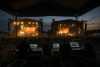
De Vere Grand Connaught Rooms opens rooftop Terrace Club

De Vere Grand Connaught Rooms in central London has introduced The Terrace Club, a rooftop space aimed at expanding options for summer business events and corporate gatherings. Positioned close to Covent Garden, the new area is designed to allow event planners to move elements of their programmes beyond traditional indoor meeting rooms during the warmer months.
The launch comes as organisers look for more flexible environments that can accommodate networking, informal sessions and social elements alongside core conference content, particularly for hybrid and in-person events returning at scale.
Background and industry context
As corporate events, association meetings and incentive programmes continue to evolve post-pandemic, venue strategies are shifting to include more open-air and multipurpose settings. Organisers are placing greater emphasis on delegate experience, wellbeing and informal interaction, prompting many venues to reconfigure underused outdoor areas into structured event spaces.
Central London venues, in particular, face pressure to maximise every square metre while also distinguishing themselves in a competitive market. Rooftop terraces and external courtyards are increasingly being developed as assets that can host welcome receptions, breakouts, private dinners or sponsor activations, providing a contrast to traditional ballroom and conference layouts.
The summer season typically brings a spike in demand for such spaces, with event professionals seeking options that support fresh air, natural light and more relaxed networking environments, while still offering the infrastructure required for business-focused programmes.
Key features of The Terrace Club
The Terrace Club occupies the top floor of De Vere Grand Connaught Rooms, giving groups access to an outdoor setting above the surrounding streets near Covent Garden. The space is positioned as an extension to the venue’s existing meeting and event facilities, enabling organisers to design programmes that flow between plenary rooms, breakout areas and the rooftop.
While detailed capacity figures and technical specifications were not disclosed, the venue is positioning The Terrace Club as suitable for a range of formats, including post-conference receptions, networking sessions, private celebrations and informal dining. The space is expected to operate most actively through the summer, when demand for outdoor corporate and social functions is highest.
By situating the terrace alongside its established conference and banqueting infrastructure, the venue aims to provide a turnkey option where catering, staffing and logistics can be coordinated through a single team, simplifying planning for organisers managing tight schedules or complex programmes.
Potential impact on the events market
The introduction of The Terrace Club underlines how city-centre venues are adapting to changing expectations around the event experience. Outdoor and semi-outdoor spaces have become more than “nice to have” features, increasingly influencing venue selection as planners weigh the value of fresh-air environments, informal networking zones and distinctive backdrops for sponsor and brand activities.
For London’s events market, where space is at a premium and many buildings are historically protected, the reimagining of rooftops and upper levels as structured event environments offers additional capacity without new construction. This allows venues to support higher delegate numbers or more concurrent activities while remaining within existing footprints.
From a competitive perspective, facilities that can combine sizeable indoor conference suites with credible outdoor event options are likely to attract interest from corporate buyers looking to consolidate plenaries, exhibitions, dinners and social functions under one roof, particularly for multi-day programmes with diverse objectives.
Why this matters for event professionals and technology providers
For event planners, spaces like The Terrace Club introduce more flexibility in how programmes are structured. Sessions that begin in a formal theatre or classroom setup can transition to the terrace for networking, sponsor-hosted cocktails or more relaxed discussion formats, without requiring off-site moves or additional transport logistics.
Hybrid and tech-enabled event formats can also benefit from such settings. While the announcement does not detail specific audiovisual installations on the terrace, rooftop areas are increasingly being equipped to support live streaming, informal panel recordings, branded content creation and social media moments. This aligns with the growing demand for venues that can offer visually distinctive backdrops alongside reliable connectivity and production capability.
Technology providers supplying mobile apps, engagement tools or live streaming services may find increased opportunities in venues that actively promote outdoor event zones. Planners looking to use these spaces will require solutions that maintain audience engagement across multiple environments, ensure seamless connectivity for remote participants and support data capture from networking activities and sponsor activations.
In addition, the shift toward multi-environment events underscores the importance of robust on-site Wi-Fi, adaptable AV setups and portable or weather-resistant hardware, all of which can enable a consistent experience as delegates move between indoor and outdoor locations.
Conclusion
The launch of The Terrace Club at De Vere Grand Connaught Rooms reflects a broader trend in the business events sector toward more versatile, experience-led environments. By converting a rooftop space into a structured event area near Covent Garden, the venue adds an additional dimension to its existing conference and banqueting offering, positioning itself to meet seasonal demand for outdoor functions.
For organisers, the development adds another central London option for blended indoor-outdoor agendas, combining formal meeting spaces with a more informal terrace setting. For event technology partners, the growing importance of such spaces reinforces the need for solutions that perform reliably across varied physical environments, supporting the hybrid, content-rich experiences that corporate and association clients increasingly expect.