CHS Manchester unveils Discover Manchester event programme
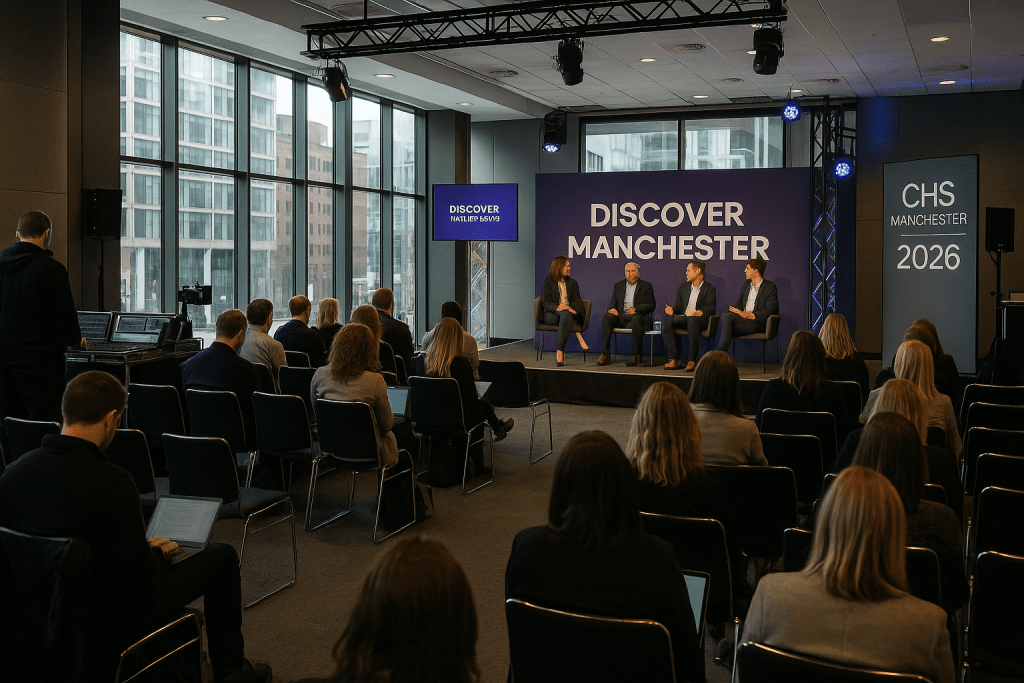
Manchester is set to use its homegrown trade show, CHS Manchester, as a live showcase of its capabilities as a conference and events destination, with the unveiling of the Discover Manchester stage programme for the 30 September 2026 edition of the show.
Manchester Convention Bureau, part of destination marketing organisation Marketing Manchester, has outlined a schedule of sessions on the Discover Manchester stage designed to give event planners concrete insight into what the city region can offer for future meetings, incentives, conferences and exhibitions.
Background and industry context
Destinations are increasingly using hosted buyer shows and regional exhibitions as platforms to demonstrate their event infrastructure, sector strengths and partner ecosystem. For cities like Manchester, which has invested heavily in digital innovation, transport connectivity and new venue stock, such platforms provide an opportunity to present a joined-up story to domestic and international organisers.
CHS Manchester has evolved into a focal point for the North of England’s meetings and events community, attracting corporate buyers, agencies and association planners. Within that context, a dedicated stage focused on the city itself reflects the growing importance of destination storytelling, data-led case studies and demonstrable value for event organisers looking beyond traditional venue showcases.
Key developments: Discover Manchester stage
The Discover Manchester stage will run a curated programme throughout CHS Manchester 2026, bringing together local partners, venue representatives and city stakeholders. The aim is to give planners a detailed view of how Manchester is pushing the envelope in event delivery and visitor experience, rather than simply presenting a static product showcase.
Sessions on the stage are being positioned as practical spotlights rather than high-level overviews. Content is expected to focus on how organisers can tap into Manchester’s infrastructure, sector expertise and community assets when planning conferences, exhibitions and incentive programmes in the region.
The bureau has framed the programme around the concept of providing both inspiration and implementation guidance. While aspirational storytelling about Manchester’s growth as a business events hub will feature, there is a clear emphasis on equipping delegates with actionable ideas on format design, delegate engagement and use of the city’s wider ecosystem.
Industry impact and opportunities
For the wider events sector, the Discover Manchester stage underscores a trend toward destinations taking a more active role in content production at trade shows. Rather than limiting their participation to exhibition stands and hosted buyer appointments, city and regional convention bureaux are increasingly curating their own education and insight tracks.
This approach can help bridge the gap between traditional destination marketing and the operational realities of event planning. By presenting case studies, local innovation stories and collaborative delivery models onsite at a show, convention bureaux can demonstrate how they function as strategic partners rather than purely promotional bodies.
Manchester’s decision to centre its programme on boundary-pushing event delivery also feeds into broader shifts around technology adoption and attendee expectations. As organisers look for cities that can support hybrid formats, advanced production, data capture and personalised visitor journeys, destinations must show how their venues, suppliers and civic infrastructure can work together to support these needs.
The Discover Manchester initiative may also serve as a model for other cities seeking to reposition themselves in a competitive marketplace. By using a regional event as a testing ground for destination-led content, bureaux can trial new messages, formats and collaborations that may later be scaled up for international trade shows.
Why this matters for event professionals and technology providers
For event planners, the Discover Manchester stage represents an opportunity to gain a concise, multi-stakeholder view of what the city region can offer without leaving the show floor. Instead of piecing together information through multiple one-to-one meetings, attendees can see how venues, accommodation providers, transport operators and experience suppliers align to support business events.
Access to practical insight is especially relevant for organisers exploring new destinations or rethinking their event formats. Sessions that examine the full delegate journey through Manchester — from arrival and wayfinding to social programmes and legacy initiatives — can help planners assess feasibility, cost implications and risk factors more accurately.
Technology providers working in areas such as registration, event apps, audience engagement or hybrid production may also find value in the programming. As Manchester showcases how it is enhancing visitor experience and event delivery, suppliers can better understand the local infrastructure, connectivity standards and partner ecosystem they may need to integrate with when supporting events in the city.
In addition, the emphasis on pushing boundaries could surface concrete examples of innovation around sustainability metrics, data analytics, accessibility and inclusivity. These are areas where both organisers and tech vendors are seeking clearer best practice and more robust collaboration with destinations and venues.
Conclusion
The announcement of the Discover Manchester stage programme for CHS Manchester 2026 signals a more content-driven and consultative role for Manchester Convention Bureau within the trade show environment. By using the platform to highlight real-world approaches to event delivery and visitor experience, the city aims to demonstrate its readiness to support more complex, tech-enabled and experience-led business events.
For the business events community, this development adds another example of how destinations are adapting their engagement strategies with planners. As competition between cities intensifies and organiser expectations evolve, initiatives like Discover Manchester suggest that the future of destination marketing will depend as much on actionable insight and collaboration as on traditional promotional activity.