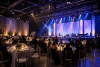
Preparing historic event venues for 2026 demand

Historic buildings are increasingly in demand as event spaces, with corporate planners, luxury wedding specialists and cultural organisers all competing for access to castles, theatres, manor houses and industrial heritage sites. Yet while these venues offer distinctive character and strong storytelling potential, they also pose complex operational and technical challenges that are becoming more acute as expectations rise towards 2026.
Securing a visually impressive venue is only the first step. Delivering a seamless, production-ready experience in a listed or protected building requires careful planning, investment in infrastructure, and close alignment between venue management, technology providers and event organisers.
Background: heritage meets high expectations
The push toward experiential events, premium hospitality and brand storytelling has drawn more organisers to heritage sites that offer a sense of place and history. At the same time, audiences and sponsors now expect the same reliability they would find in a purpose-built convention centre: robust connectivity, high-quality audio-visual systems, sustainability credentials and support for hybrid participation.
This combination can be difficult to achieve in venues that were constructed long before modern mechanical and electrical systems, let alone contemporary event technology. Load-bearing constraints, fragile interiors, conservation rules and limited access routes can make even basic tasks, such as running power or rigging lights, significantly more complex.
Looking ahead to 2026, venue operators are under pressure to reconcile heritage preservation with the operational standards required by international conferences, brand experiences and high-end private events. Those that succeed could secure a competitive advantage, while those that do not risk being bypassed in favour of more technically capable locations.
Key developments shaping historic venue readiness
Several trends are shaping how historic venues prepare for the next wave of demand:
- Infrastructure upgrades under constraints: Many operators are exploring discreet ways to introduce modern infrastructure without altering the building fabric. This can include hidden cable routes, removable rigging points, wireless solutions where feasible, and mobile control rooms that avoid permanent alterations.
- Hybrid and streaming requirements: Even where events are primarily in-person, organisers are increasingly requesting live streaming, on-demand capture and remote participation options. Historic venues must consider how to support encoding, uplink capacity, camera positions and lighting environments suitable for broadcast without compromising the look and feel of historic interiors.
- Power and data resilience: Additional power distribution, backup supplies and reliable data connections are becoming baseline requirements for technology-heavy productions. In older buildings, this often means working within limited existing power infrastructure, planning load carefully and coordinating with external suppliers for temporary installations.
- Accessibility and safety: Modern audiences and corporate clients expect inclusive design and rigorous safety standards. Venue upgrades may need to address accessible routes, evacuation plans compatible with historic layouts, and clear processes for crowd management, all while respecting conservation guidelines.
- Sustainability pressures: Organisers face scrutiny on carbon impact and material use. Historic buildings, with their age and construction methods, can be energy-intensive. Operators are examining how to improve efficiency, reduce waste from temporary builds and integrate greener technologies without extensive physical alterations.
Industry impact for venue operators and suppliers
The renewed focus on historic spaces is reshaping responsibilities across the event ecosystem. Venue operators are expected to move beyond basic hire models and present themselves as technically capable partners. This may involve building in-house production expertise, formalising preferred supplier lists, or establishing framework agreements with technology providers who understand heritage constraints.
Technical production companies, meanwhile, are adapting their service offerings to address the specific requirements of working in protected buildings. This can include specialist rigging teams trained in conservation-sensitive methods, compact equipment designed for low-impact installation, and modular systems that can be quickly deployed and removed.
For planners, the shift means more rigorous venue evaluations. Site visits increasingly focus not only on aesthetics and capacity, but also on Wi-Fi performance, backstage logistics, loading access, ceiling heights, acoustic properties and the feasibility of integrating audience engagement tools or hybrid platforms.
Industry bodies and local authorities may also see a role in supporting best practice guidance, balancing cultural heritage protection with the economic benefits of event activity. In some markets, this could lead to standardised guidelines for technical operations in listed buildings, giving both venues and organisers a clearer framework to work within.
Why this matters for event professionals and technology providers
For event professionals, the growing appeal of historic venues creates both opportunity and risk. Distinctive settings can enhance attendee experience, strengthen brand positioning and justify premium pricing. However, without early technical planning, the same venues can introduce budget overruns, schedule delays and reputational issues if basic operational needs are not met.
Planners considering heritage locations for 2026 and beyond may need to adjust their approach in several ways:
- Initiating technical dialogue with venues at the outset, not as a late-stage checklist
- Building additional time into planning for approvals, surveys and conservation sign-off
- Engaging production partners with demonstrable experience in similar buildings
- Adapting event formats to the capabilities and constraints of the space, rather than assuming arena-style production is possible everywhere
For technology providers, historic venues represent a growing segment requiring tailored solutions. There is scope to develop lower-impact rigging, power distribution and connectivity products; compact hybrid studios that can be temporarily embedded in existing rooms; and monitoring tools that help manage environmental conditions without intrusive hardware.
As client expectations continue to rise, suppliers able to demonstrate sensitivity to both technical and conservation requirements are likely to be favoured in procurement processes. Documented case studies, risk assessments and conservation-compliant methods may become as important as price and equipment lists.
Conclusion
Historic event venues are moving from niche choice to mainstream consideration for corporate, cultural and private events. With 2026 on the horizon, the sector faces a critical period of adaptation, as operators seek to align heritage value with modern event standards.
Those venues that invest in discreet infrastructure improvements, build strong relationships with specialist technology partners and clearly communicate their technical capabilities will be better positioned to capture demand. For planners and suppliers, the shift underlines the importance of detailed pre-planning, realistic expectations and solutions designed around the unique characteristics of older buildings.
As the market for distinctive, experience-led events grows, the ability to deliver reliable, technology-enabled productions within historic spaces will be a key differentiator across the events landscape.