US Open 2026 courtside activations point to evolving event experience trends
Background and context
The US Open 2026 is shaping up to be a significant case study in large-scale sports event production and fan engagement. Organisers are working within the framework of a record $108 million prize pool and an anticipated audience of around 1.2 million spectators across the tournament.
An $800 million renovation of the primary stadium complex is also influencing how space is used for spectators, hospitality, and sponsor activity. The upgraded facilities are expected to accommodate a larger number of branded environments and interactive zones, both inside and around the courts.
For event planners and experiential marketers, the tournament offers insight into how a major sports property is integrating live experiences, hospitality, and technology into a single on-site ecosystem.
Key announcement
Organisers and participating partners are planning more than 20 courtside and on-site brand activations throughout the 2026 event. These will span hospitality suites, fan zones, interactive installations, and digital-led experiences positioned near competition courts and main spectator routes.
The approach reflects a broader shift from traditional static sponsorship toward experience-based engagement. Activations are expected to combine physical build-outs with digital extensions, such as mobile integrations, content capture areas, and data-driven touchpoints.
While individual partners have not yet detailed every concept publicly, the scale of the planned activity suggests that courtside spaces will be used as key testing grounds for new experience formats, including pop-up lounges, immersive environments, and thematic food and beverage offerings.
Industry impact
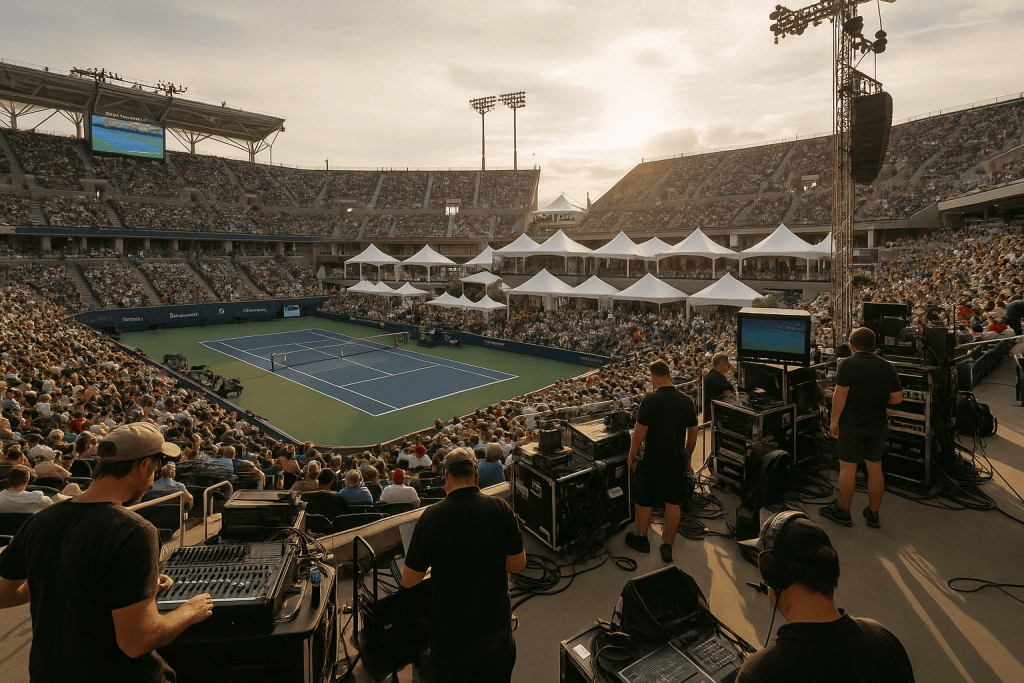
The volume and placement of these activations at the US Open 2026 highlight how sports events are increasingly being designed as multi-layered experiences rather than single-focus competitions. For production teams, this can mean more complex site planning, tighter scheduling, and closer coordination between broadcast, operations, and brand partners.
From an AV and event technology perspective, the trend points to rising demand for flexible infrastructure: modular staging, robust connectivity, LED displays, interactive kiosks, and integrated sound systems that can coexist with live match play without causing disruption.
It also underlines the importance of measurement and analytics. With so many on-site touchpoints, organisers and sponsors are likely to rely on digital tools to understand traffic flow, dwell time, and engagement patterns across different courts and fan zones.
Why this matters
For professionals in event technology and live experience design, the US Open 2026 serves as a practical example of how large venues are evolving to accommodate both core competition and sponsor-driven environments. The scale of investment in prize money and infrastructure underscores the commercial importance of the fan experience as a revenue and retention driver.
Vendors and agencies working in AV, staging, content production, and interactive installations can look to this tournament as a benchmark for what major rights holders now expect from on-site activations. Elements such as reliability under high footfall, seamless integration with broadcast and digital platforms, and rapid build-and-strike capabilities will be central requirements.
As the event approaches, further details on specific build-outs and technologies are expected to emerge, offering additional reference points for planners and suppliers. Those interested in the broader context of the tournament and venue updates can follow official information via the US Open website at usopen.org.