How Food and Beverage Strategy Is Reshaping Live Events
Food and beverage has moved from being a logistical afterthought to a central pillar of event experience design. From music festivals and city-wide celebrations to football stadiums and corporate events, organisers are rethinking how food and drink offerings shape audience satisfaction, dwell time and overall brand perception.
Where greasy fast-food vans and one-size-fits-all catering once dominated, many venues and promoters are now experimenting with curated food halls, chef-led concepts and locally sourced menus that reflect the character of the destination and the expectations of modern attendees.
Background: from functional catering to experience-led F&B
Historically, food and beverage provision at large events was driven by cost-efficiency and volume. Standardised menus, limited choice and long queues were widely tolerated as part of the live event trade-off. In recent years, however, rising consumer expectations, the influence of street food culture and growing competition for discretionary spend have elevated F&B from a basic service to a differentiating feature.
Specialist platforms and operators have emerged to connect organisers with independent traders, premium caterers and emerging culinary brands, enabling events to curate diverse line-ups of food and drink providers in the same way they book entertainment or speakers. This has opened the door to formats such as pop-up restaurants, rotating vendor rosters and thematic food zones tailored to the profile of each event.
At the same time, social media has amplified the visibility of food experiences. Instagrammable dishes, branded pop-ups and distinctive bar concepts can generate additional reach for events, while poor catering can quickly become a reputational risk. As a result, many organisers now treat food and beverage decisions as a core part of the event brand strategy, rather than a back-of-house procurement line.
Key developments in event food and beverage design
Across festivals, sports venues and business events, several trends are reshaping how food and drink are planned, procured and delivered.
- Pop-up restaurants and chef collaborations: Temporary restaurant spaces within festivals, stadium concourses or conference centres allow organisers to introduce well-known chefs or popular local restaurants as headline attractions. These experiences often operate on pre-booked sittings, adding a structured, premium component alongside more casual options.
- Local and regional produce areas: Dedicated zones featuring local traders, producers and craft beverage brands are increasingly common. These areas give attendees a sense of place, support regional businesses and offer a point of differentiation from generic catering lines that can appear at any venue.
- Hidden or secret food zones: Some organisers are experimenting with discovery-led experiences, where specific bars or food stalls are not heavily signposted but rewarded to those who explore the site or follow clues via event apps and social channels. These concepts encourage movement around the venue and can ease congestion in high-traffic areas.
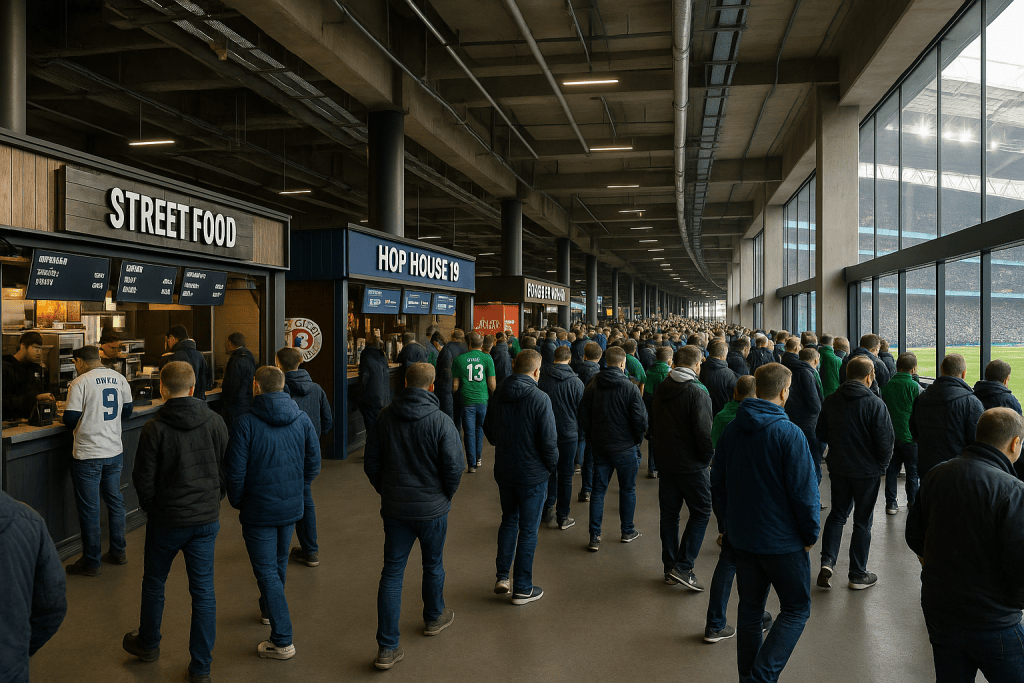
- Stadiums built around fan experience: New-build and refurbished sports venues increasingly integrate food and beverage into their architectural and operational planning. Concourse layouts, technology infrastructure and service workflows are designed to minimise queue times and maximise choice, recognising that in-venue spending and perceived value are tied closely to catering quality.
- Data-informed curation: Organisers and venues are beginning to use transaction and attendance data to refine vendor mixes, price points and service models. This enables more precise decisions about how many outlets are needed, which cuisines perform best at different times, and where to position mobile or pop-up units.
Industry impact across festivals, stadiums and corporate events
The shift towards more sophisticated food and beverage strategies is having operational, commercial and experiential consequences across multiple event formats.
For festivals and outdoor events, the move away from a handful of generic concessions towards dozens or even hundreds of specialised traders introduces both opportunity and complexity. Curated line-ups can drive ticket appeal and secondary spend, but they also require robust vendor management, power and water planning, health and safety oversight and payment infrastructure that can handle high transaction volumes.
In football stadiums and arenas, investment in concourse design, kitchen facilities and digital ordering is increasingly being viewed as core to the matchday proposition. Improved food and beverage options can influence season ticket renewal, hospitality package sales and the ability to host non-sporting events such as concerts or conferences. Modern stadiums are often marketed as all-day destinations rather than single-purpose venues, with food playing a central role.
Within the corporate and conference sector, delegates are now more likely to weigh the quality of catering alongside content and networking opportunities when assessing event value. Menus that accommodate diverse dietary requirements, reduce waste and offer healthier choices are becoming standard expectations. For organisers, this can mean partnering with more flexible caterers, adjusting schedule design to avoid congestion at meal breaks and integrating food touchpoints into sponsor activations.
Why this matters for event professionals and technology providers
The rise of experience-led food and beverage has implications for both operational teams and technology suppliers across the event ecosystem.
- Strategic planning: Event professionals now need to address F&B at the earliest design stage, alongside ticketing, content and production. Decisions about site layout, crowd flow, power distribution and signage are increasingly shaped by food and drink strategy.
- Vendor management platforms: As the number and diversity of traders at events grows, digital tools that manage onboarding, compliance documents, insurance, payments and performance data become more valuable. Technology providers have an opportunity to streamline what has traditionally been a spreadsheet-driven process.
- Payments and ordering: Contactless payments, mobile ordering and pre-pay packages can reduce queues and provide clearer forecasting for both organisers and vendors. Payment platforms that integrate with event apps and venue systems are well positioned to support multi-vendor environments.
- Data and analytics: Detailed insight into what sells, when and to whom can inform future programming, pricing and vendor selection. Technology that connects point-of-sale data with attendee profiles, ticket types or time-of-day patterns helps organisers optimise their F&B mix.
- Sustainability reporting: With sustainability under scrutiny, traceability of supply chains, food waste tracking and reusable packaging schemes are gaining prominence. Software that supports compliance reporting and impact measurement is increasingly relevant to event organisers under pressure to demonstrate responsible practice.
For suppliers, aligning product development with these needs—whether in logistics management, audience engagement, or back-of-house operations—can create new opportunities. For organisers, treating food and beverage as an integrated part of the experience rather than an outsourced necessity is rapidly becoming a competitive requirement.
Conclusion
The transformation of food and beverage from basic provision to central experience is reshaping how events are conceived, sold and delivered. Festivals are using curated food concepts to attract and retain audiences, stadiums are redesigning spaces around fan expectations, and corporate events are rethinking how catering supports networking and attendee wellbeing.
While the trend brings added complexity in logistics, compliance and vendor management, it also opens new avenues for revenue, brand differentiation and audience satisfaction. For event professionals and technology providers alike, the message is clear: food and beverage is no longer just background service. It is an integral part of the event value proposition, demanding the same strategic attention as programming, production and digital engagement.