Creative experiential concepts emerging from recent brand activations
Background and context
Experiential marketing continues to be a core strategy for brands aiming to stand out in a crowded media landscape. As in-person gatherings have returned at scale, event teams are experimenting with new ways to connect audiences to products, stories, and entertainment properties.
Recent activations from beauty, entertainment, and lifestyle brands have showcased how event designers are blending immersive environments, interactive content, and social-first design to create memorable in-person experiences. These projects offer a snapshot of where experiential trends are heading, and how creative teams are rethinking everything from staging to guest flow.
Across sectors, experiential agencies and internal brand teams are focusing less on large, one-off spectacles and more on modular, content-rich experiences that can be adapted for multiple markets and formats. This shift is particularly relevant for event professionals planning campaigns that must work across live, hybrid, and digital channels.
Key announcement
While no single product release is at the center of these recent examples, the core development is the continued evolution of experiential concepts that place audience participation at the heart of event design. Brands are piloting concepts that can generate organic content, encourage longer dwell times, and integrate seamlessly with social and digital strategies.
Among the tactics seen in recent months:
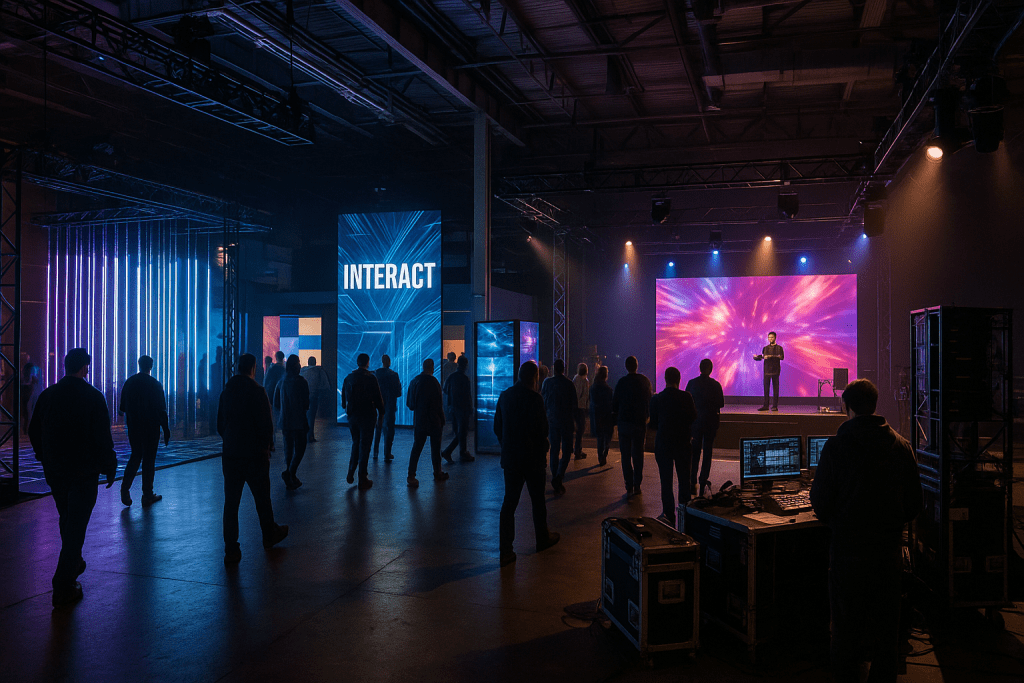
- Multi-sensory brand environments that combine lighting, soundscapes, and tactile elements to immerse guests in a narrative.
- Interactive zones built for filming and photography, encouraging attendees to create and share their own content.
- Hybrid-friendly content, such as live segments, short-form video vignettes, and behind-the-scenes access designed to extend reach beyond the physical venue.
- Collaborations between brands and entertainment properties, using themed sets, costumes, or storylines to deepen fan engagement.
These approaches reflect a broader industry move toward experience architectures that can be reused, scaled, and localized, rather than entirely bespoke one-off builds. Many providers now showcase such case studies through their official channels and product pages to guide planners seeking practical inspiration.
Industry impact
For event professionals, the ideas emerging from recent brand activations underscore how expectations around live experiences are changing. Attendees increasingly anticipate environments that are not only visually appealing but also participatory and easily captured on mobile devices.
This trend has several implications for the wider event technology and production ecosystem:
- Greater demand for flexible AV setups that support rapid content capture, from dynamic lighting cues to adaptable LED displays.
- Increased use of compact, mobile-friendly production tools to support social content teams on site.
- Closer coordination between creative, technical, and marketing teams to ensure that experiences work equally well for attendees on the ground and viewers online.
- Growing interest in analytics and feedback tools that help brands measure how interactive elements drive engagement and conversion.
Suppliers and solution providers that serve this market are responding with more modular staging, integrated content playback systems, and platforms that tie on-site activity to digital campaigns. Many of these offerings are cataloged and explained through their official websites, which now function as both product hubs and learning resources for planners.
Why this matters
For organizers, agencies, and venues, the concepts seen in high-profile brand activations serve as a testing ground for new formats that may soon become standard. Elements such as built-in content creation zones, responsive lighting and video, and narrative-driven space design are likely to filter into conferences, trade shows, and corporate meetings.
As budgets face scrutiny and stakeholders look for measurable outcomes, experiential ideas that can be repurposed, scaled, and extended online are particularly relevant. They help justify investment in physical events by creating assets and storytelling opportunities that live beyond a single date and location.
Ultimately, the recent wave of experiential ideas is less about spectacle and more about thoughtful, audience-centric design. For the event technology community, this means ongoing opportunities to collaborate on environments, tools, and workflows that make these experiences possible—while keeping production practical, repeatable, and aligned with broader marketing goals.