QEII Centre reinforces role as flexible London event hub

In central London, the QEII Centre continues to serve as one of the capital’s key meeting and events venues, offering a mix of flexible spaces and a location designed to attract both domestic and international organisers. Established in the mid-1980s, the venue has evolved into a multi-purpose hub for conferences, exhibitions, awards ceremonies and other corporate gatherings.
Background and industry context
Opened in 1986, the QEII Centre has grown alongside London’s broader meetings and events market, which has consistently ranked among the world’s leading destinations for association congresses, trade shows and corporate events. Its position in Westminster places it within easy reach of government departments, business districts, cultural landmarks and a wide transport network, making it a practical option for organisations seeking strong delegate draw.
Over nearly four decades, the venue has operated in an environment of changing event formats and expectations. Organisers now weigh not only room capacities and catering, but also the technical infrastructure needed for live streaming, hybrid participation and complex production, as well as onsite services that can support tight build schedules and high production values.
Key developments at the venue
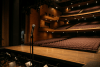
The QEII Centre offers 32 distinct event spaces that function as modern, adaptable environments for a broad range of formats. These spaces are designed as blank canvases, allowing production teams to tailor layouts, staging and branding for different sectors and event types.
The venue’s room mix supports:
- Large-scale conferences and conventions requiring plenary halls and multiple breakout rooms.
- Corporate dinners, award ceremonies and gala events needing flexible stage and seating configurations.
- Fashion shows, product launches and showcases that depend on clear sightlines, lighting rigs and exhibitor areas.
- Smaller meetings, training sessions and workshops with more intimate capacity requirements.
While individual technical specifications vary by room, the centre’s overall proposition is based on modern facilities that can integrate audiovisual and event technology solutions required by contemporary organisers. Production teams typically use the spaces as a neutral base on which to build custom lighting, sound, set design and hybrid broadcasting capabilities.
The venue’s central London setting also underpins its continuing relevance for international meetings. Proximity to major hotels, public transport hubs and cultural attractions allows organisers to combine business agendas with networking, hospitality and social programmes that are often critical to delegate satisfaction and sponsor value.
Industry impact
As the events sector continues to stabilise and develop post-pandemic, venues with strong location advantages and flexible infrastructure are influencing how organisers design their calendars. The QEII Centre’s scale and adaptability mean it can host everything from single-day meetings to multi-day congresses, which supports a more diverse pipeline of events coming into London.
For international associations and corporate planners assessing destinations for recurring events, the availability of a large, central venue with multiple room options can be a deciding factor. It allows organisers to centralise their activities, minimise delegate travel across the city and maintain tighter control over production quality by operating largely within one building.
This type of venue also plays a role in supporting suppliers across the events ecosystem. AV and production companies, event technology providers, exhibition contractors and creative agencies often benefit from working in spaces that are familiar with complex builds and have the physical and logistical capacity to support large teams during short installation and de-rig windows.
Why this matters for event professionals and technology providers
For event organisers, the QEII Centre’s combination of blank canvas rooms and established operational processes offers flexibility in programme design. Teaming this with the venue’s location can help attract speakers, sponsors and delegates who value ease of access and time-efficient logistics.
From a technology perspective, venues of this scale are increasingly expected to support hybrid event formats and high-end content capture. While specific configurations depend on each organiser’s requirements, multi-room venues with modern infrastructure are typically better positioned to accommodate:
- Live streaming from plenary spaces to remote audiences or satellite rooms.
- Simultaneous breakout sessions with integrated AV and recording.
- Onsite studios or content zones for stakeholder interviews, sponsor messages and post-event assets.
- Temporary deployment of event apps, registration systems and analytics tools.
Technology providers working with such venues can build repeatable workflows for set-up and integration, which can reduce technical risk across multiple events. For organisers, the ability to replicate or scale successful formats within a familiar venue can simplify long-term event planning.
In addition, the centre’s role as a high-profile London venue means it can act as a testing ground for new event technologies. Innovations in audience engagement, data capture, signage, networking tools or sustainable production practices can often be piloted at larger venues where there is sufficient footfall and a variety of event types.
Conclusion
The QEII Centre remains a significant piece of London’s event infrastructure, offering centrally located, adaptable spaces that can be configured for a broad spectrum of corporate and institutional events. Its 32 rooms, designed as flexible blank canvases, give organisers scope to shape experiences ranging from formal conferences and exhibitions to creative brand activations and celebratory occasions.
As demand grows for technology-enabled and hybrid-ready venues, facilities like the QEII Centre are likely to stay at the forefront of the UK’s business events landscape. For planners and suppliers operating in or targeting London, the venue continues to provide a practical, established base from which to design and deliver complex, multi-format events.