What corporate events can learn from live music and theatre
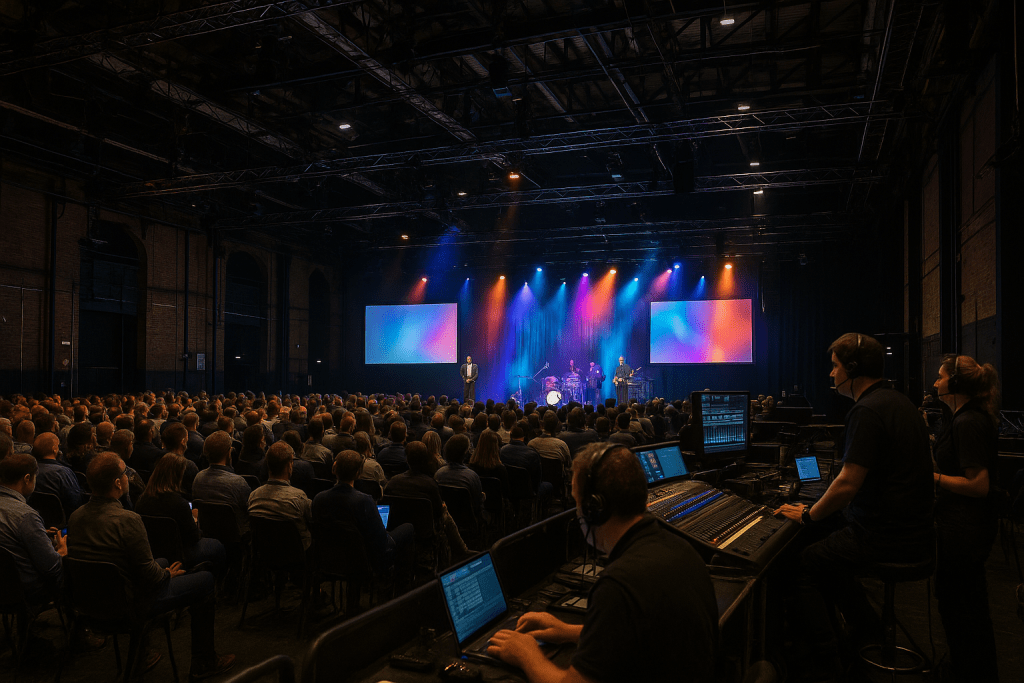
Corporate events are increasingly borrowing from the playbooks of live music and theatre as organisers look for deeper audience engagement, stronger emotional impact and more memorable experiences. At Aviva Studios in Manchester, home to Factory International and one of the UK’s most prominent new venues for large-scale performance and contemporary culture, event teams are testing how the tools of cultural programming can be translated into conferences, exhibitions and brand gatherings.
The result is a growing crossover space where a keynote presentation might share the same stage configuration as a concert, or a corporate product launch is framed with the atmosphere of an immersive theatre production. Concepts such as belonging, ambience and emotional connection, long familiar in the performing arts, are starting to shape strategic decisions in the business events sector.
Background: culture and corporate events converge
The shift towards more experiential formats in business events has been underway for several years, accelerated by hybrid event models and changing attendee expectations. Delegates who regularly consume high-quality entertainment, live music and on-demand content now expect similar production values and narrative coherence from conferences and internal meetings.
Venues like Aviva Studios, designed from the outset to host both large-scale artistic work and commercial bookings, are at the centre of this convergence. Their infrastructure, technical capabilities and creative teams are used to building immersive worlds for audiences, whether for international arts festivals, contemporary performance or large public installations. When applied to corporate events, the same capabilities can be used to move beyond standard stage-and-screen layouts.
Rather than treating cultural programming and business events as separate categories, operators are beginning to use one to inform the other. A theatre show’s focus on storytelling, pacing and emotional arc, or a music event’s use of lighting and sound to build anticipation, are increasingly seen as relevant to product launches, leadership summits and customer conferences.
Key developments at Aviva Studios
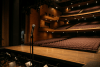
Aviva Studios offers a practical case study of this trend. The venue is the home of Factory International, a major producer of new art and performance in the UK, and has been configured to host both complex cultural productions and large-scale commercial events under one roof. Its flexible spaces, including a massive warehouse-style hall and adaptable theatre environment, allow for rapid reconfiguration from a music gig to a conference to an installation.
Event managers at the venue report that corporate clients are increasingly interested in approaches more typical of cultural programming. Rather than simply hiring a room and AV package, organisers are asking how to build a journey for attendees from the moment they arrive on site to the moment they leave. That includes foyer experiences, unexpected interventions and opportunities for audiences to co-create aspects of the event.
Staging choices can be influenced by the venue’s work with live performance. For example, a corporate session might adopt in-the-round seating formats often used in theatre to create intimacy and encourage participation, or repurpose large-scale scenic elements originally built for an art installation. Use of lighting design, soundscapes and spatial audio — common in live music — can be integrated into plenary sessions or product demonstrations.
Some events also experiment with playful or surprising elements more familiar from festivals or public art. While the details vary from project to project, the ambition is the same: to make the environment feel less transactional and more like a shared cultural moment, even when the underlying objectives are commercial or internal.
Industry impact: experience as a strategic asset
This blending of cultural techniques and corporate requirements is influencing how event strategies are developed. Experience design is no longer treated as surface-level production, but as a core component of achieving business outcomes such as employee engagement, customer loyalty and knowledge retention.
In practical terms, that can mean involving creative directors or dramaturgs alongside traditional event planners, bringing in artists and performers for collaboration, or using rehearsal models adapted from theatre to test audience flow and participation. Venues with strong cultural programming teams are positioning themselves as partners in content and experience, not just suppliers of space.
For event technology providers, the crossover is also reshaping expectations. Tools developed for live performance — real-time lighting control, show-calling software, spatial audio systems, generative visuals and interactive installations — are being evaluated for conference use. Similarly, data and analytics platforms built for business events are being considered for cultural settings, closing the loop on attendee feedback and behavioural insight.
This convergence may also influence how budgets are allocated. Rather than concentrating spend solely on headliners or keynote speakers, organisations are reserving resources for scenography, audience engagement tools and pre- and post-event digital experiences. The overall objective is to ensure that the atmosphere supports the message, not distracts from it.
Why this matters for event professionals and technology providers
For event planners, the lessons from live music and theatre foreground three themes: belonging, atmosphere and emotional connection. Attendees who feel like they are part of a temporary community — similar to an audience at a performance — are more likely to participate, network and remember key messages. This is especially relevant in internal meetings, leadership events and association conferences where behaviour change and alignment are core goals.
Atmosphere, often treated as intangible, becomes operationalised when viewed through a cultural lens. Everything from arrival routes and signage to sound levels, lighting temperature and seating design contributes to how people feel in a space. By applying the rigour of theatre production to these elements, professionals can design events that support focus when needed, energise delegates at key moments and provide calm zones for reflection.
Emotional connection, meanwhile, is not only the domain of brand storytelling. Theatre and live performance rely on carefully structured narratives, pacing and crescendo to keep audiences engaged. Translating these concepts into agendas means rethinking long slide presentations, building in narrative arcs across the day, and using varied formats — from panel discussions to performances or live demonstrations — to maintain attention.
Technology suppliers have an opportunity to support this shift by ensuring that their platforms and tools can handle both the reliability demands of corporate events and the creative flexibility expected in live performance. This includes robust show control, high-fidelity audio-visual delivery, integration with interactive tools, and the ability to support unconventional layouts or immersive environments.
Conclusion
The emerging practices at venues such as Aviva Studios signal a broader redefinition of what corporate events can be. Rather than simply borrowing aesthetic cues from festivals and theatre, business events are beginning to adopt the underlying principles that make cultural experiences compelling: a sense of shared purpose, carefully crafted atmosphere and emotional resonance.
As the boundaries between cultural programming and corporate gatherings continue to blur, event professionals who understand both worlds will be well positioned. Those who can translate stagecraft into strategy — and who can work effectively with creative teams, venue partners and technology providers — are likely to shape the next generation of conferences, exhibitions and hybrid events.
For the wider industry, the convergence offers both challenges and new avenues for differentiation. Organisations that treat their events less as isolated meetings and more as cultural experiences in their own right may find that delegates are not just informed, but genuinely moved — and more likely to act on what they have seen and heard.