How Technology is Creating Sensory-Friendly Spaces for Neurodivergent Attendees
Introduction: Rethinking Event Design Through Sensory Inclusion
Modern events are designed to be immersive, energetic, and highly stimulating. While this enhances engagement for many, it can create significant barriers for neurodivergent attendees—including individuals with autism, ADHD, sensory processing sensitivities, and anxiety-related conditions.
Bright lights, loud audio, dense crowds, and unpredictable environments can quickly become overwhelming. As a result, inclusion in events is no longer just about physical accessibility—it must also address sensory accessibility.
Technology is playing a critical role in this shift. By enabling adaptive environments, personalized experiences, and real-time control, it allows event organizers to design spaces that are not only engaging but also comfortable and inclusive for diverse sensory needs.
Understanding Sensory Challenges in Event Environments
Event environments often present multiple sensory stressors simultaneously:
- Visual overload from bright lights, flashing effects, and large displays
- Auditory overload from loud speakers, overlapping conversations, and ambient noise
- Spatial stress from crowded, fast-moving environments
- Unpredictability in schedules, transitions, and environmental changes
For neurodivergent attendees, these factors can lead to fatigue, anxiety, or disengagement.
Creating sensory-friendly environments requires both environmental design and technology-enabled control.
Technology-Enabled Sensory Adaptation
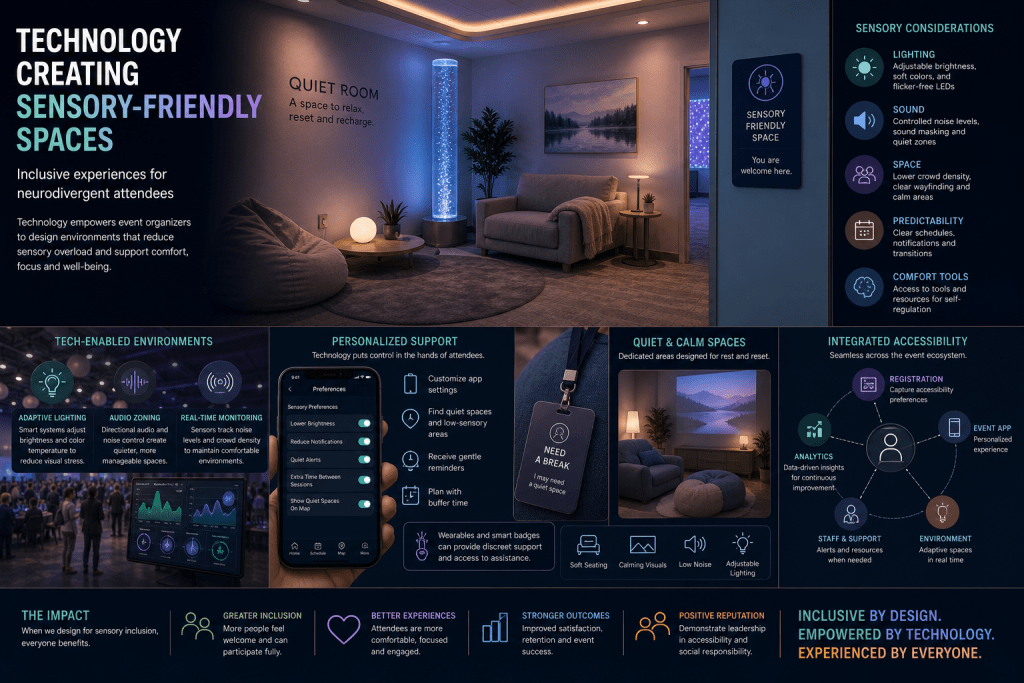
Adaptive Lighting Systems
Lighting is one of the most impactful sensory factors in events.
Modern lighting systems enable:
- Adjustable brightness levels
- Flicker-free LED configurations
- Warm, low-intensity lighting zones
Programmable lighting allows organizers to create calm areas separate from high-energy spaces, reducing visual stress.
Audio Zoning and Noise Control
Advanced audio systems can create controlled sound environments.
Key capabilities include:
- Directional speakers that limit sound spill
- Quiet zones with reduced ambient noise
- Noise-cancelling headphone integration for attendees
Some events provide personal audio control through mobile apps, allowing users to adjust volume levels or select quieter audio feeds.
Spatial Design with Technology Support
Technology helps manage how people move and interact within spaces.
Examples include:
- Real-time crowd density monitoring to prevent overcrowding
- Digital wayfinding systems that guide attendees to less congested areas
- Sensor-based flow management to maintain comfortable environments
These systems reduce stress caused by crowding and unpredictability.
Personalized Experiences Through Digital Platforms
Event Apps with Sensory Controls
Modern event apps are evolving to support accessibility preferences.
Features may include:
- Customizable notifications (reducing sudden alerts)
- Personalized schedules with buffer times
- Maps highlighting quiet zones and low-stimulation areas
Some platforms allow attendees to pre-select sensory preferences, enabling tailored recommendations.
Wearables and Assistive Devices
Wearable technology can support sensory regulation.
Examples include:
- Smart badges or wristbands that signal when an attendee needs assistance or space
- Integration with calming devices such as vibration tools or biofeedback systems
These tools provide discreet support without drawing attention.
Real-Time Feedback Systems
Attendees can provide feedback on their experience in real time.
This allows organizers to:
- Adjust environmental conditions dynamically
- Identify stress points within the venue
- Improve accessibility during the event, not just after
Designing Dedicated Sensory-Friendly Zones
Quiet Rooms and Calm Spaces
Technology-enhanced quiet zones are becoming standard in inclusive events.
These spaces typically include:
- Soft, adjustable lighting
- Minimal noise and visual stimuli
- Comfortable seating and calming visuals
Environmental controls allow these spaces to remain stable and predictable.
Transition Spaces
Moving from high-energy areas to calm zones can be abrupt. Transitional spaces help attendees adjust gradually.
These areas may use:
- Gradual lighting changes
- Reduced audio intensity
- Visual cues for navigation
Integration with Broader Event Systems
Sensory-friendly technologies are most effective when integrated into the overall event architecture.
Data-Driven Environment Management
Event systems can use data from sensors, apps, and wearables to:
- Monitor crowd density
- Adjust lighting and audio dynamically
- Optimize space usage in real time
Coordination Across Systems
Lighting, audio, registration, and navigation systems must work together to support accessibility.
For example:
- Registration systems can capture accessibility preferences
- Event apps can reflect these preferences in real time
- On-site systems can adapt environments accordingly
Operational and Cultural Impact
For Attendees
Sensory-friendly environments enable:
- Greater comfort and reduced anxiety
- Increased participation and engagement
- A sense of inclusion and respect
For Organizers
Inclusive design expands audience reach and improves overall experience quality. It also demonstrates commitment to accessibility and social responsibility.
For the Industry
As awareness grows, sensory inclusion is becoming a standard expectation rather than a differentiator.
Challenges and Considerations
Balancing Experience Design
Events must balance high-energy experiences with accessibility needs. This requires thoughtful zoning and clear communication.
Awareness and Adoption
Attendees must be aware of available resources. Clear signage, app integration, and staff training are essential.
Privacy and Sensitivity
Collecting sensory preference data must be handled carefully, with transparency and consent.
Future Outlook: Toward Fully Adaptive Event Environments
The next phase of sensory-friendly design will involve fully adaptive environments.
AI-Driven Personalization
AI systems will adjust lighting, audio, and navigation based on real-time attendee behavior and preferences.
Predictive Environment Management
Systems will anticipate crowd surges or stress points and adjust conditions proactively.
Deeper Integration with Wearables
Wearables may provide biometric feedback, enabling environments to respond to stress levels in real time.
Conclusion: Designing for Everyone
Technology is enabling a fundamental shift in how events are designed—from one-size-fits-all environments to adaptive, inclusive systems.
Creating sensory-friendly spaces is not about reducing the richness of events—it is about expanding accessibility so that more people can participate fully.
For event technology leaders, the goal is clear: design environments that are not only engaging but also respectful of diverse sensory needs, ensuring that every attendee can experience events comfortably and meaningfully.