Modular Stand Platform offers New Option for Conference Sponsor Space
Organisers of business conferences are increasingly looking beyond traditional shell schemes, pop-up banners and fully bespoke builds when planning sponsor areas. A modular stand platform is emerging as a fourth option, aiming to balance professional presentation with the time and budget constraints of short-format events.
This alternative approach is designed for conferences where sponsors may have only a few hours of exhibition time alongside dense content programmes. It seeks to provide a more polished and consistent visual environment than ad hoc pop-ups, without the cost and complexity of individual custom stands.
Modular Structure targets One-Day Conference Format
The modular sponsor stand concept focuses on events where exhibition windows are compressed into coffee breaks, lunch slots and networking sessions. Organisers in this segment often face pressure to maximise sponsor value and visibility, while working within smaller floorplans and limited build-up time.
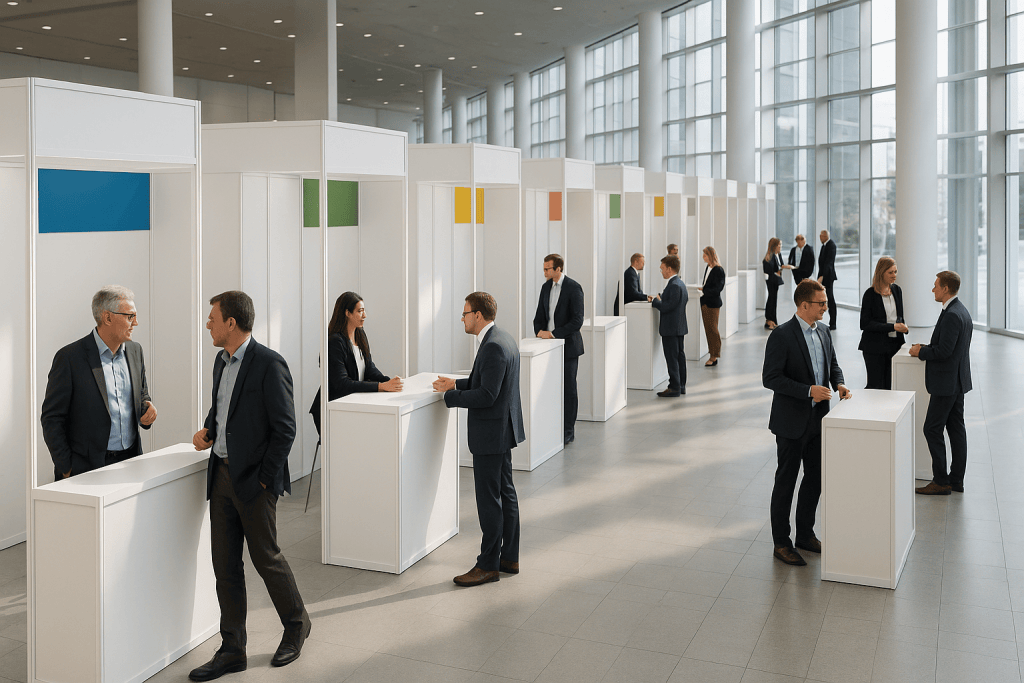
With a modular approach, the exhibition zone is planned as a unified structure built from repeatable components. Each sponsor is allocated a defined space within this framework, which can be configured to suit venue layouts and expected footfall patterns. The format is intended to be installed and dismantled quickly, reducing on-site logistics and time in the hall.
Stand Option sits between Shell Scheme and Bespoke Build
For many conferences, the default choices have been either standard shell schemes with printed panels, lightweight pop-up displays, or large-scale custom builds more commonly seen at trade shows. The modular platform positions itself between these models.
Compared with a shell scheme, the structure is conceived to offer a more contemporary look and a stronger sense of cohesion across the sponsor area. Unlike fully bespoke builds, the system reuses core components from event to event, which can help maintain consistent quality and reduce waste.
Organisers can define fixed sponsor footprints, such as small counters or larger meeting pods, and then repeat these across the floor. This creates a uniform baseline, while still allowing sponsors to differentiate through branding and content.
Visual Consistency and Visitor Flow are Central Design Goal
The modular system is designed to give the sponsor zone a clear architectural identity within the wider conference environment. Instead of a mix of varied pop-ups and individual structures, the space is shaped as a single, coherent destination that visitors can easily navigate.
Layouts can be configured in straight aisles, clusters or island formations, depending on venue constraints. Circulation routes, entrances and focal points such as coffee stations can be integrated into the plan to encourage repeat visits during breaks.
By standardising the basic form of each stand, organisers can also manage sightlines, density and crowding more predictably. This can be beneficial in venues where ceiling heights, access points or fire regulations limit how exhibition hardware can be arranged.
Branding and Messaging use Shared Structural Elements
Within the modular frame, sponsors can apply their own branding across predefined surfaces. These typically include fascia positions, vertical panels and counters sized to accept interchangeable graphics or wrap materials.
The shared structural language means that each sponsor benefits from a professional finish without needing to design every element from scratch. At the same time, the use of removable panels or skins allows for rapid rebranding between conferences with different sponsor line-ups.
This allows organisers to promote the sponsor area as a curated feature of the conference, while still providing individual exhibitors with opportunities to highlight their messaging, logos and key product information.
Operational Efficiency and Reuse support Event Schedule
For event teams managing tight turnaround windows, the modular platform is built around rapid assembly and repeat deployment. Components are designed to be transported compactly, installed in a short build slot and removed with minimal disruption after the event.
Because the same structural kit can be reused across multiple conferences, organisers and production partners can standardise processes such as storage, transport and crew training. This can simplify planning, particularly for series of events that rotate through different venues.
Shorter on-site build times also help reduce overlap with other technical departments working on staging, audiovisual systems and seating, which is often a logistical challenge in busy conference schedules.
Sponsor Experience focuses on Engagement Time
The sponsor stand format is tailored to the reality that conference exhibitors have limited windows to connect with delegates. The modular design emphasises clear lines of approach, open fronts and straightforward product presentation to encourage quick interactions.
Within their allocated space, sponsors can bring portable demonstrations, screens or literature, but the core infrastructure is handled centrally. This reduces the need for each sponsor to manage structural elements and allows them to focus on content and staffing.
From the organiser perspective, the consistent layout can make it easier to communicate sponsor benefits, such as guaranteed visibility, proximity to catering or positioning near session rooms.
Option adds Flexibility for Conference Production Teams
The arrival of a modular sponsor platform gives production teams another tool when balancing budgets, expectations and venue constraints. For some events, traditional shell schemes or simple pop-ups may continue to be appropriate; for others, bespoke builds will remain a priority.
The modular approach is aimed at organisers seeking a middle path, where sponsor zones are visually integrated into the wider event design but remain practical to deliver within tight timeframes. As conferences continue to emphasise content-driven programmes, this fourth option offers a structured way to maintain sponsor presence without dominating floor space.
For venues and suppliers working in the conference and exhibition segment, the trend towards modular sponsor areas may shape how floorplans are designed, how services are routed and how ancillary spaces such as storage and access corridors are used. As more organisers explore alternatives to traditional stand formats, modular platforms are likely to feature in discussions about how to balance experience, efficiency and cost in the sponsor journey.