Gamified Q&A: Moving Beyond Basic Polling to Interactive Ecosystems
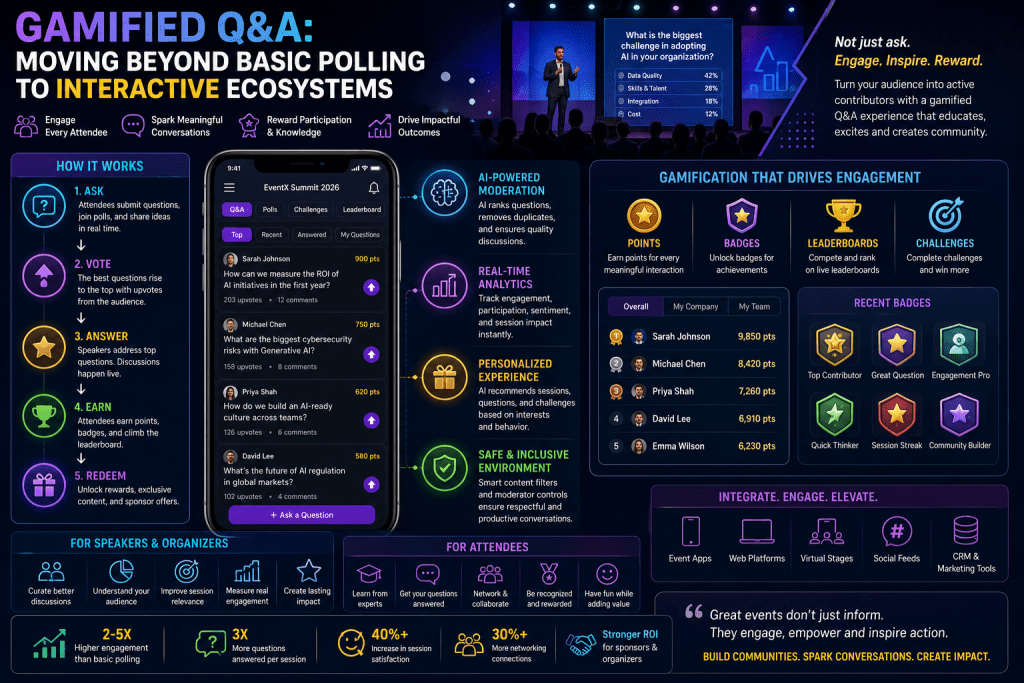
Gamified Q&A: Moving Beyond Basic Polling to Interactive Ecosystems
Audience engagement has become one of the defining success metrics for modern events. Whether at conferences, trade shows, product launches, corporate town halls, or educational summits, attendees increasingly expect to participate rather than simply observe. As hybrid and in-person experiences continue to converge, traditional one-way presentations are giving way to interactive formats that encourage collaboration, discussion, and real-time feedback.
For years, live polling platforms helped event organizers introduce audience participation through multiple-choice questions and simple surveys. While these tools remain useful for gathering opinions and measuring sentiment, they often generate only short bursts of engagement. Once a poll closes, attendee interaction frequently returns to passive listening.
In 2026, event technology is moving beyond basic polling toward fully gamified Q&A ecosystems. Powered by artificial intelligence, real-time analytics, mobile event platforms, digital badges, leaderboards, and personalized engagement mechanics, these systems transform audience participation into an ongoing interactive experience rather than an isolated activity.
The result is deeper attendee involvement, higher-quality discussions, richer educational outcomes, and measurable engagement that extends throughout the entire event lifecycle.
Why Traditional Polling Is No Longer Enough
Basic polling tools have served event organizers well by enabling quick audience feedback.
Typical use cases include:
- Opinion polls
- Session ratings
- Knowledge checks
- Icebreaker questions
- Live voting
Although effective, these interactions are often brief and transactional.
Common limitations include:
- Low repeat participation
- Limited discussion
- Minimal personalization
- Little long-term motivation
- Few networking opportunities
As attendee expectations evolve, organizers need engagement models that encourage continuous participation rather than occasional responses.
What Is a Gamified Q&A Ecosystem?
A gamified Q&A ecosystem combines audience participation tools with game design principles that reward engagement over time.
Instead of simply asking questions, these platforms create interactive environments where attendees earn recognition for meaningful participation.
Activities may include:
- Asking thoughtful questions
- Voting on audience submissions
- Solving session challenges
- Completing educational quizzes
- Participating in discussions
- Visiting sponsor booths
- Collaborating with peers
Every interaction contributes toward personalized engagement goals.
Core Technologies Behind Gamified Q&A
Modern engagement platforms rely on several interconnected technologies.
Artificial Intelligence
AI continuously evaluates audience behavior to prioritize relevant questions, recommend discussion topics, and personalize participation opportunities.
Rather than displaying questions chronologically, AI identifies submissions most likely to generate valuable discussion.
Mobile Event Applications
Most interactions occur through official event apps, allowing attendees to:
- Submit questions
- Vote on discussions
- Track achievements
- Earn rewards
- Receive notifications
This creates a seamless participation experience throughout the event.
Cloud-Based Analytics
Engagement data is processed in real time, providing organizers with immediate visibility into audience activity.
AI-Powered Question Management
One of the greatest challenges during live Q&A sessions is handling large volumes of audience questions.
Artificial intelligence improves moderation significantly.
Intelligent Question Ranking
AI analyzes submissions based on:
- Topic relevance
- Audience voting
- Speaker context
- Session objectives
- Duplicate detection
The highest-value questions rise automatically.
Duplicate Consolidation
Large audiences frequently submit similar questions.
AI combines related submissions into unified discussion points, reducing repetition while ensuring important topics receive attention.
Sentiment Analysis
Machine learning evaluates audience sentiment throughout discussions.
Speakers can better understand:
- Audience interest
- Confusion
- Agreement
- Curiosity
allowing presentations to adapt dynamically.
Game Mechanics That Drive Participation
Effective gamification depends on thoughtful incentive design rather than superficial competition.
Digital Points
Participants earn points for activities such as:
- Asking approved questions
- Voting constructively
- Completing session challenges
- Providing peer feedback
Points encourage ongoing engagement.
Achievement Badges
Attendees may unlock badges recognizing accomplishments including:
- Knowledge Contributor
- Discussion Leader
- Networking Champion
- Session Explorer
Badges provide lasting recognition without emphasizing only competition.
Leaderboards
Leaderboards introduce friendly competition while highlighting active contributors.
Many events display rankings by:
- Individual participants
- Teams
- Organizations
- Departments
to encourage collaborative participation.
Personalizing the Experience
Artificial intelligence enables highly individualized engagement.
Adaptive Challenges
Rather than assigning identical activities to every attendee, AI recommends participation opportunities aligned with individual interests.
Examples include:
- Technical discussions
- Product demonstrations
- Networking sessions
- Educational workshops
This increases relevance and motivation.
Learning Path Integration
Educational conferences increasingly connect gamified Q&A with certification programs.
Participants earn progress by actively contributing throughout learning sessions.
Context-Aware Recommendations
Based on session attendance and interaction history, AI suggests future discussions likely to match attendee interests.
Enhancing Hybrid Events
Gamified ecosystems are particularly valuable for hybrid audiences.
Equal Participation
Remote attendees receive the same opportunities to:
- Ask questions
- Vote
- Earn rewards
- Join discussions
This reduces the distinction between virtual and in-person participation.
Continuous Engagement
Interactive mechanics help maintain attention during long virtual sessions where audience fatigue is common.
Global Collaboration
Participants from multiple countries can collaborate through shared discussion spaces regardless of physical location.
Sponsor and Exhibitor Opportunities
Gamified Q&A creates new engagement channels for sponsors.
Sponsored Challenges
Exhibitors can host:
- Product quizzes
- Technical challenges
- Innovation competitions
- Interactive demonstrations
Participants receive points while learning about sponsor solutions.
Reward Integration
Organizations may exchange engagement points for:
- Digital rewards
- Exclusive content
- VIP experiences
- Product demonstrations
This strengthens sponsor visibility without interrupting educational content.
Better Lead Qualification
Sponsors gain insights into attendee interests through participation behavior rather than relying solely on booth visits.
Operational Benefits for Organizers
Gamified engagement generates valuable business intelligence.
Rich Analytics
Organizers can measure:
- Participation rates
- Discussion quality
- Session engagement
- Knowledge retention
- Audience sentiment
These insights support continuous event improvement.
Improved Session Quality
High-quality audience questions often produce stronger discussions than traditional presenter-led formats.
Extended Event Lifecycles
Engagement platforms frequently remain active after events conclude, supporting ongoing community interaction.
Challenges and Considerations
Successful gamification requires careful balance.
Reward Meaningfully
Points should reinforce valuable participation rather than encouraging excessive activity without substance.
Quality should outweigh quantity.
Avoid Over-Competition
Some attendees may prefer collaboration over competitive rankings.
Offering multiple participation pathways improves inclusivity.
Moderation Remains Essential
AI assists moderation but should not replace human oversight for sensitive or complex discussions.
The Future of Interactive Event Engagement
Several emerging technologies are expected to expand gamified Q&A capabilities.
Future innovations include:
- AI-generated discussion prompts
- Personalized learning companions
- Augmented reality participation
- Voice-based audience interaction
- Wearable engagement tracking
- Blockchain-based achievement credentials
- Digital twin audience analytics
These technologies will create increasingly intelligent and adaptive engagement ecosystems.
Conclusion
Gamified Q&A is redefining audience participation by transforming isolated polling activities into continuous interactive experiences. Through artificial intelligence, personalized challenges, achievement systems, intelligent moderation, and real-time analytics, organizers can create events where attendees actively contribute rather than passively consume information.
The benefits extend well beyond engagement metrics. Participants retain knowledge more effectively, speakers receive higher-quality questions, sponsors gain richer interactions, and organizers obtain valuable behavioral insights that improve future events.
As conferences and hybrid experiences continue evolving, successful engagement strategies will rely less on asking audiences to answer occasional polls and more on creating intelligent ecosystems that encourage curiosity, collaboration, and meaningful participation throughout every stage of the event journey. The future of event interaction is no longer about collecting responses—it is about building communities that learn, contribute, and engage together.