Farnborough Airshow Highlights Shift From Footfall to Measurable Value
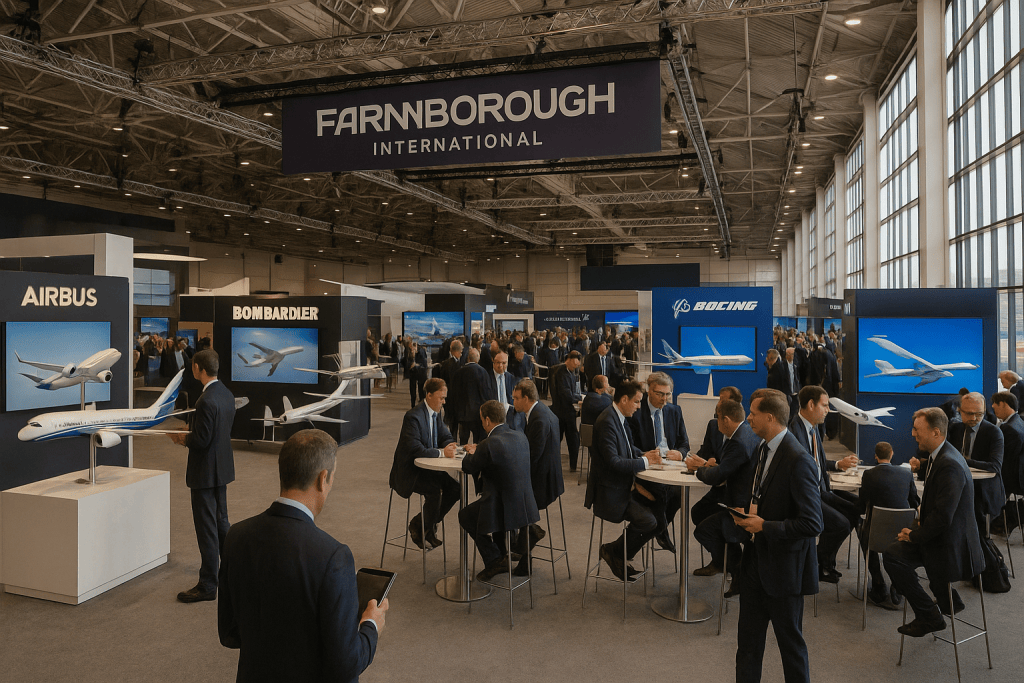
Farnborough International Airshow has long been a barometer for the aerospace and defence community, but recent editions have also become a reference point for how large-scale trade events are evolving. While anecdotal comments from exhibitors and visitors focused on how busy the show felt, the real story emerging from Farnborough is that success is no longer defined simply by crowd size. Instead, organisers, exhibitors and technology providers are increasingly focused on data, quality of interactions and measurable commercial outcomes.
Background and industry context
Major trade shows across sectors are facing similar pressures: mounting costs, heightened sustainability expectations and closer scrutiny of return on investment from both exhibitors and attendees. In this environment, counting footfall or filling aisles is no longer sufficient justification for substantial budget commitments.
Large business events, particularly in industries such as aerospace, defence and advanced engineering, are now expected to act as curated marketplaces where high-value deals are initiated, partnerships are formalised and innovation is showcased to precisely targeted audiences. For organisers, this means balancing the logistical demands of a global exhibition with the data-driven expectations of exhibitors that increasingly benchmark events against digital marketing performance.
This shift has opened up a much wider role for event technology platforms, which are being asked not only to support registration and access control but also to capture detailed interaction data, enable advanced matchmaking and provide transparent reporting on engagement and pipeline generation.
Key developments at Farnborough
The most recent Farnborough International Airshow underlined these dynamics. Exhibition halls, national pavilions and hospitality spaces reported dense meeting schedules and strong international representation, but the conversations behind the scenes focused on the quality and traceability of those interactions.
Organisers have progressively invested in digital infrastructure and data tools to give exhibitors more insight into who they are meeting, when, and with what outcome. Capabilities such as pre-event matchmaking, meeting scheduling and digital profiles have been incorporated to support targeted engagement, helping participants prioritise the contacts most relevant to their commercial objectives.
In parallel, hospitality chalets and private meeting areas, traditionally evaluated by their occupancy levels, are now being measured in terms of the opportunities they generate. Exhibitors increasingly expect post-show reporting that goes beyond anecdotal feedback to include metrics such as meetings completed, seniority of delegates engaged, follow-up actions agreed and potential deal value entering the pipeline.
This more granular approach is being reinforced by tighter integration between event platforms and exhibitors’ own systems. Data captured at the show – from registration and badge scans to meeting records and session attendance – is more frequently being transferred into CRM, marketing automation and account-based marketing tools, where it can be tracked against future sales and marketing activity.
Industry impact and changing expectations
The experience at Farnborough reflects a broader industry trend: business events are under pressure to prove their value in the same language used by digital channels. Marketing and event budgets are competing directly with performance advertising, content marketing and virtual campaigns that promise clear attribution and conversion tracking.
As a result, organisers of flagship trade shows are increasingly positioning themselves not just as venue providers, but as data and engagement partners. Core questions now include:
- How effectively did the event facilitate meetings with the right decision-makers?
- What proportion of interactions can be linked to active opportunities or revenue-generating conversations?
- How did participation at the show influence existing account relationships or strategic partnerships?
- Which themes, products or content generated the highest engagement and follow-up interest?
For exhibitors, particularly large global manufacturers and systems integrators, this evolution is changing how event success is evaluated internally. Measuring the cost per qualified meeting, the value of opportunities influenced by the show, or the contribution of the event to multi-year sales cycles is becoming more common than simply reporting visitor numbers to a stand.
Why this matters for event professionals and technology providers
For organisers, the Farnborough experience underscores the need to design events around outcomes rather than occupancy. This requires:
- Aligning event formats, floorplans and content with high-value interactions, including dedicated meeting zones, hosted buyer-style programmes or curated delegations.
- Ensuring registration and profiling processes capture the data exhibitors need to identify and prioritise target contacts while still respecting privacy and regulatory requirements.
- Deploying platforms that integrate across the full event lifecycle – pre-event planning, on-site engagement and post-event reporting – to deliver a continuous data flow.
- Translating activity metrics into business language that resonates with commercial and C-level stakeholders.
For technology providers, large-scale trade shows highlight both opportunity and challenge. Solutions must be capable of handling high volumes of participants and complex security or access requirements, while still delivering user-friendly tools to schedule meetings, capture lead data and track engagement across multiple touchpoints.
There is also growing demand for analytics that can surface patterns in behaviour and engagement: which buyer groups were most active, how different regions or sectors interacted with content, and where there may be untapped demand for future editions. The ability to translate raw numbers into actionable insights is becoming a key differentiator for platforms operating in this space.
As hybrid and digital extensions continue to evolve, the expectation is that in-person and online touchpoints will be measured together. High-profile in-person events such as Farnborough are likely to sit at the centre of longer engagement journeys, where webinars, virtual showcases and targeted briefings both precede and follow the physical show. Technology stacks will need to reflect this by enabling consistent tracking across channels.
Conclusion
The recent Farnborough International Airshow has reinforced its reputation as a globally significant marketplace for aerospace and defence, but it also illustrates how major trade events are redefining success. High attendance and busy aisles are no longer the primary indicators of performance; instead, organisers and exhibitors are focusing on the quality, relevance and traceability of every interaction.
For the wider event technology ecosystem, this signals a continued shift towards data-driven planning, delivery and reporting. Platforms that can help organisers demonstrate tangible, measurable value to exhibitors will be central to the next phase of growth for large-scale business events. As expectations rise, the most successful shows will be those that combine the energy and scale of in-person gatherings with the precision, insight and accountability of digital channels.