Cambridge venues adopt new green meetings framework
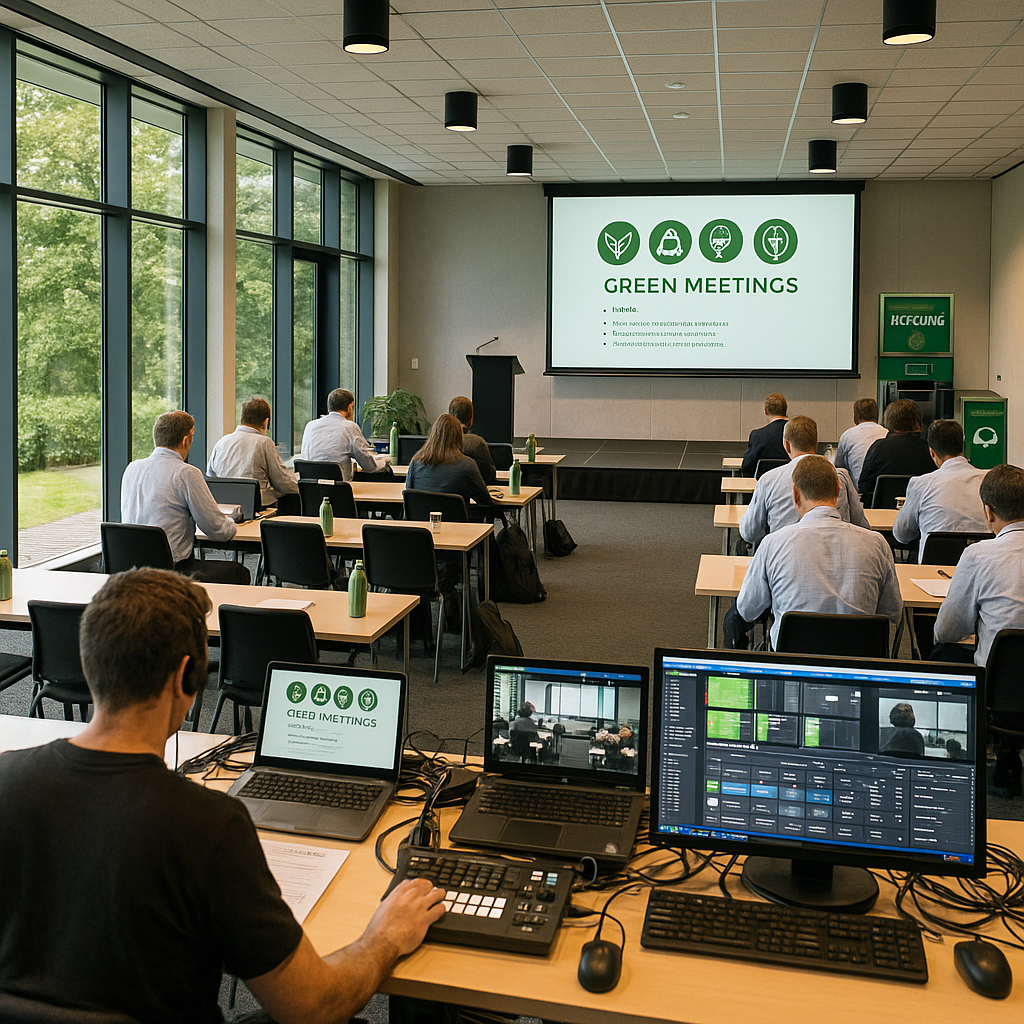
Cambridge’s meetings and events sector is stepping up its environmental commitments, with a group of local venues enrolling in the Green Meetings sustainability initiative under the coordination of Meet Cambridge, the city’s official conference and events bureau.
The move is designed to provide event organisers with clearer, independently assessed sustainability options across a network of more than 50 academic, corporate and heritage venues in and around the city. Several venues within this portfolio have already signed up to the Green Meetings framework, with others expected to follow as demand for lower-impact events continues to rise.
Background and industry context
Sustainability has moved from a niche consideration to a core requirement for many conference planners, especially in sectors such as life sciences, technology and higher education where Cambridge is internationally active. Buyers are increasingly asking venues to demonstrate energy efficiency, responsible procurement, waste management and social impact policies, often backed by recognised frameworks or third-party verification.
At the same time, destinations are seeking ways to coordinate efforts across multiple properties so that organisers can plan events at scale without having to individually audit every site. Destination bureaus and convention offices are playing a growing role in setting expectations, sharing best practice and guiding venues through accreditation or certification processes.
Within this landscape, the adoption of the Green Meetings initiative by a cluster of Cambridge venues represents a structured attempt to align local supply with these evolving buyer expectations, while giving venues a roadmap for incremental environmental improvements.
Key developments in the Cambridge initiative
Meet Cambridge has confirmed that a number of its partner venues have committed to the Green Meetings programme, an initiative aimed at helping meetings facilities measure, manage and communicate their sustainability performance. While the exact list of participating venues has not been disclosed, the bureau’s portfolio spans university colleges, purpose-built conference centres, hotels and unique historic spaces, indicating that a mix of venue types is likely to be involved.
Through the partnership, participating venues receive a framework to assess their environmental practices and identify areas for improvement across operations such as energy use, water consumption, catering, waste reduction and transport planning. The goal is to create a consistent standard of sustainable practice that event organisers can recognise and factor into their venue selection processes.
Meet Cambridge’s role is to coordinate and promote these efforts as part of the wider destination offer. By engaging with the Green Meetings initiative at a portfolio level rather than on a purely individual venue basis, the bureau aims to present a more coherent sustainability narrative to incoming conferences and events, particularly those with strong environmental targets of their own.
Potential impact on the event ecosystem
The uptake of a structured sustainability framework across multiple venues in one city can have several practical implications for the event ecosystem. For organisers, it can reduce the complexity of assessing environmental performance at the bidding and planning stages, particularly for multi-venue programmes, campus-style events or citywide conferences.
For venues, participation provides external validation of existing initiatives and can highlight where further investment is needed. It can also support staff engagement by turning broad sustainability goals into specific operational actions and metrics that can be tracked over time.
At the destination level, coordinated initiatives can support city-wide decarbonisation efforts by encouraging consistent approaches to issues such as single-use plastics, onsite energy management and local sourcing. For a knowledge hub such as Cambridge, where many events are tied to research, innovation and policy, the ability to host conferences with a lower environmental footprint may also align with the priorities of visiting organisations.
Why this matters for event professionals and technology providers
For event professionals, the development signals that sustainability is becoming an embedded part of the venue offer rather than an optional add-on. When multiple venues in a single destination adopt a common framework, it becomes easier to benchmark options and integrate sustainability criteria into RFPs, site inspections and supplier evaluations.
Planners running hybrid or technology-enabled events may also see opportunities to align digital tools with venue-led sustainability goals. For example:
- Registration and event apps can capture and communicate venue sustainability data, helping delegates understand the environmental choices being made.
- Digital signage and wayfinding can reduce printed materials while supporting efficient delegate movement, potentially reducing transport-related impacts.
- Data from venue management systems and event platforms can be combined to track indicators such as energy use in meeting spaces, catering volumes and waste streams more accurately.
For technology providers, venues engaging in structured sustainability initiatives may become more receptive to tools that support measurement, reporting and optimisation. Solutions that integrate with building systems, monitor resource use or calculate event-related emissions could find a clearer route to adoption where a framework like Green Meetings is already in place.
In addition, as corporate and association clients increasingly request quantified environmental performance, the ability for venues and destinations to share robust data will likely become a competitive factor. Technology that can surface and standardise that data across multiple properties within a portfolio could be particularly valuable.
Conclusion
The decision by multiple Cambridge venues to participate in the Green Meetings initiative, coordinated by Meet Cambridge, reflects the growing expectation that destinations provide verifiable sustainability options as part of their core meetings infrastructure. While individual properties have been pursuing environmental improvements for some time, a shared framework across a wider portfolio marks a shift towards more systematic, destination-level action.
For event organisers, the development provides clearer signals about where more sustainable choices can be made within the Cambridge market. For venues and technology partners, it underlines the importance of measurable performance, interoperable data and tools that support both operational efficiency and transparent reporting.
As sustainability requirements continue to influence site selection and event design, initiatives of this kind are likely to play a larger role in how destinations position themselves to attract conferences, exhibitions and hybrid meetings with stringent environmental expectations.