Augmented Reality in Events: Enhancing Physical Experiences Through Contextual Digital Layers
8 months ago Timothy Myres
Augmented reality has emerged as a practical and increasingly mature technology within the events industry. Unlike immersive technologies that replace the physical environment, augmented reality enhances it by layering digital information onto real-world spaces. This distinction makes augmented reality particularly well suited to live events, where physical presence, movement, and situational awareness remain central to the attendee experience.
As events grow in scale and complexity, organizers face challenges related to navigation, information overload, engagement, and consistency across formats. Augmented reality addresses these challenges by delivering information precisely where and when it is needed, without adding physical infrastructure or interrupting natural interaction. This article examines augmented reality as functional event technology, focusing on its role, applications, and considerations for responsible deployment.
Understanding Augmented Reality in the Event Context
Table of Contents
ToggleAugmented reality refers to the integration of digital elements such as text, graphics, animation, or data overlays into a real-world environment viewed through a device. In events, this is most commonly experienced through smartphones or tablets, although specialized headsets may also be used in controlled scenarios.
The defining feature of augmented reality is contextual relevance. Digital content appears in direct relation to physical objects or locations, allowing attendees to receive information without searching for it. Unlike virtual reality, augmented reality does not isolate users from their surroundings, making it compatible with dynamic, shared event spaces.
Why Augmented Reality Is Relevant to Modern Events
Modern events are information-dense environments. Attendees must navigate large venues, choose between concurrent sessions, engage with exhibitors, and absorb content within limited timeframes. Traditional tools such as printed programs and static signage struggle to keep pace with these demands.
Augmented reality enables organizers to deliver guidance, content, and interaction dynamically. Information becomes adaptive rather than fixed. This reduces cognitive load for attendees while improving operational flexibility for event teams.
For organizers, augmented reality offers a way to scale communication without increasing physical materials, staffing, or venue modifications.
Core Applications of Augmented Reality in Events
Navigation and Wayfinding
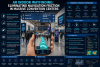
One of the most established uses of augmented reality in events is navigation. Large venues and multi-building campuses can be disorienting, especially for first-time attendees.
Augmented reality navigation overlays directional guidance, room identification, and points of interest onto the attendee’s physical view. This improves flow, reduces congestion, and minimizes reliance on printed maps or staff assistance. Because guidance can be updated in real time, it also supports last-minute schedule or location changes.
Contextual Information Delivery
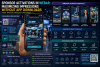
Augmented reality allows information to appear exactly where it is relevant. When an attendee points a device toward a stage, booth, or installation, digital content can be displayed automatically.
This may include speaker profiles, session details, product specifications, or sponsor information. By anchoring information to physical context, augmented reality improves comprehension and retention compared to menu-based content discovery.
Exhibition and Trade Show Enhancement
In exhibition environments, augmented reality adds depth to static displays. Products can be visualized in three dimensions, internal components can be revealed, and demonstrations can occur without physical prototypes.
This approach reduces logistical complexity while allowing exhibitors to communicate more effectively. Attendees gain a clearer understanding of offerings without requiring additional floor space or personnel.
Interactive and Guided Experiences
Augmented reality supports structured interaction through guided tours, discovery-based challenges, or informational layers that unfold progressively.
When designed with clear intent, these experiences encourage exploration while reinforcing event objectives. Augmented reality works best when interaction supports learning or orientation rather than serving as standalone entertainment.
Hybrid Event Support
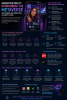
In hybrid events, augmented reality helps bridge physical and digital participation. Onsite attendees interact with physical spaces enhanced by digital overlays, while remote participants access similar content through shared interfaces.
This alignment supports consistency across formats and reduces fragmentation between audience groups.
Technical Foundations of Augmented Reality in Events
Devices and Access Models
Most event-based augmented reality experiences rely on attendee-owned smartphones or tablets. This approach reduces hardware distribution and lowers adoption barriers.
Wearable augmented reality devices remain limited in event use due to cost, onboarding complexity, and accessibility considerations. As a result, mobile-based delivery remains the dominant model.
Content Creation and Management
Augmented reality content must be designed for clarity, relevance, and performance. Overly complex visuals increase cognitive load and reduce usability.
Content management platforms allow organizers to update overlays dynamically without redeploying applications. This flexibility is essential in live event environments where changes are frequent.
Location Awareness and Triggers
Augmented reality experiences are activated through visual markers, location data, or proximity-based triggers. Accuracy is critical. Misaligned content erodes trust and discourages continued use.
Extensive testing is required to ensure that digital elements align reliably with physical spaces under real-world conditions.
Experience Design Principles
Augmented reality should enhance the event experience without competing for attention. The most effective implementations are subtle and purposeful.
Information should be concise and easy to interpret within short interaction windows. Visual overlays must respect sightlines and avoid obscuring important physical elements.
Onboarding should be minimal. If an experience requires explanation, adoption rates decline. Immediate usefulness is the strongest driver of engagement.
Operational Benefits for Event Organizers
From an operational perspective, augmented reality reduces dependence on physical materials such as signage, printed guides, and static displays. Updates can be made instantly without reprinting or redeploying staff.
Augmented reality also generates interaction data, offering insight into attendee behavior, movement, and content usage. When handled responsibly, this data supports planning and evaluation without intrusive tracking.
Accessibility and Inclusion
Augmented reality can improve accessibility by offering multilingual overlays, visual cues, and adjustable content formats. However, inclusion must be intentional.
Alternative information channels must remain available for attendees who cannot or choose not to use augmented reality features. Accessibility is achieved through choice, not obligation.
Privacy and Ethical Considerations
Augmented reality experiences often require camera access and location data. Transparency is essential.
Attendees should understand what data is collected, how it is used, and how long it is retained. Participation must always be optional, and systems should function without excessive data capture.
Ethical deployment directly affects trust and adoption.
Cost and Scalability
Compared to immersive technologies, augmented reality is relatively cost-effective and scalable. Mobile-based implementations can support events of varying sizes without significant infrastructure investment.
For recurring events, augmented reality content can be refined and reused, increasing long-term value.
Limitations and Appropriate Use
Augmented reality is not suitable for every scenario. Events with limited mobile connectivity, highly ceremonial formats, or audiences resistant to device use may see limited benefit.
Its use should always be aligned with clear objectives. When applied without purpose, augmented reality risks becoming a distraction rather than a support tool.
The Role of Augmented Reality in Contemporary Events
Augmented reality occupies a practical middle ground within event technology. It enhances physical environments without replacing them, offering information and interaction that adapt to context.
Its effectiveness lies in restraint. When used thoughtfully, augmented reality becomes an invisible layer that improves clarity and navigation without demanding attention.
Conclusion
Augmented reality has established itself as a functional and adaptable tool in modern event design. By delivering contextual information, improving navigation, and supporting engagement, it addresses real challenges faced by organizers and attendees alike.
For event professionals, the value of augmented reality depends on disciplined design, ethical data practices, and alignment with event objectives. When implemented responsibly, augmented reality enhances events without overwhelming them.
At EventTechnology.org, augmented reality is best understood not as a novelty, but as a practical technology that supports clearer, more accessible, and more responsive event experiences.