Foo Fighters Tour adopts Sennheiser Spectera for RF Management
Foo Fighters Tour adopts New RF Management Platform
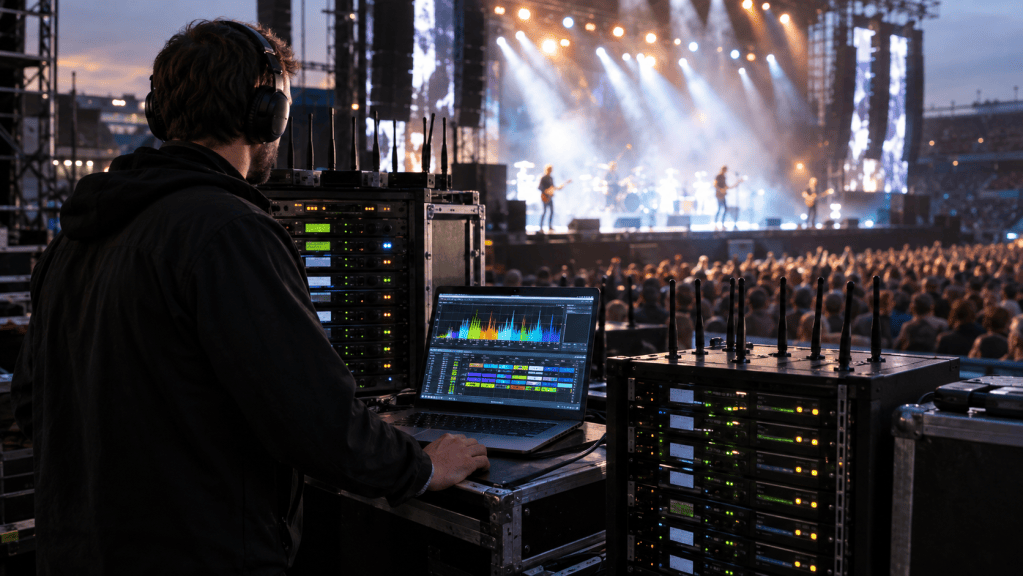
The current Foo Fighters tour has adopted Sennheiser Spectera as a central tool for managing radio frequency (RF) coordination across its large-scale live shows. The cloud-based software is being used to streamline planning and operation of wireless audio systems in a touring environment where venues, regulations, and RF conditions can change daily.
RF Challenge of Large Venue Rotation
Modern arena and stadium productions rely on dense wireless infrastructures, including microphones, in-ear monitoring systems, and production communications. On a rotating tour schedule, RF technicians must quickly adapt to differing spectrum availability, local interference sources, and country-specific regulations while maintaining reliable coverage for artists and crew.
The Foo Fighters touring production faces those typical challenges on an international routing, where both indoor and outdoor venues vary significantly in size and RF behavior. Consistent sound quality and uninterrupted wireless links are critical for the band’s long shows, high stage volume, and extensive movement on stage.
Role of Sennheiser Spectera in RF Coordination
Sennheiser Spectera is designed to support planning, scanning, and coordination of RF systems across complex productions. For the Foo Fighters tour, the software is used to organize frequency allocation for multiple wireless channels, helping engineers respond quickly to local conditions and last-minute changes.
By working from a central interface, the RF team can monitor available spectrum, identify potential conflicts, and adjust assignments before and during show days. This assists in minimizing dropouts and interference, and supports a more predictable setup process from city to city.
Benefit for Touring Production Workflow
Deploying a standardized RF coordination platform across the tour helps reduce setup times and supports repeatable workflows for the audio and RF crews. Spectera’s toolset is used to manage the interaction between different wireless systems and to keep track of configuration data as the production moves between venues.
For touring productions handling multiple artists, guest performers, and broadcast or recording requirements, the ability to centralize frequency planning can simplify communication between departments and help avoid last-minute conflicts during line checks and showtime.
Impact on Live Event Reliability
Reliable wireless operation remains a core requirement for large live events, where artist performance, show pacing, and audience experience depend on stable audio links. By incorporating Sennheiser Spectera into its RF workflow, the Foo Fighters tour adds a dedicated layer of coordination intended to keep the wireless environment under control despite changing conditions.
As spectrum becomes more crowded in many regions, tools focused on systematic RF management are playing a larger role in how touring productions, rental companies, and venues plan their wireless strategies.
Relevance for Rental Company and Venue Operation
The use of Sennheiser Spectera on a high-profile rock tour underlines how RF coordination platforms can be integrated into broader event technology workflows. Rental companies and venues supporting visiting productions may benefit from compatible planning tools that facilitate spectrum sharing, preproduction coordination, and documentation of wireless setups.
For conference centers, arenas, and festival sites that host multiple concurrent events, structured RF management approaches can help reduce interference risks and support smoother turnarounds between shows.
Outlook for RF Management in Live Events
While every production has its own requirements, the Foo Fighters tour’s adoption of Sennheiser Spectera reflects a wider trend toward more formalized RF management in live event environments. As wireless channel counts continue to grow and regulatory frameworks evolve, software-based coordination is likely to remain a key component of professional audio workflows.
For event technology professionals, keeping pace with these tools and practices is becoming an important factor in delivering stable wireless performance for concerts, conferences, and large-scale productions.