

Augmented Reality (AR) Introduction
Augmented Reality (AR) is a technology reshaping our interaction with the digital and physical worlds. Unlike Virtual Reality (VR), which immerses users entirely into a simulated environment, AR enriches the real world by seamlessly integrating digital elements.
This innovation relies on a synergy of hardware components like cameras, sensors, and displays, combined with sophisticated software. AR’s ability to overlay images, videos, and text onto the physical world in real time opens new frontiers across industries, revolutionizing education, entertainment, healthcare, and retail. For example, AR can be used in education to provide interactive and immersive learning experiences, while in healthcare, it can be used for medical training and visualization of complex medical procedures.
In short, AR has the potential to revolutionize the way we interact with digital information and our physical environment, opening up new possibilities for communication, learning, and entertainment.
Impact of Augmented Reality
An immersive and interactive experience is produced by augmented reality (AR), a technology that superimposes virtual data or objects in the real world. Here are some instances where AR can be useful:
-
Enhancing Education: AR can be used to create interactive and engaging learning experiences. Students can explore and manipulate virtual objects, enhancing their understanding of complex concepts.
-
Improving Training: AR can be used to simulate real-world scenarios, providing trainees with a safe and controlled environment to practice and learn new skills. This can be particularly useful in fields such as healthcare and manufacturing.
-
Enhancing Entertainment: AR can be used to develop virtual reality (VR) gaming experiences that blur the boundaries between the virtual and physical worlds, giving users fresh and engaging ways to interact with digital content.
-
Improving Marketing and Advertising: AR can be used to create interactive and engaging marketing campaigns, allowing consumers to try out products virtually and experience them in a more personal way.
-
Enhancing Design and Visualization: AR can be used to create virtual prototypes and visualize designs in real-world environments, allowing designers and engineers to better understand how their products will look and function in the real world.
In general, AR has the potential to improve a variety of aspects of our lives by providing new and creative ways to look at the world.
The Rise Of Technology-Augmented Reality(AR), Virtual Reality(VR) And Mixed Reality(MR) |Simplilearn
Augmented Reality Types
-
Marker-Based AR
Overview: Marker-based AR relies on predefined markers or visual cues in the physical environment. These markers act as triggers, prompting the AR system to superimpose digital content onto the identified markers.
Applications: Widely used in educational apps, advertising, and interactive product experiences.
-
Markerless AR
Overview: Markerless AR liberates itself from predefined markers, employing technologies like GPS, accelerometers, and sensors to anchor virtual elements in the real world dynamically.
Applications: Navigation apps, real-time data visualization, and location-based AR experiences.
-
Projection-Based AR
Overview: Projection-based AR involves projecting digital content onto physical surfaces, creating an interactive and dynamic augmented environment. Commonly applied in events, advertising, and entertainment settings.
Applications: Interactive advertising displays, event installations, and immersive entertainment experiences.
-
Superimposition-Based AR
Overview: Superimposition-based AR replaces or superimposes digital content on real-world objects, seamlessly blending virtual and physical elements for an enriched user experience.
Applications: Virtual try-on experiences in retail, interior design visualization, and virtual prototyping.
-
Recognition-Based AR
Overview: Recognition-based AR employs object recognition algorithms to identify and augment specific objects or scenes in the real world, enhancing user interactions with relevant information.
Applications: Industrial maintenance, art galleries, and enhancing museum exhibits.
Read more about Unlocking the Potential of Augmented Reality Systems for Immersive User Experiences and The Role of Augmented Reality Systems in Manufacturing and Industry 4.0.
Evolution of Augmented Reality (AR)
The concept of Augmented Reality (AR) dates back to the 1960s when Ivan Sutherland developed the first head-mounted display (HMD) system, known as “The Sword of Damocles,” which enabled users to view basic wireframe images overlaid onto the real world.
In the 1990s, researchers at Boeing developed the first functional AR system, known as “Virtual Fixtures,” which overlaid digital graphics onto physical objects in a factory setting to assist workers with their tasks. Meanwhile, the entertainment industry started exploring AR, with companies such as Disney and Universal Studios developing AR-based attractions for theme parks. In 2008, AR gained widespread attention with the launch of the first AR mobile application, “Wikitude,” which allowed users to overlay information about nearby locations onto their smartphone screens. This was followed by the launch of Layar in 2009, which offered similar functionality. AR technology continued to evolve rapidly, with the release of Google Glass in 2013, which was a wearable AR device that allowed users to access information hands-free through a small display mounted on the eyeglasses frame. In 2016, the launch of the popular mobile game Pokémon Go brought AR to mainstream audiences, as players used their smartphones to capture digital Pokémon characters overlaid onto the real world.
Today, AR technology is used in various industries, from healthcare and education to marketing and advertising. It is expected to continue to advance and find new applications in the years to come.
Uses of Augmented Reality
Augmented Reality (AR) seamlessly integrates virtual information into the real world, fostering interactive experiences. Accessible through smartphones, tablets, and specialized devices like smart glasses, AR spans across industries. From gaming and entertainment, AR enriches diverse sectors, superimposing 3D models, text, images, and videos onto the physical environment.
Here you can see the major applications that showcase AR’s transformative potential:
- Retail and E-Commerce
AR revolutionizes the retail experience by allowing customers to visualize products in their physical space before making a purchase. Trying on clothes virtually, using AR catalogs, and interactive product displays make online shopping more enjoyable.
- Gaming and Entertainment
AR gaming, as exemplified by phenomena like Pokémon Go, merges the virtual and real worlds, providing users with interactive and location-based gaming experiences. Entertainment venues utilize AR for immersive performances, interactive exhibits, and engaging audience interactions.
- Real Estate and Architecture
AR enhances property viewing experiences by providing virtual property tours. Prospective buyers can visualize furniture placement and design modifications in the latest way. Architects use AR to see architectural models in real locations, helping them make better decisions.
- Marketing and Advertising
AR campaigns captivate audiences with interactive and personalized content. From AR-enabled product packaging to immersive advertisements, brands utilize AR to create memorable and shareable experiences.
As Augmented Reality continues to evolve, its applications are poised to redefine how we engage with technology in our daily lives. The convergence of the virtual and physical worlds opens up endless possibilities, marking AR as a technological cornerstone across industries. Embrace the augmented era, where reality is enhanced and there are endless possibilities for innovation.
Check out the latest product in Augmented Reality
Leading Augmented Reality Companies
Microsoft:
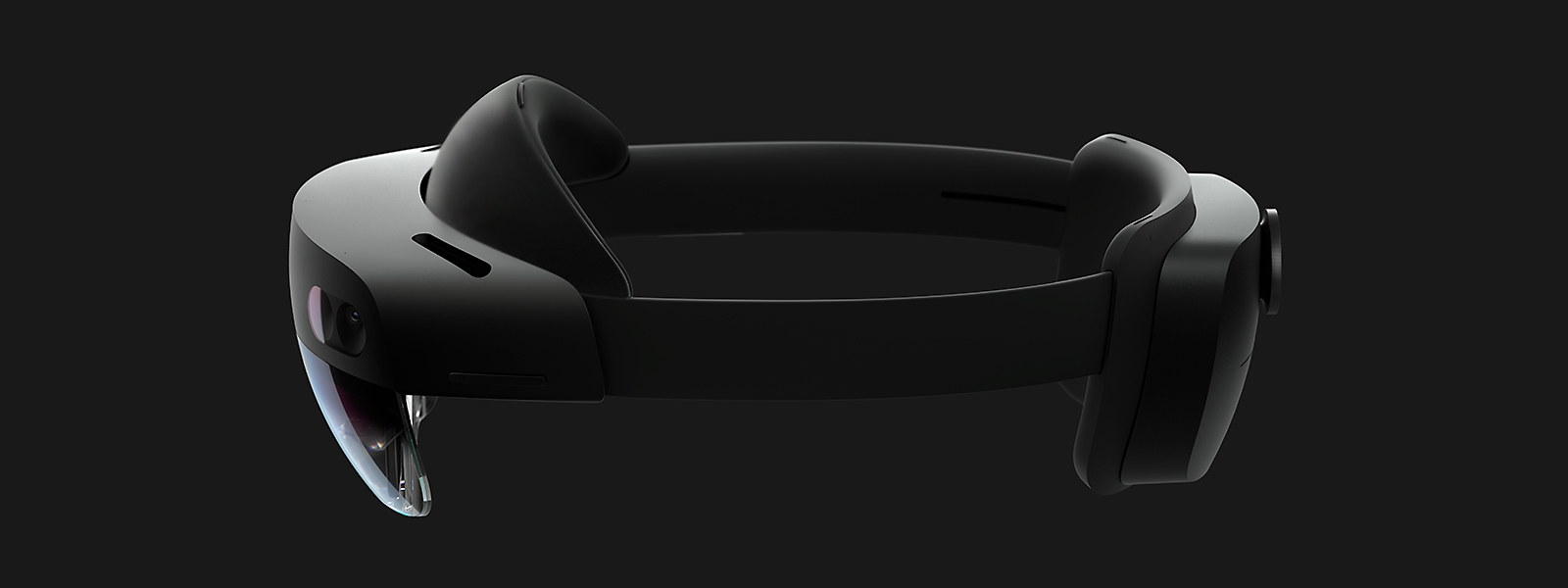
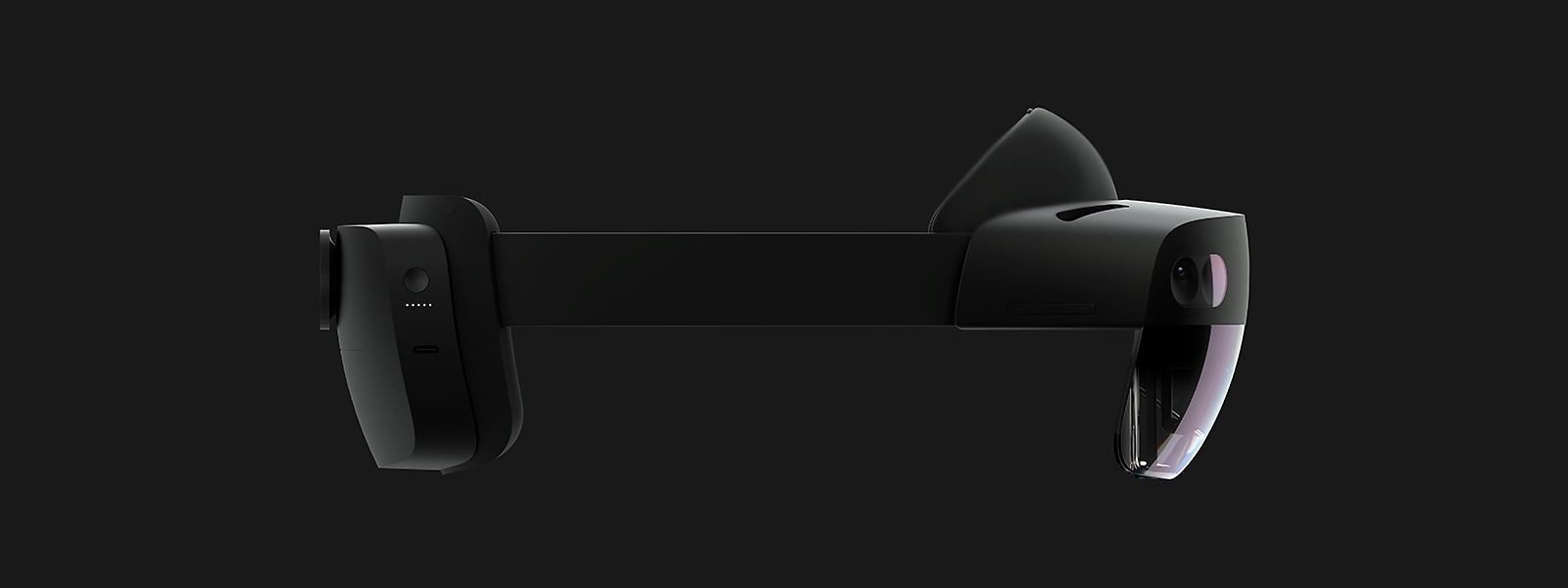
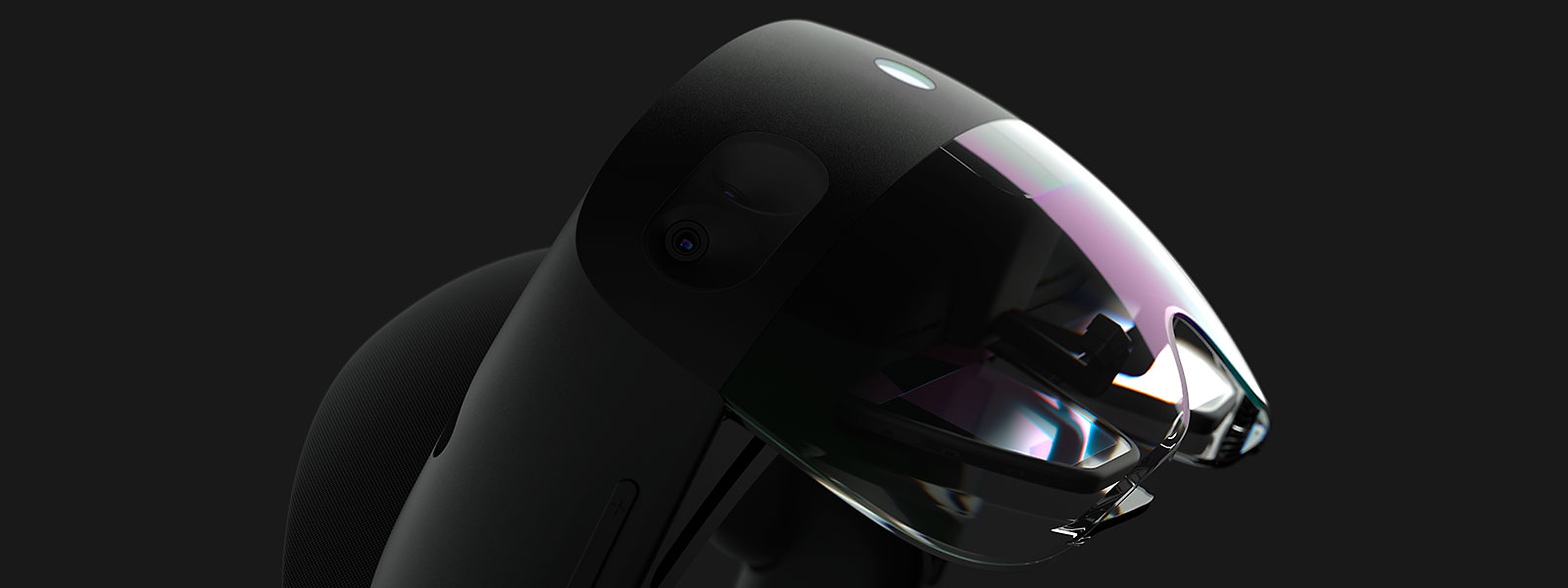
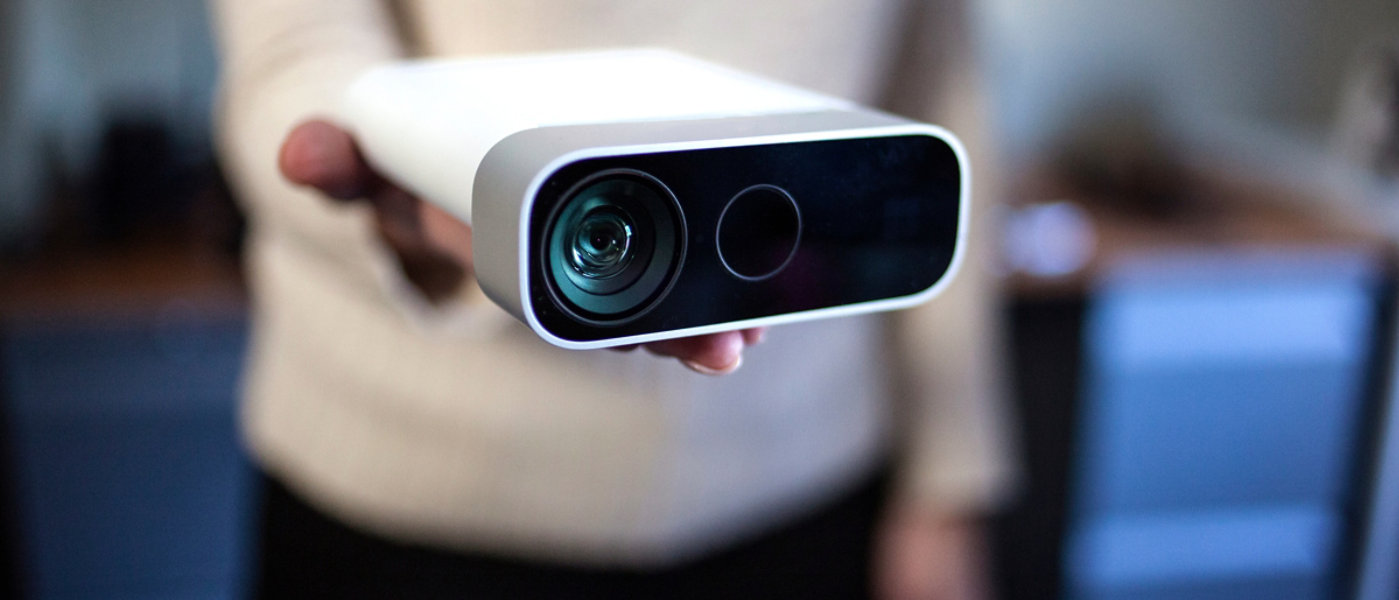
It is a leader in the augmented reality landscape, Microsoft is renowned for the HoloLens series. The HoloLens 2, a standout product, offers an enhanced immersive experience, while the Azure Kinect DK provides developers with advanced tools for spatial understanding. Here are some of the products related to it:
- HoloLens 2: By redefining mixed reality, the HoloLens 2 stands out with an enhanced immersive experience, featuring an improved field of view and comfort. It offers immersive holographic experiences, comfortable design, and advanced spatial mapping.
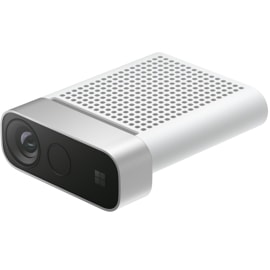
- Azure Kinect DK: Empowering developers, the Azure Kinect DK provides advanced tools for spatial understanding, enhancing the creation of diverse AR applications. Depth sensing and spatial mapping are some of the major tools for immersive AR development.
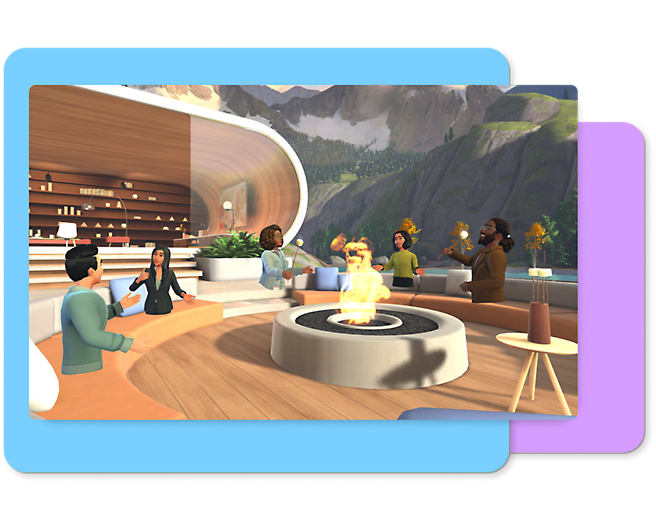
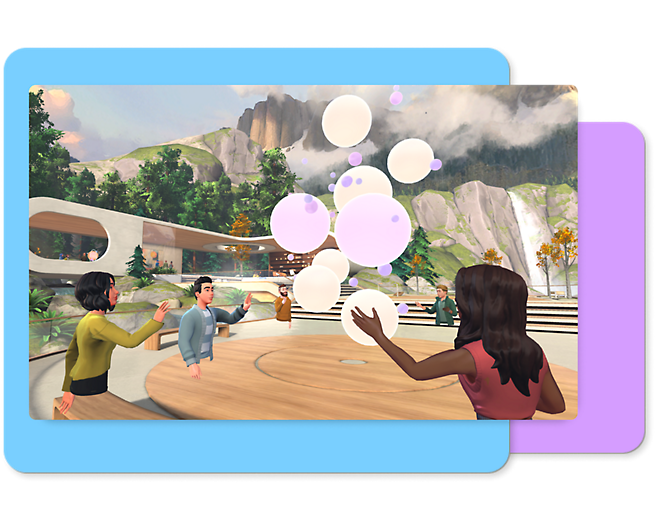
- Microsoft Mesh: It is an innovative platform fostering collaborative mixed reality experiences, breaking down physical barriers. The major features of this device are shared holographic experiences, cross-device collaboration, and spatial presence.

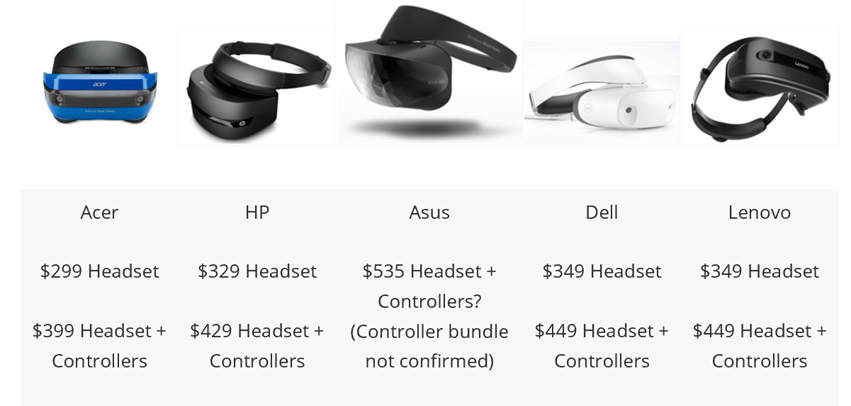
- Windows Mixed Reality: It’s a comprehensive platform that blends physical and digital worlds, offering a range of AR experiences on Windows devices. Some of the examples are mixed reality apps, immersive gaming, and seamless integration with Windows.
Magic Leap One: 
By seamlessly merging digital and physical realities, Magic Leap One provides users with a groundbreaking spatial computing experience. Its key features include spatial computing, immersive mixed reality, and seamless integration with the real world. Their products include:
- Magicverse SDK: The Magicverse SDK is a crucial software development kit that empowers developers to craft interactive experiences within the Magicverse. Key features encompass collaborative and interactive development, along with powerful spatial computing tools.

- Lumin OS: Serving as the operating system for Magic Leap devices, Lumin OS enhances the overall user experience with a specific focus on spatial computing. Its key features include seamless integration of spatial computing and a user-friendly interface.

- Helio Browser: Designed for spatial computing, the Helio Browser enables users to navigate and interact with digital content in the mixed reality space. Its key features comprise immersive web browsing and spatially aware interactions, offering a unique online experience.


- Spatial Computing Workshops: These spatial Computing Workshops aim to empower developers and creators in harnessing the potential of spatial computing. These workshops provide hands-on training and guidance for those delving into spatial computing development.

Epson: 
It is a well-established and diversified technology company recognized for its expertise in imaging and printing solutions. In the realm of augmented reality (AR), it has made significant strides with its Moverio line of smart glasses. Epson’s commitment to providing sleek and immersive AR experiences is evident in products like the Moverio BT-30C, Moverio Assist, Moverio BT-35E, Moverio BT-40, and Moverio BT-1000.
- Moverio BT-30C: They are stylish AR glasses providing a comfortable visual experience, with a sleek design merging seamlessly into an immersive augmented reality. Providing lightweight design, immersive AR, and a comfortable fit.
- Moverio Assist: It offers the emote assistance solution connecting experts with field workers through Moverio glasses, offering real-time guidance and fostering hands-free communication.
- Moverio BT-35E Smart Glasses: These are smart glasses featuring a transparent display that blends seamlessly with the real world, enhancing the AR experience.
- Moverio BT-40 and BT-40S Smart Glasses: These are high-performance smart glasses designed for various professional applications, providing advanced features for augmented reality.
- Moverio BT-1000 Smart Glasses: It is a flagship model catering to enterprise needs, offering a sophisticated AR platform for professionals across industries.
DAQRI:
It specializes in industrial augmented reality solutions, DAQRI is a manufacturer that focuses on enhancing workplace productivity and safety through its smart glasses and integrated platforms. The DAQRI Worksense Platform, a combination of hardware and software, offers a comprehensive AR experience tailored for industrial applications.
- SDAQRI Smart Glasses: These smart glasses provide workers with real-time information and interactive displays, ultimately improving efficiency in tasks and workflows within industrial settings.
- DAQRI Worksense Platform: This platform ensures a cohesive AR experience in the workplace, allowing for the smooth integration of augmented reality into various industrial processes.
Vuzix:
It is a prominent player in the augmented reality landscape, specializing in the development of smart glasses tailored for diverse industries. Their product lineup includes:
- Vuzix Blade: These smart glasses are suitable for various professional applications, providing a sleek and user-friendly interface for enhanced productivity.


- Vuzix M4000: Tailored to meet the demands of business and industry, these glasses offer a comprehensive solution for professionals, emphasizing versatility and functionality in various work environments.


Check out the latest top trending videos of Augmented Reality
Youtube video- I Used Smart AR Glasses with a Laptop for 1 Month:
Reference:
Augmented Reality Common Questions
Q1. What are some of the difficulties associated with augmented reality?
Among the challenges of augmented reality are technical limitations such as hardware requirements and software development complexity. AR technologies can collect and process personal data, causing privacy concerns.
Q2. What are some popular augmented reality devices?
Ans. Popular augmented reality devices include smartphones and tablets, smart glasses such as Microsoft HoloLens and Google Glass, and headsets such as the Oculus Quest and HTC Vive.
Q3. What is the difference between augmented reality and virtual reality?
Ans. Augmented reality overlays digital content onto the physical world, while virtual reality creates a fully immersive digital environment that the user can interact with.