Brand Experience Roundup showcases Creative Event Idea Inspiration
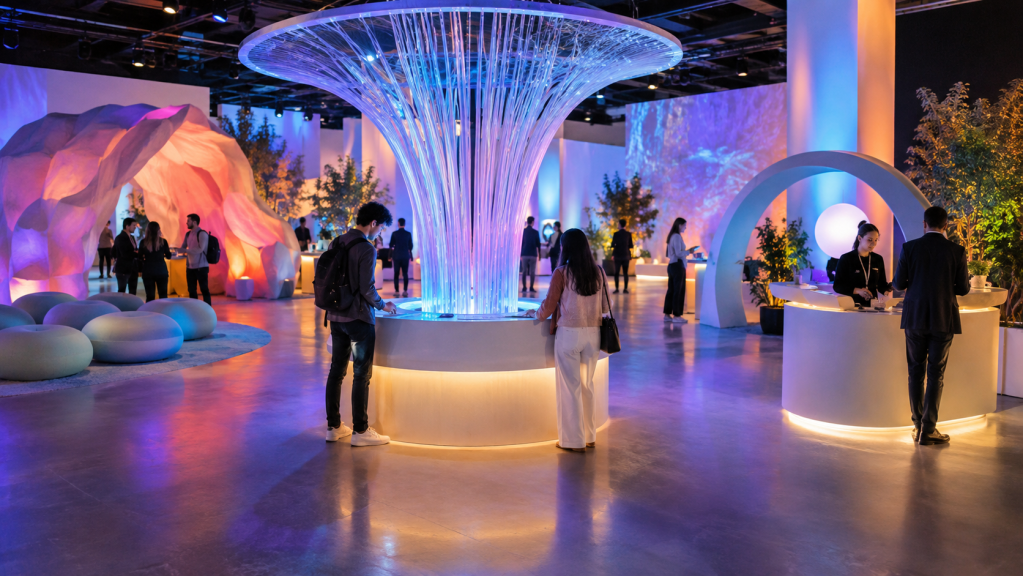
Recent brand activations from consumer and entertainment brands have highlighted how creative concepts, thoughtful audience engagement, and strong visual storytelling continue to shape the experiential and live events landscape. For event organizers, agencies, and venue teams, these projects underscore the value of tightly aligned objectives, flexible formats, and memorable attendee journeys.
Brand Experience Trend overview for Event professional Audience
Across current experiential programs, brands are investing in immersive touchpoints, hybrid physical and digital engagement, and purpose driven storytelling. While tactics vary by sector, a few consistent priorities are emerging for event and marketing teams:
- Audience centric planning that prioritizes interaction, participation, and shareability over passive viewing.
- Scaled experiences that can move between pop up footprint, touring roadshow format, and anchor placement at trade show or festival environment.
- Integrated measurement frameworks that connect on site engagement to broader campaign metrics and longer term community building.
These directions are influencing how production partners, audiovisual suppliers, and venue technology providers support activations, from content delivery and staging to data capture and reporting.
Experience format and production consideration for Live event Team
Recent brand programs illustrate a diverse mix of formats, including immersive set builds, themed hospitality spaces, outdoor fitness experiences, and content driven screening or viewing concepts. For production stakeholders, several operational considerations stand out:
- Modular set design that allows scenic element, lighting, and branding treatment to be reconfigured for different footprint and capacity requirement.
- Robust audiovisual infrastructure to support music, live presentation, interactive station, and on site content capture for social and campaign use.
- Close alignment with venue technology capability, including power distribution, connectivity, and potential integration with in house display system.
Teams are also placing renewed emphasis on wayfinding, attendee flow, and queue management to maintain experience quality during peak traffic, particularly in retail adjacent and outdoor settings.
Audience engagement Strategy for Brand activation Designer
The most effective activations continue to prioritize clear, simple participation mechanic that invite guests to explore, play, or create. Common approaches include:
- Hands on activity that encourage personalization, co creation, or content capture, often supported by staff guide or brand ambassador team.
- Programmed moment such as demonstration, short performance, or timed reveal that provide focal point for storytelling and media coverage.
- Digital extension via QR code, microsite, or app based component that connects on site action to loyalty program, content hub, or follow up communication.
For conference, exhibition, and festival environments, these techniques can be adapted to drive traffic between zone, support sponsor objective, and enhance overall attendee satisfaction scores.
Measurement, insight, and Future planning for Event organizer
As experiential budgets face increasing scrutiny, brands and agencies are refining how they define and measure success. Common practice includes:
- Baseline metric such as attendance, dwell time, and participation rate for key activity or installation.
- Qualitative feedback collection from guest, partner, and internal stakeholder to assess clarity of messaging and perceived value.
- Attribution model that connect event touchpoint to uplift in awareness, sentiment, or conversion within broader campaign window.
For event professionals, these learnings can inform layout design, content programming, staffing model, and technology investment for upcoming season.
Key takeaway for Venue, Production, and Technology Partner
Recent brand experiences reinforce that creativity must be matched with operational excellence. Flexible infrastructure, experienced production crew, and reliable venue technology are critical to delivering immersive concepts at scale. As more marketers lean into experiential strategy, collaboration between brand, agency, and event supplier will be essential to maintaining safety, accessibility, and audience comfort while still achieving standout, social ready moments.
For planners, producers, and venue operators, ongoing monitoring of current brand activations offers practical insight into evolving attendee expectation and new opportunity for innovation in live event, conference, and exhibition environment.