Canada’s event sector sees new festival developments, leadership moves, and market activity
Background and context
Canada’s live events and cultural sectors continue to evolve as cities invest in festivals, destination marketing, and industry marketplaces. Recent developments highlight how arts programming, tourism strategy, and the film economy are converging to attract visitors and support local creative communities.
Municipal partners, tourism boards, and cultural organizations are using festivals and industry-facing events to extend visitor stays, diversify programming, and draw professional audiences. These moves come as event organizers look for ways to balance local engagement with international reach.
Key announcement
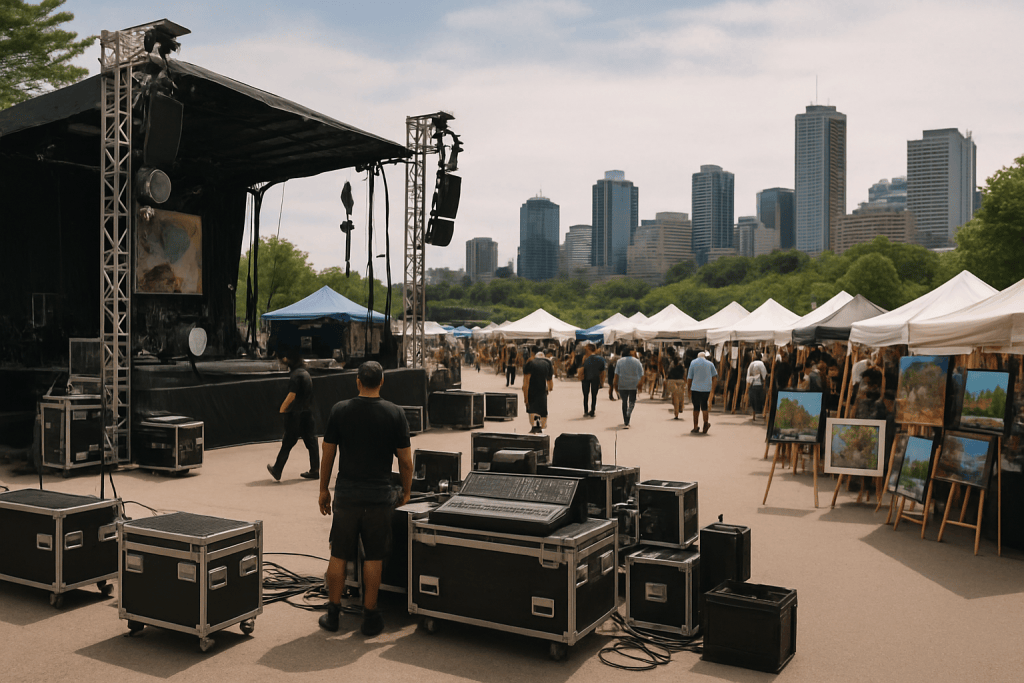
In Edmonton, the Strathearn Art Walk and Music Festival has emerged as a growing cultural event combining visual arts and live performance along the city’s river valley. The festival brings together local artists, musicians, and food vendors, positioning itself as both a community celebration and a draw for regional visitors.
In Québec City, destination marketing organization Destination Québec Cité has announced a new senior hire to support its tourism and events strategy. The appointment signals ongoing efforts to strengthen the city’s positioning as a hub for meetings, incentives, conventions, and major cultural events. Details on the executive’s portfolio include developing partnerships, enhancing the visitor offer, and working closely with local stakeholders in hospitality and event production.
Meanwhile in Toronto, the city’s film and event ecosystem is seeing further integration between cultural programming and business activity. A key example is TIFF: The Market, a component of the Toronto International Film Festival focused on deal-making, industry networking, and content acquisition. The initiative aims to connect producers, distributors, and buyers in a structured environment alongside the festival’s public screenings.
Collectively, these updates illustrate how Canadian destinations are refining their approaches to cultural events and professional gatherings. Further information on these and related initiatives can typically be found via the respective organizers’ official channels and tourism sites, such as main destination marketing organization websites.
Industry impact
For event professionals, the growth of festivals like the Strathearn Art Walk and Music Festival underscores continued demand for hybrid programming that combines arts, food, and music in accessible urban settings. This creates opportunities for AV suppliers, production companies, and experiential agencies to support outdoor stages, temporary installations, and interactive elements.
Destination Québec Cité’s leadership change is likely to influence how Québec City positions itself for international conferences and large-scale events. Strategic shifts at destination marketing organizations can affect bidding processes, support packages, and the level of collaboration available to planners considering the city for future programs.
TIFF: The Market highlights how film festivals are doubling as commercial platforms, with implications for venue use, technology deployment, and scheduling. Industry markets require robust digital infrastructure for content review, video conferencing, and rights management meetings, in addition to traditional screening and presentation spaces.
Why this matters
These developments point to a broader trend: Canadian cities are leveraging cultural content and industry marketplaces to compete for visitors, investment, and professional events. For planners and suppliers in the event technology sector, this means more opportunities in areas such as outdoor production, live streaming, content capture, and hybrid networking tools.
Festivals that blend art and music demand flexible sound reinforcement, lighting, and staging that can scale with audience size. Destination marketing shifts may translate into new incentive programs or infrastructure upgrades that benefit conference and trade show organizers. Film-related markets like TIFF’s initiative also raise expectations for screening quality, digital delivery, and secure on-site connectivity.
As Canada’s event landscape becomes more interconnected across arts, tourism, and industry, stakeholders who track these regional changes will be better positioned to anticipate demand for technology, services, and collaboration opportunities.