National Gallery explores creative engagement at The Meetings Show
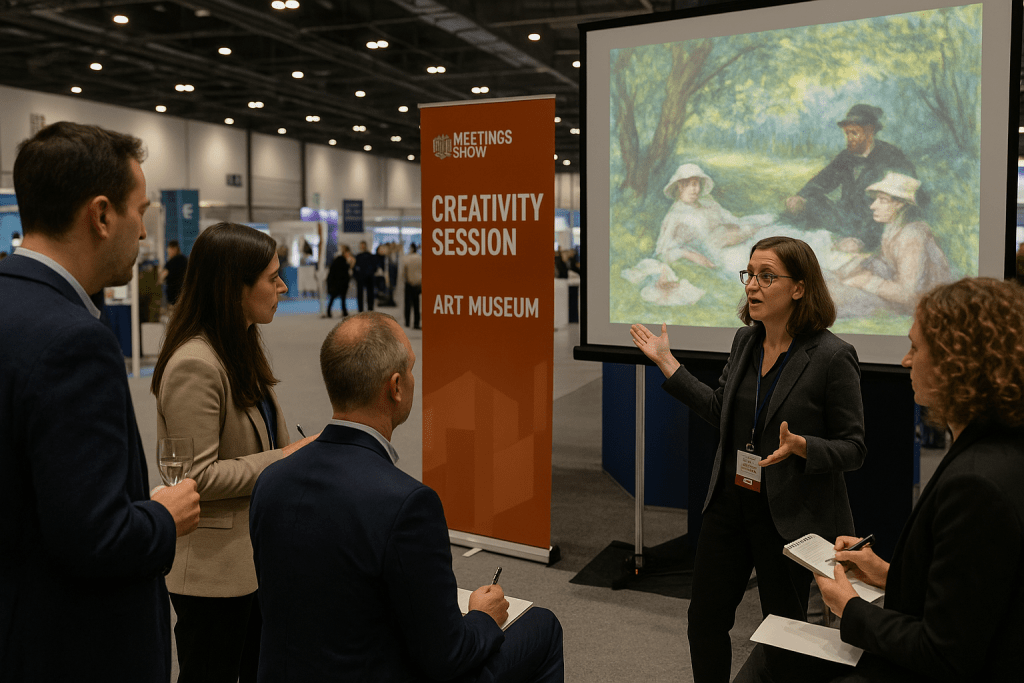
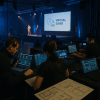
The National Gallery used this year’s The Meetings Show to highlight how art-led experiences can reshape delegate engagement, hosting an immersive interactive session on the show’s Blank Canvas Stage. Under the title “Sip, See, Create: How Creative Engagement Transforms Delegate Experience”, the session invited attendees to move beyond conventional conference formats and experience creativity as a tool for connection and learning.
The live activation positioned the London venue not just as a cultural landmark, but as a testbed for experiential formats that blend visual art, interaction and structured content. Delegates were encouraged to participate directly, underscoring growing interest in multisensory and co-created event experiences across the meetings and incentives market.
Background and industry context
In recent years, organisers of conferences, exhibitions and corporate events have been under pressure to differentiate in-person experiences from virtual and hybrid formats. With delegates increasingly selective about travel and time away from work, there is a stronger emphasis on engagement, wellbeing and memorability over traditional programme design.
Venues with strong cultural or experiential assets, such as museums and galleries, are leveraging their collections and spaces to support this shift. Instead of simply providing rooms and AV, they are curating content-led activities that use their surroundings to stimulate discussion, creativity and networking. This mirrors a broader trend in the events industry: moving from passive, presentation-heavy agendas toward participatory sessions where attendees are invited to contribute, create and collaborate.
The Meetings Show, a UK-based trade event for the meetings and events sector, has become a platform for demonstrating such approaches. The Blank Canvas Stage in particular is used for formats that challenge traditional conference structures, giving suppliers an opportunity to showcase new ways to structure learning and engagement.
Key developments at the session
The National Gallery’s “Sip, See, Create” session was designed as a live demonstration of creative engagement rather than a purely theoretical discussion. While detailed session mechanics were tailored for the show environment, the core objective was to show how art can be integrated into event design to create more meaningful touchpoints for delegates.
The format encouraged participants to slow down, observe and respond, using artworks as conversation starters and creative prompts. This approach is increasingly being adopted in leadership workshops, team-building programmes and client events, where facilitated interaction around cultural content can help break down barriers and diversify discussion.
By situating the session on the Blank Canvas Stage, the organisers positioned it as an exploration of what is possible when events step away from lectern-and-slides presentations. The National Gallery team focused on demonstrating how curated experiences around art can be structured to achieve specific outcomes, such as:
- Encouraging delegates who do not know each other to connect through shared reflection
- Stimulating creative thinking that can be fed back into business or project work
- Providing a calming, reflective moment within busy trade show schedules
- Supporting inclusive participation by removing hierarchy from discussions
Industry impact and takeaways
The session aligns with a broader movement toward designing events around experiences rather than content volume. As organisers attempt to justify in-person attendance and sponsorship investment, there is increasing focus on the quality and depth of interaction rather than simply the number of sessions or speakers.
For venues, the National Gallery’s approach illustrates how existing assets can be reinterpreted for the meetings market. Galleries, museums and cultural institutions can package interactive tours, facilitated workshops or creative labs as part of their meetings and events offering, extending value beyond room hire. In doing so, they address a demand from planners seeking distinctive environments that help delegates think differently, collaborate more effectively and remember the event.
For agencies and corporate planners, the session highlighted how curated cultural content can be built into agendas without necessarily increasing production budgets. Simple frameworks that invite delegates to look closely at an artwork, interpret it in small groups and relate it back to business challenges can be implemented in a variety of locations, including exhibition floors, breakouts and evening receptions.
Why this matters for event professionals and technology providers
While the National Gallery’s activation was rooted in physical art and in-venue interaction, it speaks directly to questions that technology providers and event strategists are grappling with: how to design formats that maintain attention, support meaningful networking and deliver measurable outcomes.
For event professionals, several practical implications emerge:
- Experience design as core skill: Planners increasingly need to think like experience designers, layering content, space and interaction. Cultural venues and creative partners offer models and resources that can be adapted to both large-scale meetings and smaller leadership gatherings.
- Hybrid and digital translation: Although the session took place in person, elements such as guided looking, collaborative interpretation and creative response can be translated into digital whiteboards, virtual breakout rooms and interactive event platforms. Technology providers can take cues from arts-based facilitation to design more engaging online tools.
- Data and feedback opportunities: Structured creative activities can generate qualitative insights about delegate perspectives and priorities. Event technology platforms could be used to capture these reflections, turning creative engagement into a source of actionable feedback for organisers and sponsors.
- Wellbeing and focus: With event schedules often dense and fast-paced, integrating reflective, art-based sessions offers a way to address delegate wellbeing. Technology companies developing agenda-planning tools or recommendation engines may look to flag these types of experiences as high-value breaks rather than optional extras.
The gallery’s presence at The Meetings Show also reinforces the idea that non-traditional venues have a role to play in driving innovation across the business events landscape. As event technology firms collaborate more with venues on integrated solutions—ranging from digital wayfinding to interactive content delivery—the potential to embed art and culture into the overall event journey increases.
Conclusion
By using an interactive art-led session at The Meetings Show, the National Gallery demonstrated how creativity can be positioned as a practical tool for enhancing delegate experience, not just as an aesthetic backdrop. The “Sip, See, Create” format underlined the value of giving participants time and structure to engage with content in new ways, and provided a tangible example of how cultural institutions can support the evolving needs of meetings and events.
For event professionals, the activation serves as a reminder that distinctive experiences do not always depend on complex staging or high-end production. Carefully facilitated activities, rooted in existing venue assets and supported by thoughtful design, can deliver the kind of engagement and memorability that delegates now expect. As the sector continues to balance physical, hybrid and virtual formats, the principles showcased in this session are likely to influence how both venues and technology providers think about the next generation of event experiences.