Emerging experiential designer blends digital and physical environments
Background and context
A new generation of experiential designers is reshaping how audiences interact with live events by combining digital media with physical spaces. These practitioners are increasingly important as brands and organizers seek more integrated, interactive environments that move beyond traditional staging and signage.
In San Francisco, junior experiential designer Mia He represents this shift. Working at global experience agency George P. Johnson, she operates at the intersection of visual design, digital content, and spatial planning, reflecting a broader trend toward multidisciplinary skill sets in event production.
Key announcement
He has gained industry attention for her role in creating experiences that connect on-screen elements with the built environment. Her work focuses on aligning pixels—such as motion graphics, interactive content, and visual interfaces—with physical structures, scenic design, and attendee pathways.
According to information shared about her role, He draws on a mixed background that spans multiple creative disciplines. This approach allows her to contribute to projects where environmental design, branding, and digital storytelling must function as a cohesive whole.
At George P. Johnson, which showcases its experiential work on its official website, He is part of teams that develop concepts from early visual ideation through to implementation on site. While project specifics were not disclosed, her position highlights how junior designers are increasingly involved in shaping both the aesthetic and functional aspects of event environments.
Industry impact
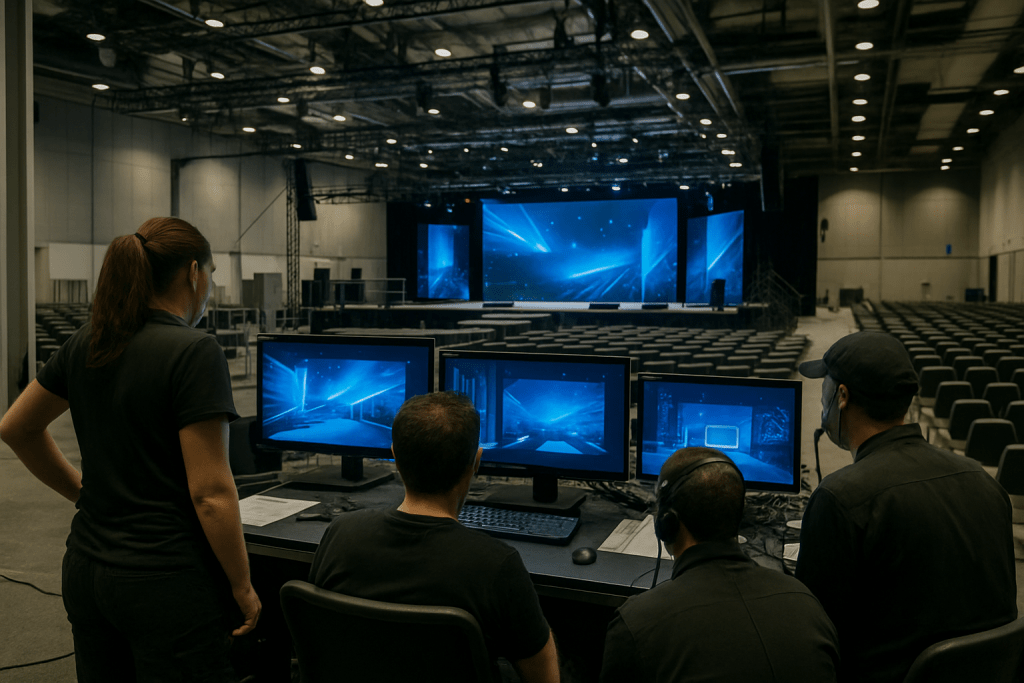
Experiential design roles like He’s are becoming more central as events lean heavily on integrated media. Organizers now expect LED backdrops, projection mapping, and interactive digital surfaces to work seamlessly with staging, signage, and audience flow.
- Designers with cross-disciplinary skills can bridge gaps between AV teams, creative directors, and fabrication partners.
- The ability to plan for both screen-based content and physical space supports more coherent attendee journeys.
- Junior roles focused on integration indicate that this capability is becoming a baseline expectation rather than a specialist add-on.
For agencies and in-house teams, this kind of talent pipeline suggests that experiential design will continue moving toward more unified, media-rich environments—particularly at corporate events, brand activations, and large-scale conferences.
Why this matters
For event professionals, the emergence of designers like He underscores a practical shift in how projects are staffed and executed. As experiences increasingly blend digital storytelling with physical immersion, teams need contributors who can think across formats rather than in silos.
Her role highlights several trends worth watching for planners, producers, and venues:
- Greater reliance on designers who understand both content and space planning.
- Increased collaboration between creative, technical, and production departments from early concept stages.
- Growing expectations that even junior team members will be comfortable working across disciplines.
While He is at an early stage in her career, her position as a junior experiential designer illustrates how agencies are investing in talent that can merge pixels and environment. For an industry that depends on audience engagement and memorable experiences, this blend of skills is likely to become a defining feature of future event production teams.