Emerging event professional focuses on community-building experiences
Background and context
Younger event professionals are playing a growing role in shaping how live experiences are designed and delivered. As the industry continues to recover and evolve after years of disruption, there is renewed attention on how events can foster meaningful connections rather than simply deliver content.
Within this shift, early-career practitioners who focus on attendee experience and community-building are becoming more visible. Their work often spans account management, creative concepting, and on-site execution, with an emphasis on how audiences feel before, during, and after an event.
Key announcement
Selena Bustos, an account executive at event-focused company POPLIFE, has been highlighted as part of a new wave of emerging talent in the events sector. In her current role, Bustos works with clients to design and deliver experiences that go beyond standard programming, with the stated goal of creating an authentic sense of community among attendees.
As an account executive, her responsibilities span client relationships and project delivery, connecting strategic objectives with on-the-ground execution. While specific campaigns and clients are not detailed, her work sits at the intersection of creative event design and attendee engagement, reflecting broader priorities within the industry.
POPLIFE positions itself as a producer of experience-driven events, and professionals in roles like Bustos’s are often tasked with ensuring that these experiences resonate with audiences in a lasting way. More information about the company and its work is available on its official website.
Industry impact
The focus on community at live events aligns with broader trends across business, cultural, and experiential marketing sectors. Organizers are under pressure to justify the time and cost of in-person attendance, which has increased interest in formats that encourage interaction, peer learning, and a sense of belonging.
- Attendee expectations are shifting toward participatory formats, networking, and shared experiences rather than passive consumption.
- Brands and organizations are using events to build long-term communities, not just host one-off activations.
- Event professionals in client-facing roles are increasingly expected to combine account management skills with an understanding of human-centered design.
Professionals like Bustos reflect this hybrid skill set: translating client goals into experiences that are structured for interaction, social connection, and ongoing engagement.
Why this matters
For event technology and production specialists, the rise of community-focused event strategies has practical implications. It influences how spaces are designed, what digital platforms are selected, and which tools are prioritized for engagement and data collection.
- Networking features and community platforms gain importance alongside traditional registration and content delivery tools.
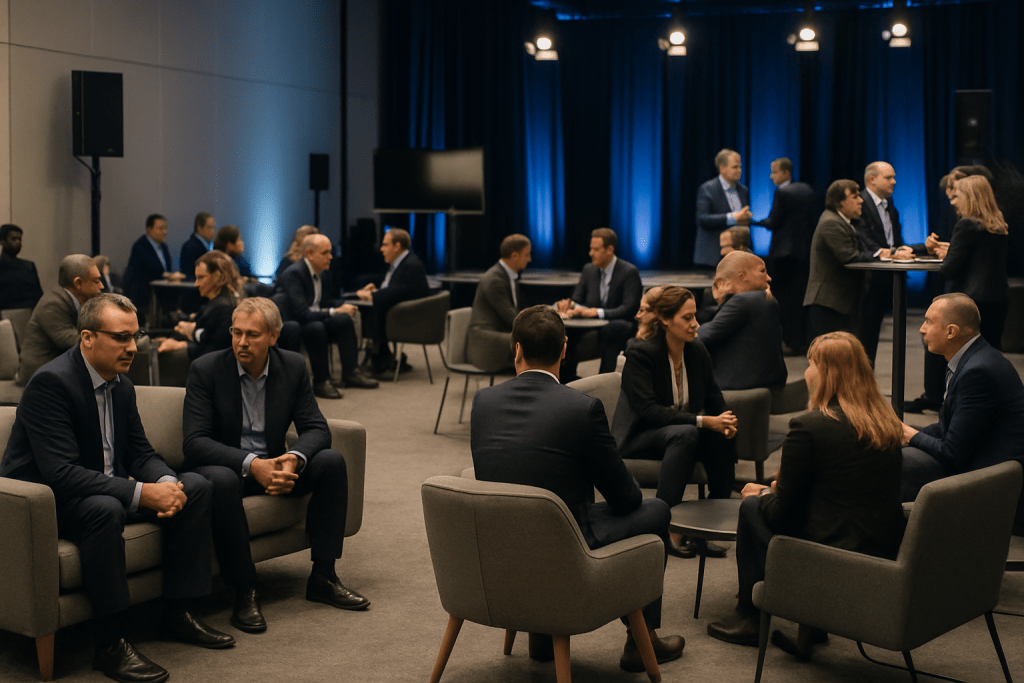
- Room layouts, staging, and AV setups are increasingly planned around conversation, collaboration, and shared experiences.
- Metrics of success extend beyond attendance and session views to include connection, retention, and ongoing community activity.
The recognition of emerging professionals who place community-building at the center of their work underscores how attendee experience is now a strategic priority, not a secondary consideration. As more account executives and producers adopt this mindset, technology providers and production teams will likely see stronger demand for tools and formats that support networking, interaction, and long-term audience communities.