Sustainable Wedding Alliance calls for Industry Collaboration Shift
The Sustainable Wedding Alliance is urging wedding professionals to rethink how they work together, arguing that closer collaboration is essential to strengthening the sector and supporting more sustainable business practices.
In commentary from Founder and CEO Michelle Miles, the organisation highlights how long-standing competitive habits across venues, planners, and suppliers are limiting progress, despite the industry's proven ability to collaborate successfully on individual events.
Industry Culture Of Competition And Protection
The Sustainable Wedding Alliance notes that, over several decades, many parts of the wedding market have been shaped by an assumption that every other business is competition. This has encouraged venues, planners, and suppliers to guard contacts, resources, and knowledge rather than share them.
According to the organisation, this culture can be seen in practices such as closely protecting supplier lists, limiting open discussion of operational challenges, and treating perceived competitors with caution even when they serve different segments of the market.
The Alliance argues that this behaviour may once have been seen as a way to protect commercial advantage, but now risks holding back adaptation and resilience at a time when businesses are facing evolving client expectations, higher operational pressures, and growing interest in sustainability.
Event-Day Collaboration Contrasts With Business Silos
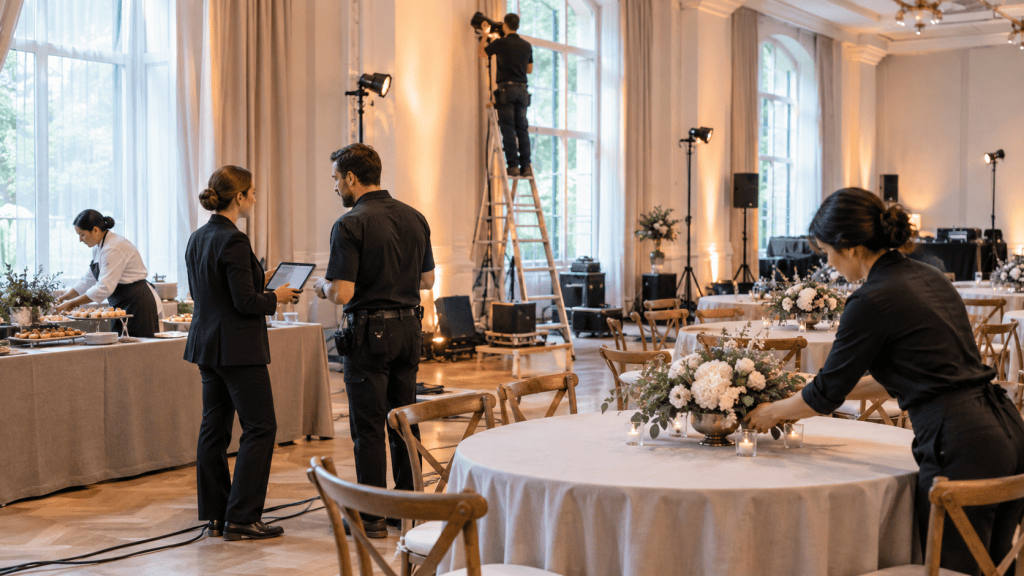
Michelle Miles observes that, on the day of a wedding, professionals across the supply chain often operate with impressive cooperation. Planners, venues, caterers, decorators, entertainers, and technical teams typically coordinate timings, layouts, and logistics to deliver a seamless experience for couples and guests.
This high level of event-day collaboration demonstrates that suppliers and venues already possess the skills and mindset needed to work together effectively. However, the Alliance points out that this spirit of teamwork often does not extend to how businesses plan, share information, or develop services at an industry level.
The organisation suggests that this gap between operational collaboration on individual events and strategic collaboration as businesses is a missed opportunity, especially when many companies face similar questions around sustainability, supply chain reliability, and changing client expectations.
Call For Shift Toward Shared Learning And Support
The Sustainable Wedding Alliance is encouraging wedding professionals to adopt more open, cooperative approaches beyond the confines of a single event. It proposes that businesses could benefit from structured opportunities to share experience, insights, and practical solutions to common challenges.
This might include more transparent conversation between venues and suppliers about what works well operationally, open discussion of preferred working practices, and joint exploration of new ideas that support more sustainable weddings. The organisation suggests that such exchanges could help reduce duplicated effort and enable businesses to refine services more efficiently.
By aligning more closely, the Alliance believes that companies across the sector can build stronger, more resilient networks that are better placed to respond to external pressures and client needs.
Link Between Collaboration And Sustainability Goals
As its name suggests, the Sustainable Wedding Alliance places particular emphasis on environmental and social responsibility within the wedding sector. It frames collaboration not only as a commercial or operational issue, but also as a practical enabler of more sustainable weddings.
The organisation notes that sustainability often requires coordinated action across multiple suppliers and venues, whether that involves reducing waste, sourcing materials more responsibly, or managing energy use during events. These goals can be difficult to achieve in isolation if businesses do not share information or align their approaches.
By working together more deliberately, the Alliance argues, professionals can identify realistic sustainability measures that fit the realities of different venues and service models. Shared learning can also help avoid repeating mistakes and allow successful initiatives to be adopted more widely.
Role Of Networks And Professional Communities
The Sustainable Wedding Alliance positions itself as part of a growing ecosystem of networks and communities that aim to support the wedding sector in addressing shared challenges. It sees organised collaboration as a way to move beyond informal exchanges and build a more consistent culture of support among suppliers and venues.
Through initiatives focused on sustainability and best practice, the organisation aims to provide spaces where professionals can discuss issues that affect the industry as a whole, rather than only their own businesses. These discussions can cover topics ranging from operational efficiency and resource management to client communication and supplier relationships.
The Alliance suggests that when professionals participate in such networks, they are more likely to view each other as partners in solving common problems, rather than purely as competitors.
Implications For Venues, Suppliers, And Planners
The commentary from Michelle Miles underlines that the call for greater collaboration applies to all parts of the wedding supply chain. Venues can play a central role by setting expectations for cooperative working methods among their recommended suppliers and by being open about operational considerations that impact event delivery.
Suppliers, from florists and caterers to production and audiovisual companies, can contribute by openly engaging with venues and peers on logistics, timing, and sustainability practices that affect the broader event ecosystem. Planners and coordinators, who often sit at the intersection of multiple suppliers, are also well placed to encourage information sharing that benefits the entire team.
The Alliance maintains that, collectively, these changes can help create a more supportive and adaptable industry environment, where businesses can respond more effectively to both day-to-day operational challenges and longer-term trends.
Outlook For Wedding Sector Collaboration
While the Sustainable Wedding Alliance recognises that competitive dynamics will remain part of the wedding market, it argues that a more collaborative mindset does not conflict with healthy competition. Instead, it suggests that shared standards, aligned expectations, and mutual support can raise overall quality and reliability across the sector.
The organisation positions collaboration as a practical step toward a stronger, more sustainable wedding industry that can continue to deliver high-quality experiences for couples while managing resources more responsibly. By challenging ingrained habits of secrecy and isolation, it hopes to help shift the culture toward one where wedding professionals feel more confident working together on the issues that affect them all.