Three Days Grace adopts Sennheiser EW-DX for global touring

Background and context
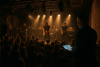
Canadian rock band Three Days Grace is currently on a world tour in support of their recent releases, performing a mix of arenas, festivals, and theater-sized venues. With a catalogue built around high-energy, guitar-driven material, the band requires a robust sound setup that can handle aggressive performance styles and variable stage conditions.
For this tour cycle, the production team has placed particular emphasis on streamlining RF coordination, ensuring stable audio in crowded spectrum environments, and reducing setup time between tour stops. These demands have led the crew to update several elements of the touring rig, with a focus on the wireless microphone and instrument systems used on stage each night.
Key announcement
Sennheiser reports that Three Days Grace has standardized its current touring wireless package around the EW-DX digital system. The setup includes handheld vocal transmitters and bodypack units for instruments and in some support roles, paired with rack-mounted receivers integrated into the band’s touring racks.
According to the manufacturer, the choice of EW-DX was driven by the need for predictable RF performance across different territories, as the band’s itinerary includes North America, Europe, and other regions with varying spectrum rules and levels of congestion. The digital system is designed to offer tighter spacing of channels and automated scanning features intended to speed up daily frequency coordination.
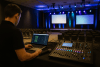
On the technical side, the tour is making use of networked control functions to monitor RF status, battery life, and audio levels from front-of-house and backstage positions. This allows the audio team to adjust settings and respond to emerging RF issues without physically accessing each receiver, which can be valuable during quick changeovers or festival appearances.
The manufacturer highlights that the EW-DX system in use on the tour is based on its current UHF digital platform, featuring rechargeable power options and tools for integrating with existing touring infrastructure. Further details can be found on the company’s official product pages at sennheiser.com.
Industry impact
Large-scale rock tours remain among the most demanding live environments for wireless equipment, combining high SPLs, active performers, and complex stage designs. A system that can withstand these conditions over months of travel serves as a practical test case for other sectors of live events, including festivals, corporate shows, and broadcast-linked performances.
Three Days Grace’s adoption of a fully digital wireless workflow reflects a broader industry move away from legacy analog systems. As RF spectrum becomes more crowded and regulated, production teams are increasingly turning to digital platforms that promise higher channel counts and more efficient spectrum use.
For audio rental companies and touring vendors, the use of a unified digital system on a world tour can simplify inventory management and technician training. It can also influence purchasing decisions, as productions look to standardize on platforms that have been proven in similarly demanding applications.
Why this matters
For event technology professionals, this tour provides a concrete example of how digital wireless systems are being applied in real-world, high-pressure scenarios. The focus on RF stability, remote monitoring, and streamlined setup aligns with the needs of many live event formats, not just rock concerts.
As tours and festivals continue to juggle tight turnarounds and complex stage plots, tools that reduce setup time and minimize RF troubleshooting are becoming central to production planning. The implementation of Sennheiser’s EW-DX system on a heavy-touring act like Three Days Grace underscores how manufacturers and production teams are adapting to this new operational reality.
While each event will have unique requirements, the underlying trends—higher channel density, reliable digital transmission, and centralized control—are likely to shape wireless strategies across the wider event technology landscape in the coming years.