Panel Discussion explores Modern Reality of Unique Venue Market
Industry practitioners gathered at Somerset House in London to examine how so‑called unique and historic venues compare with conventional event spaces on cost, complexity and overall event delivery.
The discussion, recorded live during the Unique Venues of London Showcase at Somerset House, brought together representatives from Historic Royal Palaces, Somerset House, Park Lane Events and Venufindr to address common perceptions that characterful venues are more restrictive, complicated or expensive than traditional locations.
Panel Discussion examines Venue Perception and Reality
The panel focused on venues often described as historic, heritage or otherwise distinctive, and how they are positioned within the wider business events and live experiences sector. Speakers from venue ownership and venue-marketing organisations joined agency and platform specialists to compare operational practice in unique venues with that of more standard conference centers and hotels.
Participants discussed how venue selection is influenced by assumptions about flexibility, catering, technical provision and planning requirements, and how those assumptions affect buying decisions by event planners, corporate bookers and production agencies.
Venue Cost and Budget Consideration
One of the core themes was how unique venues are evaluated on price in relation to more familiar event spaces. The panel addressed the idea that historic or landmark properties automatically command a premium and that this is always reflected in the final event budget.
Speakers examined how pricing models at unique venues can differ from those at purpose-built facilities, including how venue hire, production, catering and ancillary services may be packaged or itemised. They also explored how perceived cost barriers might deter planners from making initial enquiries, even when a venue may be competitive for certain event formats or dates.
Operational Complexity and Event Logistics
The conversation also covered how operational factors shape the perception of unique venues as complicated or restrictive. Panelists considered elements such as access for build and de-rig, scheduling constraints, and the impact of heritage protection or public access requirements on event logistics.
Representatives from venue teams described how operational frameworks can be structured to support events while still meeting building, conservation or safety obligations. The role of in-house event management and preferred supplier networks was discussed in the context of simplifying planning processes for organisers unfamiliar with working in non-traditional spaces.
Regulation, Compliance and Heritage Requirement
Compliance questions specific to historic or culturally significant properties featured prominently in the discussion. The session examined how factors including listed-building status, conservation guidelines or museum-standard environmental controls can influence event design, capacity and production.
The panel considered how venue teams communicate these parameters to clients and how early-stage conversations can help align creative concepts with what is practically deliverable. They also highlighted the importance of clear documentation and briefing in ensuring that suppliers understand venue-specific rules around rigging, decor, power usage and technical installation.
Technology Provision and Production Capability
Speakers addressed how unique venues approach audiovisual support, connectivity and wider technical infrastructure. The discussion looked at how some venues integrate in-house AV, work with appointed production partners or facilitate external production companies to deliver staging, lighting, sound and broadcast elements.
The panel explored how planners can assess whether a unique venue has the appropriate baseline infrastructure for their requirements, and where additional investment might be needed. Connectivity and support for hybrid and digital elements were also considered in the context of evolving expectations for business events and live experiences.
Client Expectation and Communication Strategy
Participants analyzed how expectations from corporate clients and agencies are shaped by early messaging, marketing materials and initial sales conversations. The discussion addressed how unique venues describe their capabilities, standard inclusions and limitations without discouraging enquiries.
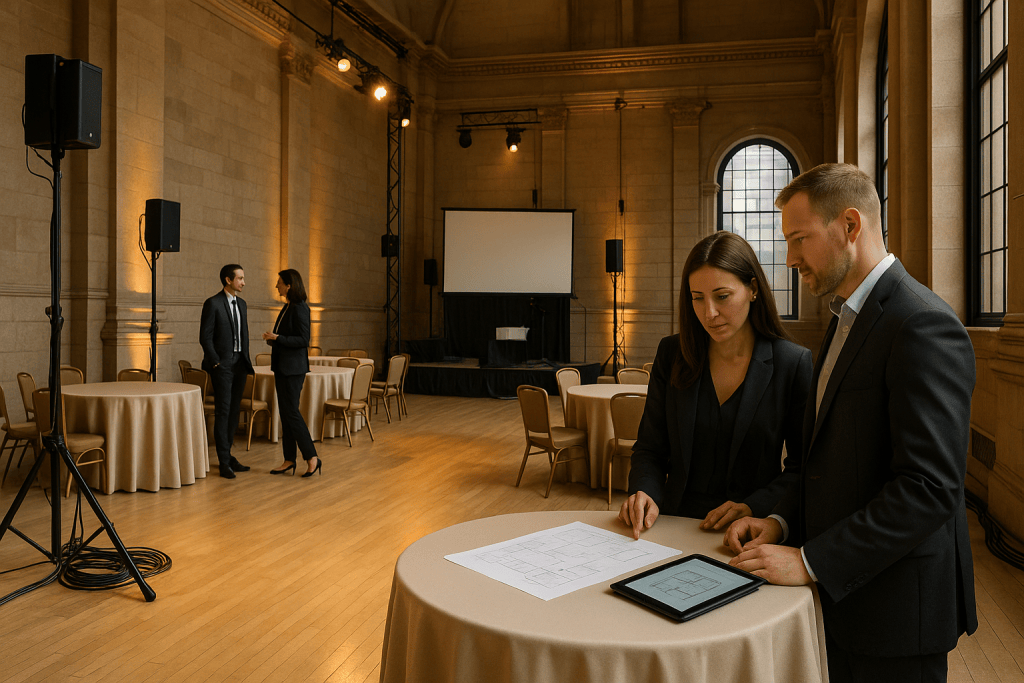
The role of clear, accessible information on capacities, layouts, technical options and access arrangements was highlighted as central to aligning expectations. Panelists considered how site visits, detailed floorplans and early engagement with operations or production teams can reduce uncertainty and help organisers understand how spaces can be used effectively.
Role of Agency and Platform Partner
With Park Lane Events and Venufindr represented on the panel, the discussion also examined how agencies and venue-finding platforms influence the visibility and positioning of unique venues in the marketplace. Speakers discussed how third-party partners help match client objectives with appropriate spaces and provide insight into what is feasible within given budgets and timelines.
The session covered how digital tools and search platforms present information about non-traditional venues, and how filters related to capacity, location, format and style can influence discovery. The importance of accurate, comprehensive data supplied by venues was highlighted as a factor that helps planners make informed comparisons between different kinds of spaces.
Unique Venue Advantage in Event Design
The panel explored how the architecture, history or distinctive features of a venue can support event narrative, branding and delegate experience. Speakers considered how existing character may reduce the need for extensive decor or theming and can contribute to memorability for attendees.
They also discussed how event formats such as product launches, awards, receptions and content-led conferences may leverage different aspects of a venue, from ceremonial rooms and outdoor courtyards to contemporary gallery-style spaces within heritage complexes.
Booking Process and Planner Confidence
Throughout the discussion, the panel returned to how the booking process itself can shape perceptions of complexity. They examined how enquiry handling, proposal clarity and the structure of venue hire agreements influence organiser confidence in working with unusual or historic properties.
Speakers from venue, agency and platform backgrounds shared perspectives on where misunderstandings often arise, such as inclusions within hire fees, expectations around caterers or suppliers, and timelines for confirming technical details. The emphasis remained on practical measures that can clarify these aspects early in the planning cycle.
Market Position of Unique Venue Sector
The event at Somerset House formed part of a broader industry conversation about the position of unique venues within the business events marketplace. With organisations such as Historic Royal Palaces and Unique Venues of London represented on the panel, the session drew on experiences across a range of high-profile sites and specialist spaces.
The discussion underscored how demand for distinctive environments continues to shape venue choice for corporate events, conferences and brand experiences, while also highlighting the importance of accurate information around cost, logistics and technical capability when comparing these options with traditional venues.