Global Event Venue news highlights New Austin Venue And Hotel Outlook
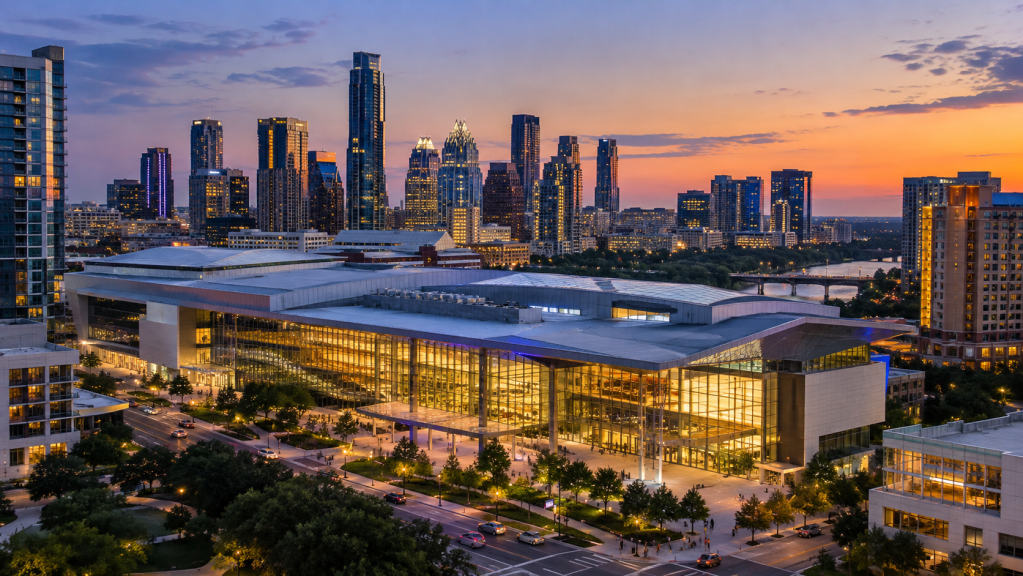
Global Venue news shapes Event And Meeting Landscape
Event organizers, meeting planners, and venue operators are watching a series of new developments that are reshaping where and how business events will take place over the next few years. Recent updates range from macro-level shifts that may influence hotel performance after the U.S. midterm elections to large-scale investments in new convention and meeting infrastructure such as a major $1.6 billion venue project in Austin.
Together, these changes underscore how political, economic, and urban development trends are converging to create both opportunities and new planning variables for the global events industry.
Midterm Election outcome could influence Hotel And Meeting demand
Industry stakeholders are closely tracking the potential impact of the U.S. midterm elections on hotels, convention business, and corporate travel. While the exact policy and market consequences will depend on final outcomes and subsequent legislation, any shift in government priorities can affect issues such as business confidence, public spending, and travel patterns, which in turn influence group bookings and event budgets.
Event organizers planning conferences, trade shows, and incentive programs in the U.S. are therefore assessing a range of scenarios for 2026 and beyond. These may include changes in federal or state-level support for tourism promotion, infrastructure investment that affects access to key destinations, and regulatory environments that influence corporate travel decisions.
For venue operators and destination marketing organizations, the post-election period will likely involve close monitoring of booking pace, reforecasting of group business, and updated positioning to appeal to both domestic and international planners.
Austin convention project advances with $1.6 billion Venue investment
One of the most significant developments in the North American venue pipeline is a planned $1.6 billion venue project in Austin. The large-scale investment signals continued confidence in the city as a meetings and events destination and reflects ongoing demand for flexible, high-capacity spaces able to host conventions, trade shows, and business events.
Although full design and programming details have not been disclosed in the source, the size of the investment suggests a major expansion of Austin’s ability to attract and retain large national and international events. For organizers, a new venue of this scale typically promises a broader mix of exhibition spaces, breakout rooms, and networking areas, alongside improved back-of-house infrastructure for event production, audiovisual integration, and hybrid event support.
The project also has implications for the wider local ecosystem. Large venue investments tend to spur parallel development in hotels, restaurants, and transportation infrastructure, providing planners with more options for room blocks, off-site activations, and partner events across the city.
Hotel and Venue market monitors Shifting Meeting demand
Globally, hotels, convention centers, and independent meeting spaces are responding to evolving group demand and the continuing importance of live gatherings in corporate and association calendars. While the source information highlights broad trends rather than specific properties, several themes are evident for event professionals:
- Hotels are reassessing group booking strategies to balance leisure demand with meetings, incentives, conferences, and exhibitions.
- Convention centers are emphasizing flexibility in space use to accommodate everything from large trade shows to smaller, high-tech meetings.
- Restaurants and nontraditional venues are positioning private and semi-private areas as viable options for receptions, sponsor events, and client experiences.
Meeting planners are consequently encouraged to maintain close communication with venue partners, especially in high-demand markets, to secure preferred dates, negotiate appropriate space allocations, and confirm technical capabilities for increasingly complex event formats.
Implications for Event Planners and Production teams
For event technology providers, production companies, and in-house venue teams, these venue developments carry practical implications for planning and delivery. A major new venue in a growth market such as Austin often becomes a focal point for technological upgrades, including integrated audiovisual systems, hybrid-ready infrastructure, and enhanced connectivity, creating new opportunities for collaboration with suppliers.
At the same time, macroeconomic shifts linked to political events like the midterm elections can influence event budgets, travel approvals, and sponsorship strategies. Production teams may need to build greater flexibility into technical designs, allowing programs to scale up or down based on final attendance and budget decisions.
Across hotels, convention centers, and alternative spaces, the common thread is a premium on adaptability: venues that can support diverse formats, from traditional plenaries and exhibitions to immersive experiences and content capture for digital audiences, are likely to be favored in future sourcing decisions.
Outlook for Global Event Venue development
While specific project announcements vary by region, the combination of significant capital projects such as Austin’s $1.6 billion venue and the broader political and economic context illustrates how dynamic the venue landscape remains. Event professionals evaluating destinations and facilities for upcoming cycles will need to stay informed about new builds, renovations, and policy environments that can affect travel and meetings.
As more details emerge on large venue projects and as the post-election environment clarifies, planners can expect further updates on capacity, availability, and capabilities across hotels, convention centers, and other event spaces worldwide.