Empire Entertainment appoints Growth Chief for Experiential Agency Expansion
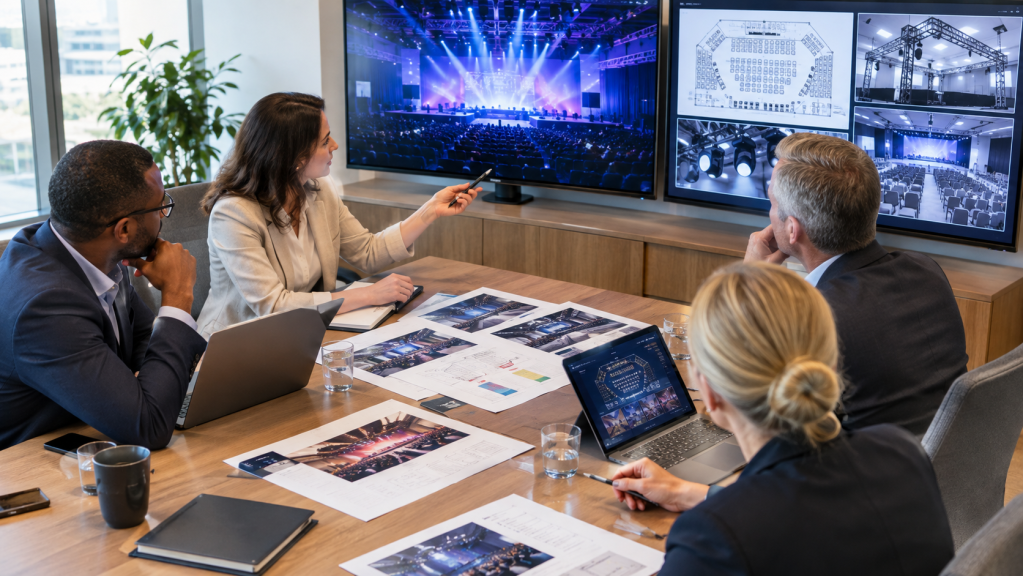
Empire Entertainment has appointed a new growth-focused C-suite executive to sharpen its business strategy, deepen client relationships, and pursue expansion opportunities in the competitive experiential agency landscape. The hire signals a deliberate move by the event production company to formalize and professionalize its approach to scaling services for brands, corporations, and institutions.
Company strategy and industry context
The creation of a dedicated senior role focused on growth reflects how mature experiential agencies are evolving beyond project-by-project execution. As client expectations rise and event budgets are increasingly scrutinized, agencies are under pressure to demonstrate long-term value, strategic insight, and the ability to scale globally consistent experiences.
By adding growth leadership at the C-suite level, Empire Entertainment is aligning itself with this shift. The new executive remit typically touches areas such as market development, client portfolio strategy, and the integration of live, hybrid, and digital experience capabilities. It also commonly includes closer collaboration with creative, production, and operations teams to ensure that new business ambitions are grounded in delivery reality.
Focus on experiential growth fundamentals
The appointment underscores several fundamentals that are increasingly critical for experiential agencies seeking sustainable growth:
- Clear definition of core client segment and service offering
- Investment in repeatable processes and scalable production models
- Integration of measurement and data into event strategy
- Alignment between sales promises and on-site delivery capabilities
For agencies, growth is no longer just about winning the next pitch. It depends on building long-term programs, strengthening account management, and leveraging a mix of in-person, virtual, and hybrid channels to support year-round engagement.
Implications for brand and corporate clients
For brands, corporations, and institutions that rely on partners like Empire Entertainment, the strategic shift is likely to show up in more consultative engagement, earlier involvement in planning cycles, and a sharper emphasis on measurable outcomes. Clients increasingly expect agencies to support objectives such as community building, demand generation, internal culture, and stakeholder education, not just event execution.
A dedicated growth leader can help align these expectations with internal resources, ensuring that creative concepts, production design, and technology choices are driven by business goals. This can influence decisions around format mix, content strategy, venue selection, and the use of audiovisual, broadcast, and digital engagement tools.
Trend of senior growth leadership in experiential agencies
Empire Entertainment’s move mirrors a wider industry trend where experiential and event production agencies are introducing roles such as chief growth officer, chief client officer, or head of growth. These positions often serve as a bridge between C-suite strategy and day-to-day client service, helping agencies navigate:
- Competitive differentiation in a crowded experiential marketplace
- Shifts in procurement processes and centralized buying
- Rising demand for hybrid-ready technical infrastructure
- Regional and global expansion of event programs
As agencies grow, the risk of fragmented client experiences also increases. Senior growth leadership is one way to coordinate business development, marketing, and account direction so that clients experience consistent quality across multiple markets and programs.
Outlook for event and experiential growth
The appointment at Empire Entertainment underscores how growth in the event and experiential sector is becoming more intentional and data-informed. While creative excellence and flawless production remain non-negotiable, agencies are increasingly judged on their ability to partner strategically with clients, anticipate industry shifts, and adapt their operating models.
For experiential agencies, the move toward formal growth leadership may become a standard part of organizational design, particularly for those servicing global brands and complex event portfolios. For the wider market of venues, audiovisual providers, and technology partners, this evolution is likely to translate into more structured collaboration, clearer briefs, and a tighter focus on measurable impact across live, hybrid, and digital event formats.