Coventry’s visitor economy surpasses £1bn milestone
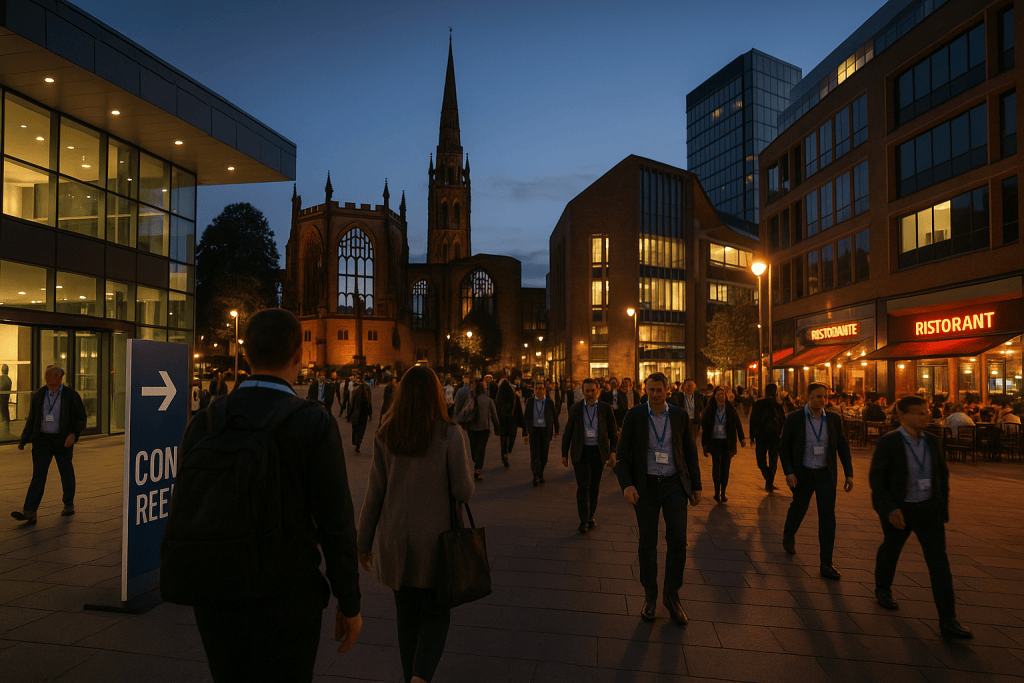
Coventry has passed a major economic milestone, with its visitor economy exceeding £1 billion for the first time. Newly published data indicates that 12.6 million visits were made to the city in 2025, generating an estimated £1.009 billion in economic impact.
The figures are based on the STEAM (Scarborough Tourism Economic Activity Measure) Economic Impact Model, a commonly used tool for assessing the value of tourism and visitor activity at destination level. The results underline the growing role of events, conferences and cultural programming in driving regional economic performance.
Background and industry context
Coventry has been steadily building its profile as a visitor and events destination, supported in recent years by investment in cultural infrastructure, transport links and city-centre regeneration. The city’s calendar includes a mix of business events, exhibitions, festivals and sports fixtures, alongside a growing number of community and cultural activities.
The wider UK visitor economy has experienced a period of adjustment and recovery following the COVID-19 pandemic, with domestic travel and regional business events playing a more prominent role as international sectors rebuild. Within this landscape, mid-sized cities such as Coventry are positioning themselves as accessible alternatives to major metropolitan hubs, offering lower costs and improved availability for meetings, incentives, conferences and exhibitions (MICE).
The use of the STEAM model places Coventry’s data in line with standard practice across many UK destinations, allowing local authorities, destination management organisations and venue operators to benchmark performance over time. The methodology combines information on visitor numbers, length of stay, type of visit and associated spending to estimate the overall value of visitor activity to the local economy.
Key developments in Coventry’s growth
Reaching the £1.009 billion mark represents a significant uplift for Coventry’s visitor economy, driven by both volume and spend. The 12.6 million visits recorded for 2025 signal strong demand across leisure, day visits and business-related travel.
While detailed breakdowns of overnight stays versus day trips, or business versus leisure tourism, were not disclosed alongside the headline figures, the overall trajectory suggests that a combination of cultural programming, sports events, conferences and exhibitions has helped sustain year-round activity.
Local venues, including conference centres, multi-purpose arenas, university facilities and hotel meeting spaces, are expected to have benefited from this demand. Increased visitor flows typically translate into additional revenue for accommodation providers, food and beverage outlets, transport operators and experience-based businesses such as attractions and tours.
The adoption of a recognised economic impact model underpins the reliability of the data for planning and policy decisions. For local government, city planners and tourism bodies, this evidence base supports discussions around further investment in transport, digital infrastructure and event-ready public spaces.
Implications for the events and conference sector
For the business events community, Coventry’s performance underscores the value of sustained destination development and coordinated event strategies. As visitor numbers grow, destinations typically increase their appeal for conference organisers, exhibition planners and corporate event teams seeking proven locations with established supplier networks.
An economy of more than £1 billion linked to visitor activity signals a sizeable ecosystem of event-related services, from production and AV technology to logistics, catering and accommodation. This environment can be particularly attractive to technology providers and event platforms looking to integrate with local venues, destination marketing organisations and city-wide data initiatives.
Stronger visitor metrics can also support bids for national and international conferences, as organisers often look for evidence of past performance, infrastructure capacity and stakeholder collaboration. Cities with robust tourism data are better positioned to demonstrate that they can handle peak demand periods, provide adequate connectivity and deliver sustainable delegate experiences.
Why this matters for event professionals and technology providers
For event planners, Coventry’s new visitor economy benchmark highlights a number of practical considerations:
- Destination reliability: A track record of attracting 12.6 million visitors in a year suggests consistent demand, which can reduce risk when bringing conferences and exhibitions to the city.
- Supplier depth: A £1bn visitor economy typically supports a diverse supply base, including production companies, AV specialists, hybrid event providers and on-the-ground staffing solutions.
- Transport and access: Growth at this scale often aligns with improved connectivity and transport planning, key factors in delegate experience and event logistics.
For event technology companies, the figures indicate a growing market for digital tools and services that support the full event lifecycle in a regional city context. Potential opportunities include:
- Venue and city-wide platforms: Integrations that link booking systems, registration platforms and onsite technologies with destination data.
- Hybrid and virtual extensions: Solutions enabling Coventry-based events to reach international audiences while leveraging the city’s physical infrastructure.
- Analytics and impact measurement: Tools that complement models like STEAM, helping local stakeholders understand attendee behaviour, spend patterns and sustainability metrics.
Destination success can also encourage public and private investment in smart city initiatives, including better connectivity, wayfinding, digital signage and real-time crowd management. These developments directly affect how event technology is deployed across venues, outdoor spaces and temporary event sites.
Conclusion
Coventry’s achievement in pushing its visitor economy beyond the £1 billion threshold marks a notable moment in the city’s ongoing evolution as a destination for leisure, culture and business events. The combination of 12.6 million annual visits and a robust economic impact figure, calculated through the STEAM model, provides a solid foundation for future planning.
For organisers, venues and technology providers, the data points to a maturing market with growing demand for professional event services and digital infrastructure. As destinations of Coventry’s scale continue to strengthen their visitor economies, competition within the UK events landscape is likely to intensify, creating new opportunities for innovation in how conferences, exhibitions and hybrid experiences are delivered.