Canadian cities test playful event concepts to drive local engagement
Background and context
Event producers and destination marketers across Canada are increasingly using playful, visually driven concepts to attract visitors and create shareable moments in urban spaces.
From art-led festivals to themed consumer activations, cities are testing formats that blend tourism, local culture, and branded experiences. These efforts target both residents and visitors, aiming to extend dwell time, stimulate nearby businesses, and boost the visibility of lesser-known neighborhoods.
Key announcement
Recent initiatives in Edmonton, Toronto, and Greater Victoria show how municipalities and brands are experimenting with these approaches.
-
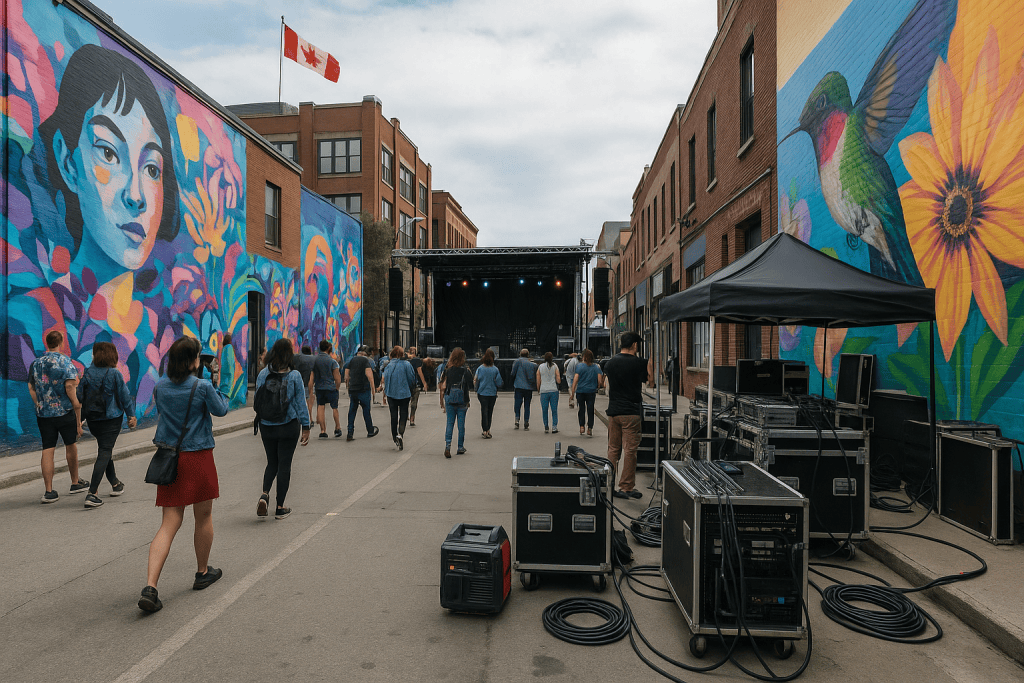
In Edmonton, a mural-focused festival is using large-scale public art installations to activate exterior walls and alleyways. The event brings together local and visiting artists for live painting sessions, guided tours, and community programming. Organizers position the festival as both a cultural attraction and a way to transform underused city surfaces into long-term visual landmarks.
-
In Toronto, a National Rum Day activation has been staged as a short-term, high-visibility experience aimed at adult consumers. The concept combines themed decor, tasting stations, and social media–ready photo areas. While tightly time-bound around the calendar “holiday,” the format reflects broader interest in single-day or weekend pop-ups that can be replicated in different markets.
-
On the West Coast, Greater Victoria has introduced a tongue-in-cheek public installation informally framed as a “cone-cation,” integrating traffic cones into a lighthearted, tourism-oriented narrative. The approach turns a common urban object into a visual motif that appears in signage, wayfinding, and photo stops, encouraging visitors to explore specific routes and attractions.
Together, these examples underscore how Canadian event designers and civic partners are leaning into low-barrier, visually distinctive concepts that can live both on the street and online.
Industry impact
For the event technology and production sectors, these projects point to a continued demand for flexible AV setups, lightweight staging, and content capture tools that work in non-traditional venues.
The Edmonton mural festival, for instance, relies on mobile sound systems, projection options for nighttime programming, and documentation support for artists. Short-run activations like Toronto’s themed rum event typically require compact lighting rigs, digital signage, and point-of-sale integrations that can be installed and removed within hours.
Meanwhile, destination-driven concepts such as Victoria’s cone-themed experience show how simple physical interventions can be amplified through digital storytelling. Wayfinding displays, QR-linked maps, and visitor-generated content all play into how these campaigns are measured and refined.
Vendors servicing this segment are likely to see growing interest in rental-friendly LED displays, portable sound and lighting solutions, and event management platforms that support hybrid outreach—before, during, and after the on-site activation. Further details on related solutions are available through EventTechnology.org.
Why this matters
For organizers and suppliers, these Canadian examples highlight several trends: the value of compact, repeatable event formats; the importance of highly visual design in attracting passerby attention; and the role of light-touch technology in extending the life of a local installation.
As cities and brands look for cost-conscious ways to re-energize downtown areas and engage residents, concepts like mural festivals, themed micro-holidays, and playful urban motifs offer a template. They do not require large-scale infrastructure but still create moments that are easy to photograph, share, and integrate into broader marketing campaigns.
For the wider event ecosystem, this points toward a market in which smaller, more frequent activations coexist with major festivals and conferences. Providers of AV, staging, and digital tools who can adapt to both scales—and who understand how to support storytelling in public space—stand to benefit as these formats become more common across Canada and beyond.