How Exhibition Stand Design Is Evolving Beyond the Booth
Product videos, brochures and supplier research are now just a click away. For many buyers, the discovery phase starts and often continues online through webinars, websites and social platforms. That reality is reshaping expectations of what a trade show stand should deliver.
If information can be accessed remotely, exhibitors are placing greater emphasis on what cannot be replicated on a laptop screen: physical, multi-sensory brand experiences and in-person interaction. Stand design is increasingly focused on engagement, participation and data capture rather than simply building a branded backdrop for meetings.
Background: from information desks to experience hubs
Historically, exhibition stands were primarily information points. Graphics, literature racks and product displays acted as the main attractors, while staff qualified leads and handed out materials. The value proposition was based on access to information and face-to-face conversation.
The rise of always-on digital content has shifted that balance. Buyers can compare specifications, view demos and download technical sheets before they ever register for a show. As a result, the purpose of a physical presence at an exhibition is evolving from information delivery to experience design.
This trend is reinforced by broader changes in event strategy. Organisers and exhibitors are looking for ways to justify travel, time out of the office and budget allocation. A stand that offers only what could be obtained remotely is increasingly difficult to defend. Instead, both sides are looking at how the show floor can provide something uniquely live: hands-on trials, immersive storytelling and spontaneous peer-to-peer connections.
Key developments in modern exhibition stand design
In response, several design patterns are becoming more common across trade shows and exhibitions, often supported by technology but rooted in behavioural insight and visitor psychology.
From product display to interactive demonstration
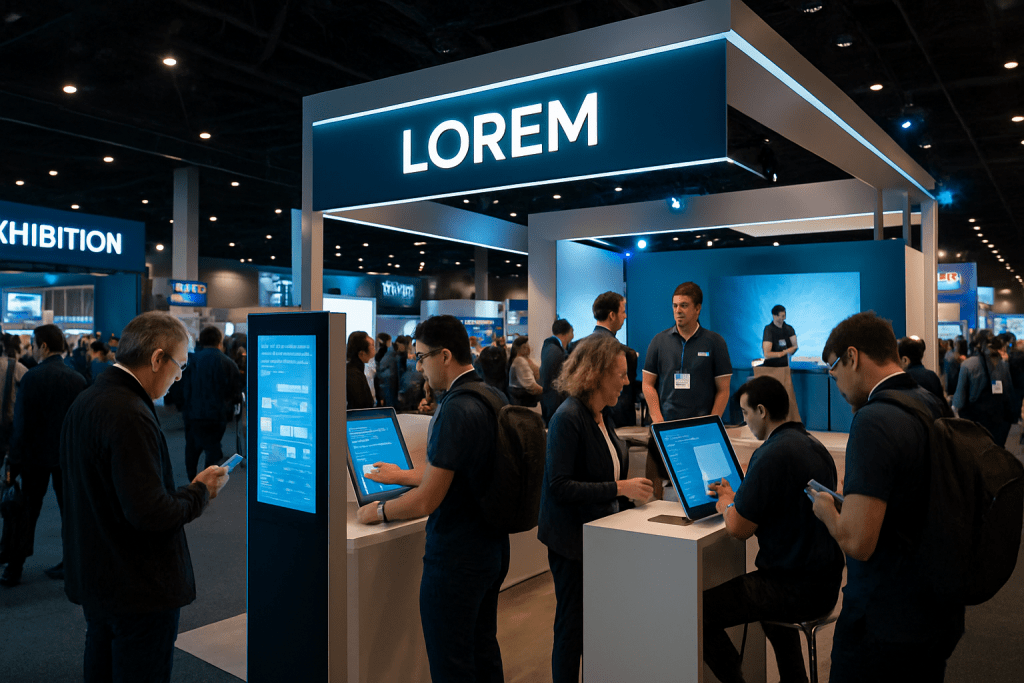
Static product line-ups are giving way to areas where visitors can test, manipulate or personalise what they see. Exhibitors are integrating live demos, guided workflows and scenario-based experiences that mirror real-world use cases. Rather than watching a product video, attendees are encouraged to try the solution themselves, often supported by touchscreens, tablets or sensors that track usage and interest.
Interactive demo stations can also be structured to collect data. For example, visitors might scan a badge to begin an experience, answer short prompts as they move through it, or receive a customised summary via email afterwards. This supports more informed follow-up and provides measurable insight into what captured attention.
Immersive brand spaces and storytelling
Many exhibitors are rethinking the stand as an environment rather than a frame. Lighting, sound, materials and layout are used to communicate brand values and narrative, not just logos and taglines. This might include thematic zones that reflect different customer segments, application areas or stages of a journey.
Immersive elements such as large-format projections, directional audio, responsive lighting and augmented reality are increasingly common, but they are most effective when anchored to a clear story. The aim is not spectacle for its own sake, but a structured way to guide visitors through a sequence of messages and interactions.
Spaces designed for conversation and collaboration
Engagement is not only about technology. As exhibitions become more relationship-focused, stands are being designed with distinct areas for informal conversations, structured meetings and small-group sessions. Comfortable seating, acoustic treatments and semi-private pods are used to create an environment where longer, higher-value discussions can take place.
Some exhibitors are also building small presentation or workshop areas into their stands. These can be used for scheduled talks, live demos or roundtables, often supported by simple AV set-ups and digital registration or check-in. This programming approach extends dwell time and offers organisers additional educational content for the show as a whole.
Blending physical and digital touchpoints
Hybrid thinking has filtered down to individual stands. Exhibitors are combining physical encounters with digital follow-up, using QR codes, NFC tags and mobile experiences to connect on-stand activity with ongoing engagement.
Examples include digital product configurators accessible via visitors’ own devices, content libraries unlocked after a stand interaction, or digital passports that reward participation in different stand zones. These tools help exhibitors capture verified contact details and behavioural data while reducing reliance on printed collateral.
Data-driven layout and traffic planning
As event technology matures, stand design is also benefitting from analytics. Exhibitors are using historical show data, heatmaps and lead capture reports to refine layouts. Entrances, demo points and hospitality areas are being positioned based on likely traffic flows and desired visitor journeys.
Some stand concepts are created to be modular, allowing teams to test different configurations across events. Elements can be added, removed or repositioned in response to what engagement data reveals, turning the stand into a continuously optimised asset rather than a one-off build.
Industry impact: changing expectations for exhibitors and organisers
These design shifts are influencing how budgets are allocated and how success is measured. Investment is moving from large-scale printed graphics and physical giveaways towards experience development, content creation and interaction design.
For organisers, there is pressure to provide infrastructure that supports more complex stands: adequate power and connectivity, flexible build regulations, and access to reliable technology partners. Clear guidelines around audio levels, lighting effects and visitor safety also become more important as immersive builds increase in number and ambition.
The emphasis on engagement can contribute positively to the overall event proposition. Stands that prioritise interaction encourage visitors to spend more time on the show floor, participate in live content and share their experiences online. In turn, this can improve perceived value for attendees and exhibitors alike, helping events compete with digital channels for marketing spend.
Why this matters for event professionals and technology providers
For event marketers and brand teams, the evolution of stand design demands earlier and closer alignment with sales, product and customer success functions. Designing an engaging stand is no longer purely a visual exercise; it requires clarity on target audiences, messaging hierarchy and desired visitor behaviours.
Organisers need to factor these trends into floorplan design, exhibitor onboarding and onsite services. Offering guidance on best practices in experiential stand design, or connecting exhibitors with vetted AV and engagement technology providers, can strengthen an event’s positioning and outcomes.
For technology companies serving the exhibition sector, there is growing demand for tools that bridge physical and digital engagement. Lead capture platforms, interactive content systems, analytics dashboards and integrations with CRM or marketing automation platforms all have a role to play in making experiential stands measurable and scalable.
There is also opportunity in services: content strategy for on-stand experiences, UX design for interactive tools, and training for stand staff on how to facilitate participation rather than just deliver pitches.
Conclusion
As more of the traditional trade show information stack moves online, the physical exhibition stand is being redefined. The focus is shifting from presenting static information to creating experiences that can only happen in person: hands-on interactions, immersive storytelling and meaningful conversations.
For exhibitors, this means rethinking objectives, design briefs and how success is measured. For organisers and technology providers, it highlights the need to support more complex, engagement-led activations on the show floor. While approaches will vary by sector and scale, the direction of travel is clear: the most effective stands will be those that move beyond the booth and treat live engagement as their core function.