
Power 30 ranking opens for UK’s most sustainable event agencies
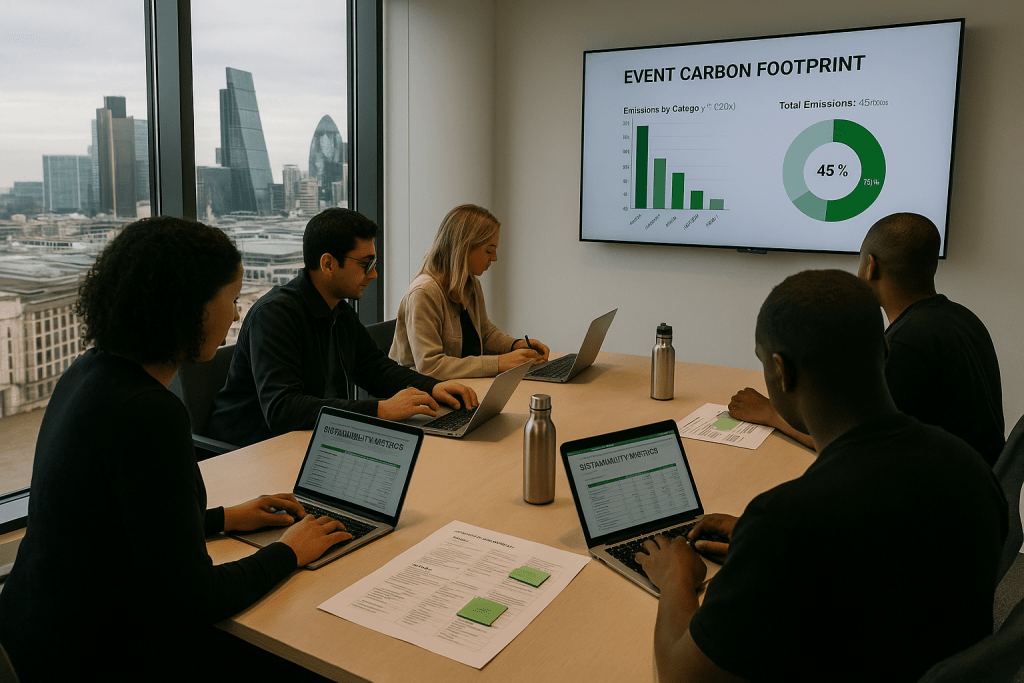
Entries have opened for the 2026/27 edition of the Power 30 Most Sustainable Agencies UK, a programme that highlights UK-based event agencies demonstrating strong performance in environmental and social responsibility. Now entering its third year, the ranking seeks to recognise organisations that are embedding sustainability into event strategy, operations and client delivery.
The initiative is run by event:decision in partnership with micebook and is open to agencies of all types operating within the UK market, including full-service event firms, specialists in meetings and incentives, experiential agencies, and hybrid and digital event providers. The resulting list will profile 30 agencies that can evidence meaningful progress on sustainability rather than relying on high-level commitments alone.
Background and industry context
Sustainability has become a central concern across the meetings, incentives, conferences and exhibitions (MICE) sector as clients, attendees and regulators increase pressure on organisations to reduce environmental impact and demonstrate responsible business practices. Event agencies are being asked to quantify carbon emissions, measure resource use and improve the social value of their projects, while still delivering engaging in-person, hybrid and virtual experiences.
Over the past few years, the sector has seen a rise in sustainability certifications, carbon accounting tools and destination-level initiatives targeting net zero goals. However, there remains a gap between policy and practice, particularly where agencies must balance client expectations, supplier capabilities and budget constraints. Programmes such as the Power 30 are emerging as a way to benchmark progress, showcase viable approaches and encourage more systematic action on sustainability among agencies of different sizes and specialisms.
Key developments in the 2026/27 call for entries
With the 2026/27 cycle now open, UK-based event agencies are invited to submit entries that demonstrate how they are integrating sustainability into their business and event delivery. While specific scoring criteria sit with the organisers, the programme is designed to evaluate both strategic commitment and practical implementation, covering areas such as:
- Environmental management, including efforts to measure and lower event-related emissions, waste and resource consumption.
- Supplier and venue selection policies that prioritise sustainable practices and transparent reporting.
- Workforce practices, diversity and inclusion, and the social impact of agency operations and events.
- Use of data, tools and technology to monitor, report and improve sustainability performance.
- Client education and collaboration around more sustainable event formats and production choices.
The programme is open to agencies working across live, virtual and hybrid formats, reflecting the broad scope of the UK events ecosystem. Agencies are expected to provide evidence of initiatives and outcomes rather than solely aspirational targets. The final list of 30 will represent a cross-section of organisations that have embedded sustainability within their commercial and creative decision-making.
Industry impact and benchmarking value
For the wider events industry, the Power 30 ranking functions as a reference point for how sustainability is being operationalised within agency environments. By profiling a diverse group of agencies, the initiative can help surface case studies and approaches that other organisations may adapt, from low-waste production models to data-led carbon tracking across complex programmes.
The ranking also has potential influence on client procurement decisions. As brands and corporate organisers refine their own environmental, social and governance (ESG) criteria, independent benchmarks can be used informally as an additional signal of agency capability in sustainable delivery. While inclusion in the Power 30 is not a certification, it may complement formal standards, internal audits or external advisory work being carried out by agencies and their clients.
In previous years, similar sustainability-focused rankings have encouraged more transparent reporting and a greater willingness among agencies to publish case studies detailing both achievements and challenges. This contributes to a more mature industry dialogue, where limitations in data, infrastructure or supplier availability can be discussed alongside successes, rather than obscured.
Why this matters for event professionals and technology providers
For event planners, marketing teams and corporate organisers, the Power 30 list offers a curated view of agencies that are actively prioritising sustainability. This can inform agency selection for RFPs where ESG performance is a key criterion, or provide a starting point for discussions about how to reduce the impact of existing programmes without compromising experience design.
For technology providers, the ranking highlights a growing demand for tools that enable measurable progress. Agencies looking to secure or maintain a place among recognised sustainable performers are likely to invest in platforms that support:
- Emission measurement and reporting at event, project and portfolio level.
- Supply chain and materials tracking to identify high-impact categories.
- Audience engagement features that encourage more sustainable attendee choices.
- Scenario planning and modelling for different event formats and logistics options.
Vendors offering registration systems, mobile apps, virtual platforms, production technologies and data analytics tools all have opportunities to align features with the sustainability priorities being evaluated in initiatives like the Power 30. This may include API connections to carbon accounting services, enhanced reporting dashboards, or functionality to support circular models for event materials.
As more agencies seek to differentiate themselves through documented sustainability performance, demand is likely to increase for verifiable data and cross-platform integration. This creates a feedback loop where client expectations, agency commitments and technology capabilities develop in tandem.
Conclusion
The opening of entries for the 2026/27 Power 30 Most Sustainable Agencies UK underscores how rapidly sustainability has moved from a peripheral concern to a core performance metric in the UK event agency landscape. By focusing on demonstrable action and measurable progress, the programme aims to highlight organisations that are turning policy into practice across live, hybrid and virtual formats.
For agencies, the ranking represents an opportunity to benchmark their efforts and gain visibility for initiatives that may otherwise remain internal. For clients and technology providers, it offers a snapshot of how sustainability requirements are reshaping creative, operational and digital strategies in the events sector. As the third edition of the Power 30 gets underway, the results are likely to provide further insight into how UK agencies are evolving in response to both environmental imperatives and market expectations.


