Event venue bodies urge broader UK business rates relief
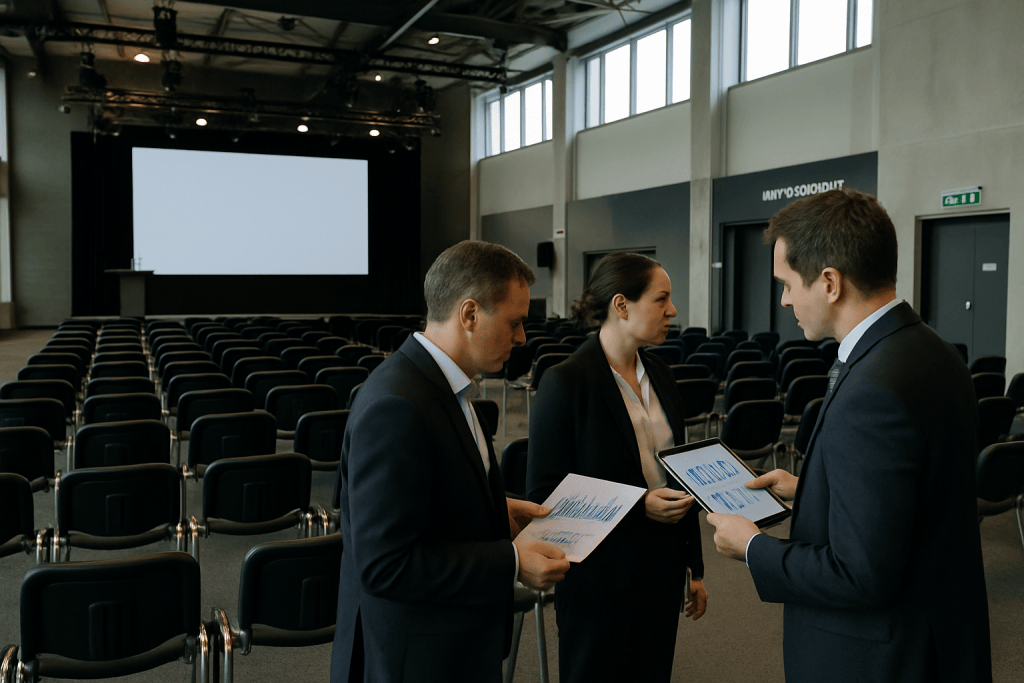
Two leading UK meetings and events associations have welcomed new government plans to cut business rates for parts of the hospitality sector, while warning that key event and conference venues risk being left behind unless support is extended more widely.
beam (the Business Events Association) and the Meetings Industry Association (MIA) issued a joint response to a recently announced 20% reduction in business rates for pubs, social clubs and live music venues across England from April 2027. Both bodies say the move is a positive step for high-street and leisure businesses under sustained financial pressure, but argue that venues central to the country’s business events ecosystem also need targeted relief.
Background and industry context
Business rates remain one of the most contentious cost pressures facing UK venue operators, from small independent spaces to large conference and exhibition centres. The meetings, incentives, conferences and exhibitions (MICE) sector has been grappling with a combination of rising energy and staffing costs, inflation and slower recovery in some corporate travel segments.
Many business events venues, particularly those focused on conferences, meetings and hybrid events, are heavily dependent on predictable long-term bookings and corporate budgets. These can be more vulnerable to economic uncertainty than the day-to-day footfall that sustains some hospitality businesses.
Industry bodies have repeatedly warned that high fixed costs, including business rates, could undermine the UK’s competitiveness as a destination for international conferences and major events. They argue that this can have wider consequences for regional development, inward investment and knowledge exchange, all of which are closely linked to a strong events infrastructure.
Key developments in the latest announcement
The government’s decision introduces a 20% reduction in business rates for selected hospitality and entertainment venues in England, specifically naming pubs, social clubs and live music venues as beneficiaries from April 2027. This is framed as part of a wider effort to support local communities and protect culturally important spaces.
While the new measure does bring relief to parts of the visitor economy, it does not explicitly address the position of conference centres, dedicated meeting venues, event campuses, exhibition halls or hotel-based events facilities. In their joint statement, beam and the MIA welcome the support for eligible venues but highlight what they see as a gap in recognising the full breadth of the events industry.
Both associations represent a wide cross-section of the UK’s business events ecosystem, including venues, agencies, technology providers and service companies. Their response draws attention to the interconnected nature of hospitality and events businesses, emphasising that meetings and conferences often drive midweek occupancy, food and beverage revenue, and longer-term corporate relationships for hotels and venues that may not fit the narrow categories in the new relief scheme.
Industry impact and concerns
The joint response underlines concerns that by focusing on specific venue types, the government risks creating an uneven playing field within the visitor and events economy. Venues that host conferences, exhibitions, training, association meetings and corporate events often operate on tight margins and are still recovering from the long-term impact of pandemic-related disruption.
Without comparable relief, many of these businesses could face higher relative costs than neighbouring hospitality operators, despite playing a critical role in attracting business tourism and supporting local supply chains. This includes hotels with significant banquet and meeting facilities, event campuses that combine exhibition, conference and performance spaces, and regional venues that rely heavily on B2B events for revenue.
Industry stakeholders also point out that large-scale meetings and exhibitions can be powerful drivers of economic activity, generating spend across accommodation, transport, catering, production services and event technology. Business rates policy that does not take this broader impact into account, they argue, could undermine the sector’s ability to invest in upgrades, digital infrastructure and sustainability initiatives.
Why this matters for event professionals and technology providers
For event professionals, the structure of business rates has a direct bearing on venue pricing, availability and long-term viability. High fixed overheads can limit investment in hybrid capabilities, networking tools, on-site connectivity and other technologies that organisers increasingly expect as standard.
If some venue categories receive relief and others do not, organisers may see growing price disparities between similar event spaces, or find that certain regions become less competitive for conferences and exhibitions. This could influence site selection, contract negotiations and the feasibility of multi-year event strategies.
For event technology providers, the economic health of venues is equally important. Many technology deployments—from permanent AV and LED installations to access control, registration systems and hybrid event platforms—depend on venues having sufficient capital to upgrade infrastructure. Where business rates remain high, investment in digital transformation may be delayed or scaled back.
The stance taken by beam and the MIA signals a broader push for the meetings and events sector to be viewed as an integral part of the UK’s economic and industrial strategy, rather than purely a subset of leisure and hospitality. The associations are effectively arguing that supportive fiscal policy should recognise the strategic role of business events in driving innovation, skills development and trade.
Conclusion
The proposed 20% business rates reduction for pubs, social clubs and live music venues from April 2027 represents a clear win for parts of England’s hospitality and entertainment landscape. However, the joint response from beam and the Meetings Industry Association underscores growing pressure on policymakers to adopt a more comprehensive approach that includes business events venues and conference infrastructure.
As the UK competes for global conferences and high-value business events, the conversation around business rates is likely to intensify. Event organisers, venue operators and technology partners will be watching closely to see whether future fiscal measures explicitly recognise the contribution of the meetings and events industry—both as an economic driver in its own right and as a platform for innovation across sectors.