Major concerts underline Coventry Arena’s economic impact
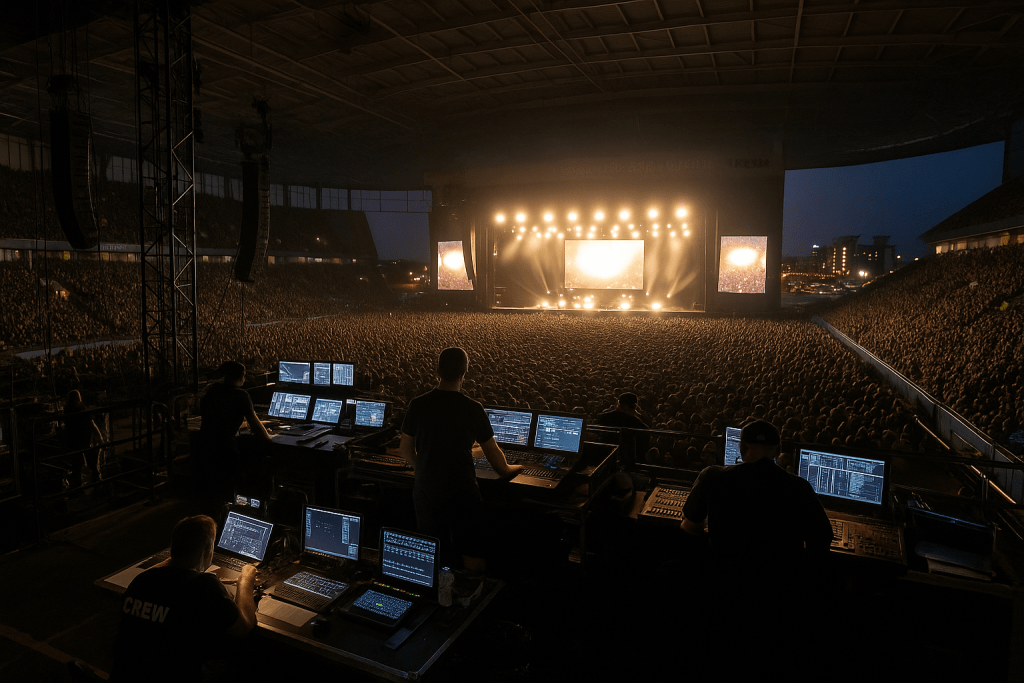
Three consecutive nights of large-scale concerts at Coventry Building Society Arena have delivered a significant financial uplift for the city, with organisers reporting an estimated £6.2 million economic boost driven by more than 100,000 attendees.
The shows, featuring pop group Take That in the stadium bowl, marked one of the most substantial live music weekends in the venue’s two-decade history. The surge in visitor numbers translated into increased spending on accommodation, food and beverage, local transport, and ancillary leisure activities across Coventry.
Background and industry context
Coventry Building Society Arena, which combines stadium, exhibition, conference and hospitality facilities, has been positioning itself as a multi-purpose venue capable of hosting major sports, concerts and business events. The recent concert series underscores how large entertainment productions continue to be central to venue strategies as they compete for diverse event bookings and year-round utilisation.
For UK cities, stadium-based concerts have become a key lever in post-pandemic recovery plans. They not only generate direct revenue for venues and promoters but also support a wide ecosystem of suppliers, from security and staging to local hospitality. As demand for in-person experiences has returned, venues are increasingly looking at how to optimise the operational, digital and fan-engagement layers of these events to maximise both economic and reputational benefits.
The Coventry weekend sits within a broader trend of regional cities using high-profile tours to reinforce their status as event destinations. For event technology providers and production partners, these shows provide a live testbed for crowd management systems, ticketing platforms, cashless payments, connectivity solutions and hybrid fan-engagement tools.
Key developments and the Coventry concerts
Across three nights, more than 100,000 fans passed through the stadium bowl at Coventry Building Society Arena to see Take That perform. Organisers describe it as one of the venue’s biggest live music weekends since opening 20 years ago, both in terms of scale and operational complexity.
The economic uplift estimate of £6.2 million takes into account visitor spending in the city across the event period. While detailed breakdowns have not been made public, such calculations typically include:
- Hotel and short-stay accommodation booked by out-of-town visitors
- Spending at bars, restaurants and retail outlets in and around the city centre
- Local travel, including rail, taxis and ride-hailing services
- Purchases within and near the venue, such as food, drink and merchandise
Operationally, weekends of this scale require coordination between the venue, local authorities, transport providers, emergency services and a wide network of contractors and suppliers. Behind the scenes, digital ticketing, access control, security monitoring, audio-visual systems and temporary infrastructure are all critical to safely processing large volumes of attendees within tight timeframes.
The concerts also provided the arena with an opportunity to showcase its capability to host complex, high-density live events that run alongside its conference, exhibition and hospitality business. In a competitive UK venue market, demonstrating the ability to deliver such weekends can be a powerful reference point when bidding for future tours, festivals and large-scale corporate activations.
Industry impact
While headline economic impact figures are often used in city marketing, they also signal the growing importance of integrated event infrastructure and technology. Large shows now depend on robust connectivity, advanced ticketing platforms, real-time crowd data and resilient payment systems to handle peak loads without disruption.
For regional economies, concert weekends of this size help support:
- Local event and production workforces, including freelance technicians and suppliers
- Hospitality businesses that rely on spikes in visitor numbers
- Transport networks that benefit from increased ridership
- City branding, through national media exposure and social media reach
From a policy and planning perspective, such weekends can influence future decisions on transport links, digital infrastructure and public-space management around major venues. Reliable delivery of high-attendance events strengthens the case for further investment in smart city tools, wayfinding, crowd analytics and integrated event mobility solutions.
Why this matters for event professionals and technology providers
For event organisers, the Coventry concerts highlight the value of:
- Data-driven planning: Using historical attendance, travel and spend patterns to forecast economic impact and resource requirements.
- Integrated operations: Aligning ticketing, security, transport and on-site services via shared dashboards and communication channels.
- Scalable infrastructure: Ensuring Wi-Fi, mobile networks, payment terminals and digital signage can scale to stadium-level crowds.
- Stakeholder management: Coordinating with city authorities, emergency services and local businesses to reduce friction for visitors.
For technology providers, high-profile concert weekends provide evidence points for solutions including:
- Advanced access control and digital ticketing platforms designed for rapid entry
- Real-time occupancy and movement tracking to support safety and crowd-flow decisions
- Mobile ordering and cashless payment systems that can operate under heavy load
- Audience engagement tools, from event apps to second-screen experiences, that extend value beyond the performance window
As venues seek to prove their wider contribution to local economies, there is also a role for more rigorous impact measurement. This could include anonymised mobility data, spending analytics, and post-event surveys integrated into existing event tech stacks. Clearer evidence helps both public and private stakeholders justify investment in venue upgrades, digital infrastructure and major-event bidding.
Conclusion
The Coventry Building Society Arena concert series demonstrates how large-scale live music events can act as catalysts for local economic activity while showcasing a venue’s operational and technological capabilities. An estimated £6.2 million boost and more than 100,000 attendees over three nights underscore the scale of impact that well-executed events can generate for regional cities.
For event professionals and technology suppliers, weekends like this highlight the importance of resilient infrastructure, coordinated planning and data-led decision-making. As competition intensifies among cities and venues to attract major tours and hybrid experiences, the ability to consistently deliver high-attendance events with measurable outcomes is likely to remain a key differentiator.