Sennheiser Spectera integrates with Bitfocus Companion and Buttons
Background and context
Sennheiser has been expanding its software tools to give technicians more flexible ways to control its audio systems in live, broadcast, and corporate environments. Spectera, the company’s browser-based control solution, is aimed at managing devices such as wireless microphone systems from a central interface.
In parallel, Bitfocus Companion has become a widely used open-source control platform that lets operators trigger commands across many different devices and applications from a single surface, often using stream decks or custom button panels. The separate Buttons application provides a streamlined way to build and trigger these commands.
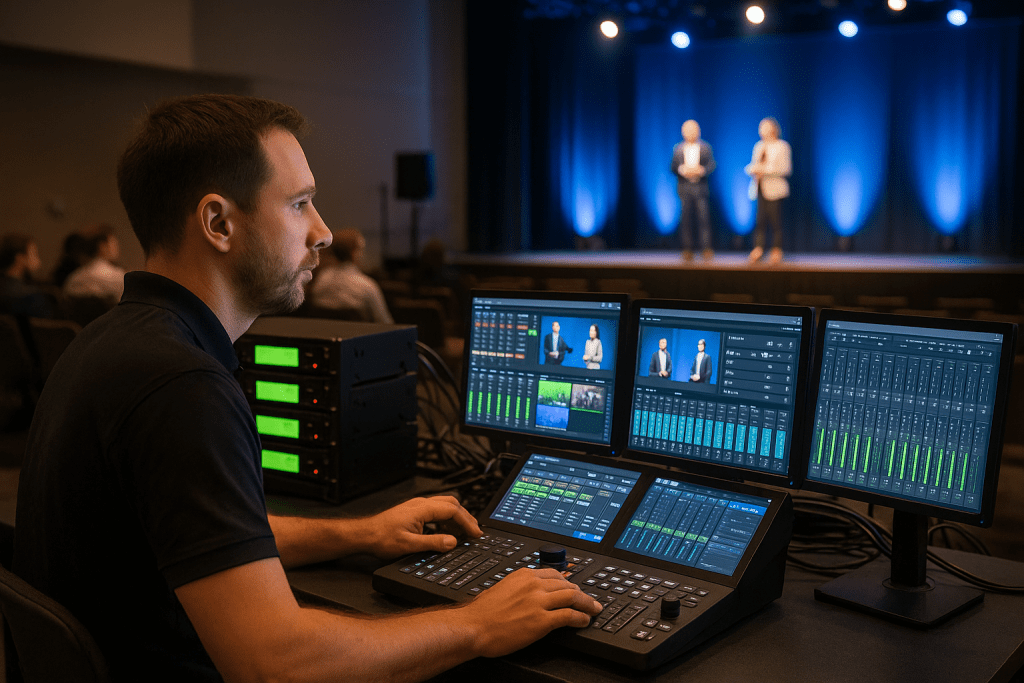
For AV teams and event technicians, the overlap between these tools is clear: they need to coordinate multiple systems—audio, video, lighting, and streaming—under one control layer, often with minimal staffing and tight schedules.
Key announcement
Sennheiser has announced that a dedicated Spectera module is now available within the Bitfocus Companion and Buttons applications. This means Spectera-controlled Sennheiser devices can be integrated into existing Companion-based workflows without additional middleware or custom scripting.
Through the new module, users can configure buttons to trigger common operations, such as changing device settings, recalling presets, or managing channels, directly from their Companion interface. This allows operators to treat Sennheiser systems like any other controllable endpoint in their show or room automation setup.
The module is designed to work with Spectera’s network-based control approach, using standard IP connectivity rather than proprietary cabling or dedicated hardware controllers. More information on Spectera is available via Sennheiser’s official product pages on sennheiser.com.
Industry impact
The integration aligns with a broader industry trend toward unified, software-driven control of AV infrastructure. As more manufacturers offer APIs and browser-based control, platforms such as Bitfocus Companion are becoming central orchestration points for events and installations.
For system integrators, the Spectera module reduces the need for custom programming to bring Sennheiser devices into a Companion environment. It can simplify design and commissioning, particularly in spaces where operators already rely on Companion for switching video sources, automating streaming scenes, or recalling lighting looks.
For rental and staging companies, this integration could streamline show control in temporary setups, where time to configure and test systems is limited. A single operator can now trigger audio-related actions alongside other show cues from a consistent interface.
Why this matters
Event and AV teams are under pressure to do more with fewer resources, while ensuring reliability and repeatability across shows and meetings. Integrations like the Spectera module for Bitfocus Companion and Buttons support this by reducing friction between systems and enabling more cohesive control strategies.
Instead of managing separate interfaces for wireless microphones, DSPs, video switchers, and streaming tools, operators can consolidate key functions into one customizable surface. That can help lower the training barrier for part-time staff, volunteers, or rotating crews who may not be familiar with every vendor’s software.
As AV environments continue to converge with IT and rely more heavily on IP networks, the availability of manufacturer-supported modules inside open control platforms is likely to become an expectation rather than a value-add. Sennheiser’s move to support Spectera within Bitfocus Companion and Buttons reflects that shift and gives event professionals another option for simplifying day-to-day operations.