Introduction
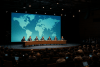
In an increasingly globalized world, communication lies at the core of successful collaboration, diplomacy, and business. Yet, as organizations expand beyond borders, they often encounter a significant challenge — the language barrier. Whether at international conferences, trade shows, or corporate summits, effective multilingual communication is essential to ensuring that every participant understands and engages fully. This is where interpretation equipment plays a transformative role. Through advanced interpretation equipment rental services, event organizers can deliver seamless, real-time multilingual communication without compromising the quality of interaction.
Understanding Interpretation and Its Importance in Events
Interpretation is the process of conveying spoken communication from one language into another in real time. Unlike translation, which focuses on written text, interpretation occurs instantly, enabling participants who speak different languages to interact naturally.
Interpretation is crucial for:
- Global business meetings where participants come from diverse linguistic backgrounds.
- International conferences host speakers and delegates from multiple regions.
- Diplomatic events and government summits require precise, accurate communication.
- Corporate training sessions and product launches that involve multinational teams.
Without proper interpretation, miscommunication can lead to misunderstandings, inefficiencies, or even reputational damage. Hence, investing in the right interpretation equipment rental ensures that language diversity enhances — rather than hinders — the success of an event.
Core Components of Interpretation Equipment
Modern interpretation systems are designed for accuracy, clarity, and ease of use. The right configuration depends on the size and nature of the event, but typically includes the following key components:
1. Interpreter Console
This is the workstation where interpreters perform their tasks. Equipped with microphones, headphone inputs, and control panels, interpreter consoles allow interpreters to listen to the source language, translate it in real time, and broadcast their interpretation to the audience.
High-end consoles offer advanced features such as:
- Multiple language channel selection
- Relay interpretation (interpreting from a non-original language source)
- Audio gain and tone control for clarity
- Redundant systems to prevent audio dropouts
2. Transmitters
Transmitters broadcast the interpreted audio signal to listeners. They can operate through:
- Infrared (IR) transmission: Ideal for enclosed spaces as it prevents interference and ensures confidentiality.
- Radio Frequency (RF) transmission: Suitable for large venues or outdoor events where greater mobility is needed.
- Digital Wi-Fi systems: Allow delegates to receive interpretation through mobile devices or specialized receivers.
3. Receivers and Headsets
Participants use wireless receivers and headsets to listen to the interpreted language of their choice.
Modern systems offer:
- Lightweight, ergonomic headsets for comfort during long sessions.
- Multi-channel receivers allow listeners to switch between different languages.
- Noise-canceling technology to minimize background interference.
4. Microphones
High-fidelity microphones capture the speaker’s voice for accurate interpretation. In large-scale events, a combination of delegate microphones, lectern microphones, and roving mics ensures that every participant can contribute seamlessly to discussions.
5. Soundproof Interpretation Booths
Interpretation booths provide interpreters with a controlled acoustic environment. These ISO-compliant booths isolate interpreters from ambient noise and prevent their voices from disturbing the main event. Portable booths are also available for flexible setups in temporary venues.
How Interpretation Equipment Enhances Multilingual Events
The success of multilingual events depends on both the competence of interpreters and the reliability of the equipment used. Advanced interpretation systems provide several advantages that directly influence the event’s quality and accessibility.
1. Real-Time Communication
With simultaneous interpretation, speakers and interpreters work concurrently. Delegates can follow discussions in their preferred language without delays, preserving the natural rhythm of communication.
2. Improved Audience Engagement
When participants understand every detail in real time, they are more likely to contribute actively, ask questions, and collaborate effectively. Interpretation equipment ensures inclusivity and engagement across language boundaries.
3. Scalability for Any Event Size
From small workshops to large international conventions, interpretation equipment rental can be scaled to fit the event’s requirements. Multiple language channels can be supported simultaneously, ensuring that every participant receives clear, uninterrupted audio.
4. Technological Reliability
Professional-grade interpretation systems are engineered for stability. They minimize latency, distortion, and interference — ensuring that interpretations remain accurate and intelligible.
5. Accessibility and Inclusivity
Beyond multilingual audiences, interpretation systems can also support accessibility services such as sign language interpretation, captioning, or assistive listening for the hearing-impaired, ensuring that all attendees can participate equally.
Advantages of Renting Interpretation Equipment
While some organizations may consider purchasing interpretation systems, interpretation equipment rental offers significant operational and financial advantages, particularly for occasional events.
1. Cost-Effectiveness
High-quality interpretation systems represent a substantial investment. Renting eliminates upfront costs, allowing event organizers to access the latest technology without long-term financial commitments.
2. Access to the Latest Technology
Rental providers regularly update their inventory to include state-of-the-art equipment. This means you can benefit from advanced features like digital encryption, wireless connectivity, and interference-free transmission without needing to upgrade hardware yourself.
3. Professional Installation and On-Site Support
Rental services typically include professional technicians who handle setup, calibration, and testing. During the event, technical support ensures that any issues are resolved instantly, guaranteeing uninterrupted communication.
4. Customization and Flexibility
Each event has unique requirements regarding language combinations, venue layout, and audience engagement size. Rental providers can tailor system configurations accordingly, ensuring optimal coverage and clarity.
5. Maintenance-Free Operation
Renting eliminates the burden of maintenance, storage, and equipment depreciation. Once the event concludes, the provider handles collection, inspection, and servicing, allowing organizers to focus solely on event execution.
Learn here about How Live Polling Improves Participation and Insight Collection.
Technical Considerations When Choosing Interpretation Equipment
Selecting the right system requires careful evaluation of several technical parameters to ensure compatibility with your event’s requirements.
1. Venue Size and Layout
The physical environment significantly impacts signal transmission.
- Infrared systems are best suited for indoor spaces with clear line-of-sight between transmitters and receivers.
- RF or digital systems offer greater flexibility for outdoor or multi-room venues.
2. Number of Languages
Determine how many languages need to be interpreted. Each language requires a separate channel and interpreter booth. Advanced digital systems can support dozens of simultaneous language channels efficiently.
3. Audio Quality and Signal Integrity
High-fidelity audio ensures interpreters capture nuances accurately. Look for systems with low total harmonic distortion (THD), wide frequency response, and digital encryption for secure communication.
4. Power and Connectivity Requirements
Modern interpretation equipment integrates with existing audio-visual (AV) systems. Ensure compatibility with your venue’s power supply, mixing consoles, and public address systems.
5. Compliance with International Standards
Ensure that equipment complies with ISO 4043 (for interpretation booths) and IEC 60914 (for conference networking technology). Compliance guarantees consistent quality, safety, and acoustic performance.
Learn here about Voting System Solutions for Corporate and AGM Events and Gamification Strategies Using Audience Interaction Tools.
Emerging Trends in Interpretation Technology
The field of interpretation technology continues to evolve, driven by innovation and digital transformation. Understanding these trends helps organizations stay ahead in delivering inclusive multilingual experiences.
1. Remote Simultaneous Interpretation (RSI)
RSI enables interpreters to work remotely through cloud-based platforms. Audio streams are transmitted in real time to participants’ devices, reducing logistical constraints while maintaining quality. This is ideal for hybrid or virtual conferences.
2. Mobile App-Based Receivers
Instead of dedicated hardware, participants can now use smartphones or tablets as receivers through encrypted Wi-Fi channels. This approach enhances convenience and sustainability by reducing the need for physical devices.
3. AI-Enhanced Interpretation Support
While human interpreters remain indispensable, AI-driven tools assist in terminology management, glossary suggestions, and real-time captioning. These tools complement human expertise and improve accuracy.
4. Sustainable Equipment Practices
Eco-friendly equipment designs and digital delivery systems are helping event organizers reduce waste. Rental providers increasingly focus on energy-efficient technologies and reusable hardware.
Best Practices for a Successful Multilingual Event
Ensuring seamless communication in multilingual events requires both planning and technical precision. Here are a few best practices:
- Conduct a Needs Assessment: Determine the number of languages, audience response, and event type before selecting the system.
- Engage Professional Interpreters: Equipment alone cannot guarantee success; skilled interpreters ensure linguistic accuracy and cultural sensitivity.
- Test All Systems in Advance: Conduct pre-event testing to identify potential interference or connectivity issues.
- Provide Clear Instructions to Delegates: Attendees should know how to use receivers, change channels, and adjust volume.
- Ensure Technical Support Onsite: Always have a trained technician available to manage setup, operation, and troubleshooting.
Summary of Interpretation Equipment
Language should never be a barrier to collaboration, innovation, or understanding. With advanced interpretation equipment and reliable interpretation equipment rental services, event organizers can ensure that every participant — regardless of language — experiences the event in full clarity and connection.
By combining technical precision, professional interpretation, and the latest communication technology, organizations can transform their multilingual events into truly global experiences where ideas flow freely and inclusively.
YouTube Videos on Interpretation Equipment
Academic References for Interpretation Equipment
- SIMULTANEOUS INTERPRETATION: BRIDGING LANGUAGE BARRIERS IN REAL–TIME
- Breaking the Language Barrier
- The language barrier as an aid to communication
- A typology of interpreter-mediated events
- Breaking language and cultural barriers: A key to improve stakeholder relationships of SMEs
- [PDF] Bridging cultural barriers in bicultural projects: More than translation and interpretation of language
- Language barriers hinder multinational operations
- [PDF] Breaking Language Barriers: A Global Translation Initiative
- Special Operators Seek to Break Language Barrier
- Eliminating language barriers for non-English-speaking patients