Waterfront Hall partners with BBC Introducing in NI push
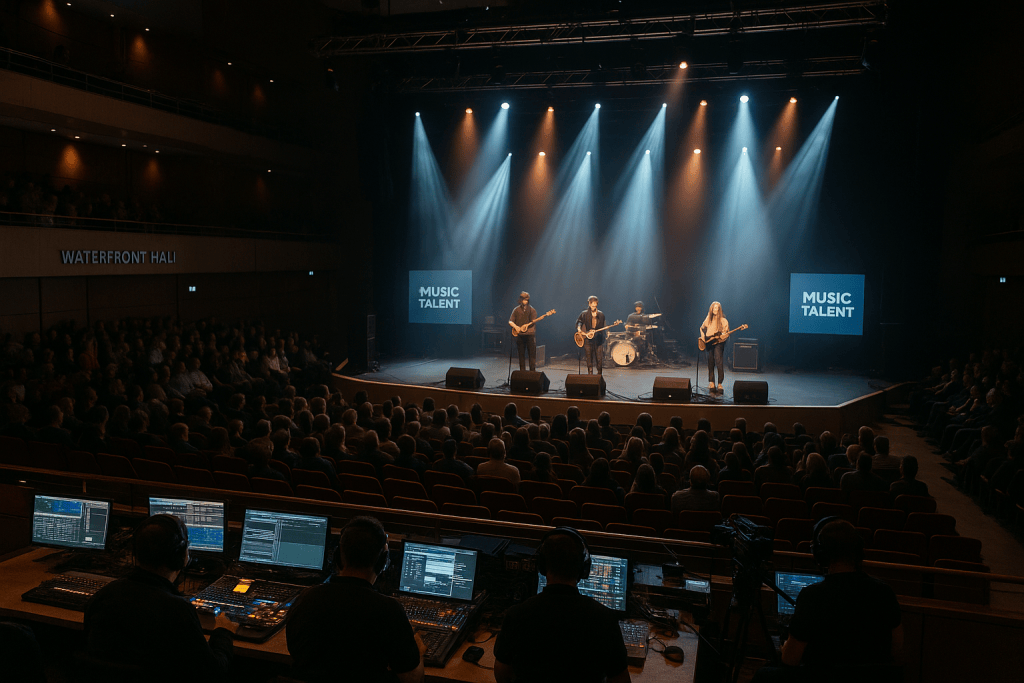
Waterfront Hall in Belfast has entered into a new partnership with BBC Introducing, aiming to strengthen support for emerging music talent across Northern Ireland and provide a more structured pathway for new artists into the live performance ecosystem.
The collaboration links one of the region’s most high-profile public venues with the BBC’s talent discovery platform, which has played an early role in the careers of artists such as Lewis Capaldi, Raye and Sam Fender. The initiative is designed to connect young and independent musicians with key players across the live, broadcast and education sectors, while expanding the use of Waterfront Hall as a performance and development hub.
Background and industry context
BBC Introducing operates as a nationwide network within the UK, providing a route for undiscovered and unsigned artists to submit music for broadcast consideration and live performance opportunities. Over the past decade, it has become a recognised conduit between early-stage artists and major platforms including festivals, touring circuits and national radio.
In parallel, multi-purpose civic venues such as Waterfront Hall have been reassessing their role in regional cultural ecosystems. Beyond hosting touring productions and commercial events, many are looking to contribute to local creative economies by offering stages, rehearsal spaces, and technical support for developing artists. This reflects a broader trend across the live and hybrid events sector, where venues are diversifying programming and partnerships to remain relevant in a rapidly changing entertainment landscape.
For Northern Ireland, the move comes at a time of renewed focus on the music and events economy, including investment in local festivals, city-based cultural programmes and education-led initiatives. The partnership aligns with that wider effort to retain talent in the region and to build clearer bridges between grassroots activity, professional venues and national media exposure.
Key elements of the partnership
The new arrangement will see BBC Introducing work with Waterfront Hall as part of its collaborative network of venues, promoters, educators and cultural organisations. While detailed programming schedules have not been disclosed, the stated objective is to create identifiable new avenues for emerging musicians in Northern Ireland to gain experience, visibility and industry connections.
The relationship is expected to include:
- Use of Waterfront Hall as a performance space for BBC Introducing-affiliated showcases or events featuring new artists.
- Closer coordination between the venue’s programming team and BBC Introducing curators to identify and support promising local acts.
- Collaboration with education and cultural partners to provide learning and development opportunities, such as workshops, mentoring or industry-facing sessions, where appropriate.
- Potential integration of recording or broadcast-ready performances into BBC Introducing content pipelines, helping selected artists reach audiences beyond the physical event.
For Waterfront Hall, the partnership positions the venue as a more visible part of the region’s talent development infrastructure, rather than solely as a host location for touring productions and major concerts. For BBC Introducing, it extends its on-the-ground presence in Northern Ireland and offers a high-profile, technically equipped venue within its network.
Industry impact for venues and organisers
For the wider events and venue industry, this type of collaboration underscores the growing importance of partnerships between broadcasters, cultural institutions and live event operators. As audience discovery increasingly happens across digital, social and broadcast channels, the value of well-equipped physical spaces as content production sites and artist development hubs continues to rise.
By aligning with a recognisable talent platform, Waterfront Hall may be able to attract new demographics, broaden its event mix and strengthen its reputation among promoters and programmers seeking credible spaces for developmental shows. At the same time, the partnership demonstrates how public venues can participate in a more joined-up pipeline that spans local scenes, regional stages and national media exposure.
For regional promoters and independent organisers, the collaboration could indirectly open up more options for joint programming, co-branded events and hybrid formats where live showcases are captured for later broadcast or online distribution. As event formats evolve, the ability to combine in-venue experiences with extended digital reach is increasingly viewed as a competitive advantage.
Why this matters for event professionals and technology providers
For event professionals, the partnership highlights several operational and strategic considerations:
- Programming strategy: Integrating developmental showcases into a venue’s calendar can help build long-term audiences and diversify revenue streams. Close collaboration with a recognised talent platform can also add credibility to emerging-artist bookings, helping to mitigate perceived risk.
- Technical infrastructure: To support this type of relationship, venues need reliable audio, lighting and recording capabilities suitable for both live audiences and potential broadcast or streaming use. This creates opportunities for AV and production technology providers to supply scalable solutions tailored to developmental events.
- Hybrid and content-led models: Partnerships with broadcasters and digital platforms can transform a venue into a content studio as well as a performance site. Recording, live streaming and repurposing performances for online audiences can extend the value of each event, with implications for workflow, rights management and technical design.
- Stakeholder collaboration: The model brings together public-sector venues, media organisations, educators and cultural bodies, requiring coordinated planning, shared objectives and clear governance. Event managers and producers working in this environment must navigate multiple stakeholder requirements while maintaining a coherent experience for artists and audiences.
For technology providers, particularly those supplying ticketing, production, streaming or audience analytics solutions, such partnerships demonstrate where future demand may emerge. As more venues position themselves as development platforms and content hubs, there will be a need for systems that support smaller-scale but high-frequency events, flexible hybrid formats and detailed reporting for funders and partners.
Conclusion
The new collaboration between Waterfront Hall and BBC Introducing marks a strategic step in Northern Ireland’s efforts to support its next generation of music talent. By connecting a flagship venue with an established talent discovery network, the partnership aims to create clearer pathways for emerging artists while reinforcing the role of physical event spaces within a multi-channel music ecosystem.
For the broader event technology and live entertainment sector, the move illustrates how venues can work with media partners and cultural organisations to align programming, technology and talent development. As regional markets look to retain creative talent and build sustainable event economies, similar models of cooperation between venues, broadcasters and educational stakeholders are likely to become more prominent.