Events sector urged to become visible career path
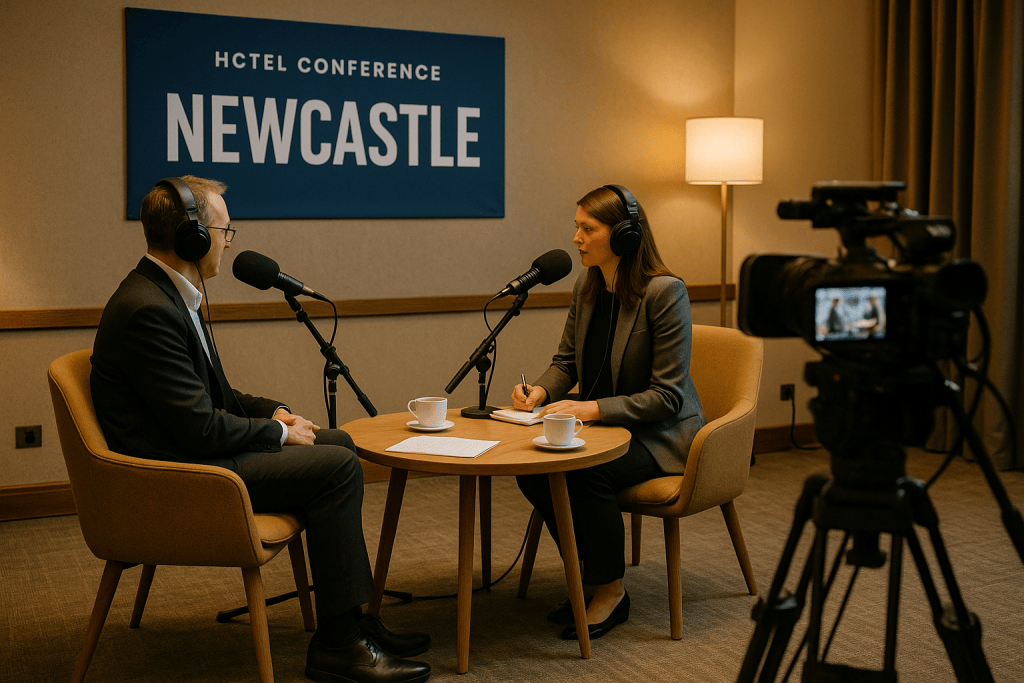
The events industry must become a clearer and more intentional career option for young people, rather than a profession people stumble into by chance. That was the central argument in the debut episode of a new podcast series, Talking People with Paul Borg, which explores people-focused issues across the hospitality and events sector.
In the opening episode, host Paul Borg, General Manager of the Crowne Plaza Newcastle, speaks with podcast guest James Dickson about how the industry has grown into a multi-billion-pound ecosystem while still lacking visibility as a structured career path. Both contributors highlight that many experienced professionals entered events unintentionally, often transitioning from other roles or discovering the sector by accident.
Background and industry context
Over the last two decades, the global events industry has developed into a complex and commercially significant landscape that spans conferences, exhibitions, live entertainment, experiential marketing, and hybrid formats. Despite this economic contribution, the sector still contends with low public awareness when compared with more traditional professional tracks such as finance, law, engineering or healthcare.
Within the UK and other mature markets, event agencies, venues, technology providers and organisers have invested heavily in digital platforms, data analytics, production, and logistics. Yet the perception of events as a skilled and long-term career is less defined among school leavers and graduates. Many roles—ranging from event technology and production to operations, project management and customer experience design—are not widely understood by those outside the industry.
This disconnect has been amplified by the pandemic, which temporarily halted large-scale in-person gatherings and drew attention to the fragility of live events. At the same time, forced digital adoption accelerated the growth of virtual and hybrid event technology, expanding the range of specialist roles that now require expertise in platforms, streaming, analytics, content design and user experience.
Key themes from the Talking People podcast
The initial Talking People with Paul Borg episode uses this backdrop to examine how the events sector attracts, develops and retains talent. Dickson notes that while the industry is now responsible for billions of pounds of economic activity, it is still largely built on people who “fell into” events.
The discussion raises several interlinked themes:
- Accidental career routes: Many event professionals start in frontline or entry-level roles—such as hospitality, sales or operations—before discovering events as a specialism, rather than targeting it from the outset.
- Lack of early visibility: The guests point to limited presence of event and experience-based careers in schools, colleges and universities, particularly compared with other service-led industries.
- Skills diversification: As events become more data-driven and technology-enabled, demand is increasing for skills in digital platforms, AV, production, project management and analytics, as well as traditional event operations.
- People-first leadership: Borg’s focus for the wider podcast series is on people management, recruitment, development and culture across hospitality and events, positioning talent strategy as a central competitiveness factor.
The episode frames these topics not as a criticism of the current workforce—often known for agility, resilience and problem-solving—but as an opportunity to build a more intentional pipeline of future talent who actively choose events as a long-term professional path.
Industry impact and talent implications
The question of how the events ecosystem positions itself as a career destination has direct implications for event organisers, venues, suppliers and technology providers. As live, virtual and hybrid formats converge, organisations are competing for a limited pool of skilled professionals who understand both the operational realities of events and the increasingly complex technology stack underpinning them.
For employers, the reliance on people who “fall into” the industry can create several challenges:
- Inconsistent pipelines: Without structured outreach or defined entry paths, organisations depend heavily on word of mouth, lateral hires and internal progression, which can be unpredictable.
- Skills gaps: Rapid growth in event platforms, virtual production, data and content delivery has outpaced the availability of trained specialists, leaving some roles hard to fill.
- Retention pressure: Professionals who do not see a clear long-term development path may be more likely to migrate into adjacent sectors such as marketing, media, technology or general management.
On the other hand, raising the profile of event careers could help the sector attract candidates who might otherwise gravitate toward more visible industries. This includes digital natives with strong interest in technology, user experience and online communities, as well as those drawn to logistics, operations and customer engagement.
Why this matters for event professionals and technology providers
For event professionals, the conversation highlights a need to articulate the breadth of roles and competencies that underpin successful events—from creative and commercial functions to technology operations and data insights. Clearer job frameworks and progression routes could support more deliberate workforce planning and professional development.
Event technology companies, in particular, operate at the intersection of software, content and live delivery. They rely on talent that understands both the product side and the real-world demands of planners, exhibitors and attendees. Making the industry more visible at an early stage could help them access graduates in fields such as computer science, UX design, digital media and data science who may not currently consider events as a technology career.
The themes discussed on Talking People with Paul Borg also align with broader sector concerns around diversity, equity and inclusion. A more structured and visible career narrative—supported by outreach, internships, apprenticeships and partnerships with education providers—could widen access to the industry for those who lack informal networks or prior exposure to events.
As hybrid experiences become more sophisticated, the ability to combine technical fluency with audience understanding will be critical. Building that capability at scale requires sustained attention to how the sector presents itself to potential entrants, how it trains them, and how it supports their progression into senior roles.
Conclusion
The launch episode of Talking People with Paul Borg positions talent visibility as a strategic concern for the events ecosystem. The discussion suggests that an industry now worth billions cannot rely indefinitely on professionals who discover it by chance. Instead, it points toward a more deliberate approach to promoting events as a defined, skilled and technologically sophisticated career path.
For organisers, venues and vendors, particularly those working in event technology, this is not just a workforce issue but a competitiveness one. As demand for complex live, virtual and hybrid experiences continues to rise, the industry’s ability to attract and develop the next generation of specialists will be central to its long-term resilience and growth.