Helene Fischer plans 360-degree stadium tour for 2026 with immersive audio setup
Background and context
German pop artist Helene Fischer is preparing a new stadium tour for 2026 that is set to use a 360-degree stage concept. While details are still emerging, the production is expected to build on the large-scale live shows that have become common in European arenas and stadiums.
Stadium tours of this scale typically require complex audio and wireless infrastructures, particularly when performers move across multiple stage zones and perform in the round. For manufacturers and rental companies, such productions are often testbeds for new solutions in RF coordination, monitoring, and distribution of immersive sound for tens of thousands of attendees.
Helene Fischer’s previous tours have already demonstrated a high level of technical ambition, with elaborate staging, choreography, and multi-zone sound reinforcement. The planned 2026 run continues this trend, with a focus on audience immersion and sightlines from all sides of the venue.
Key announcement
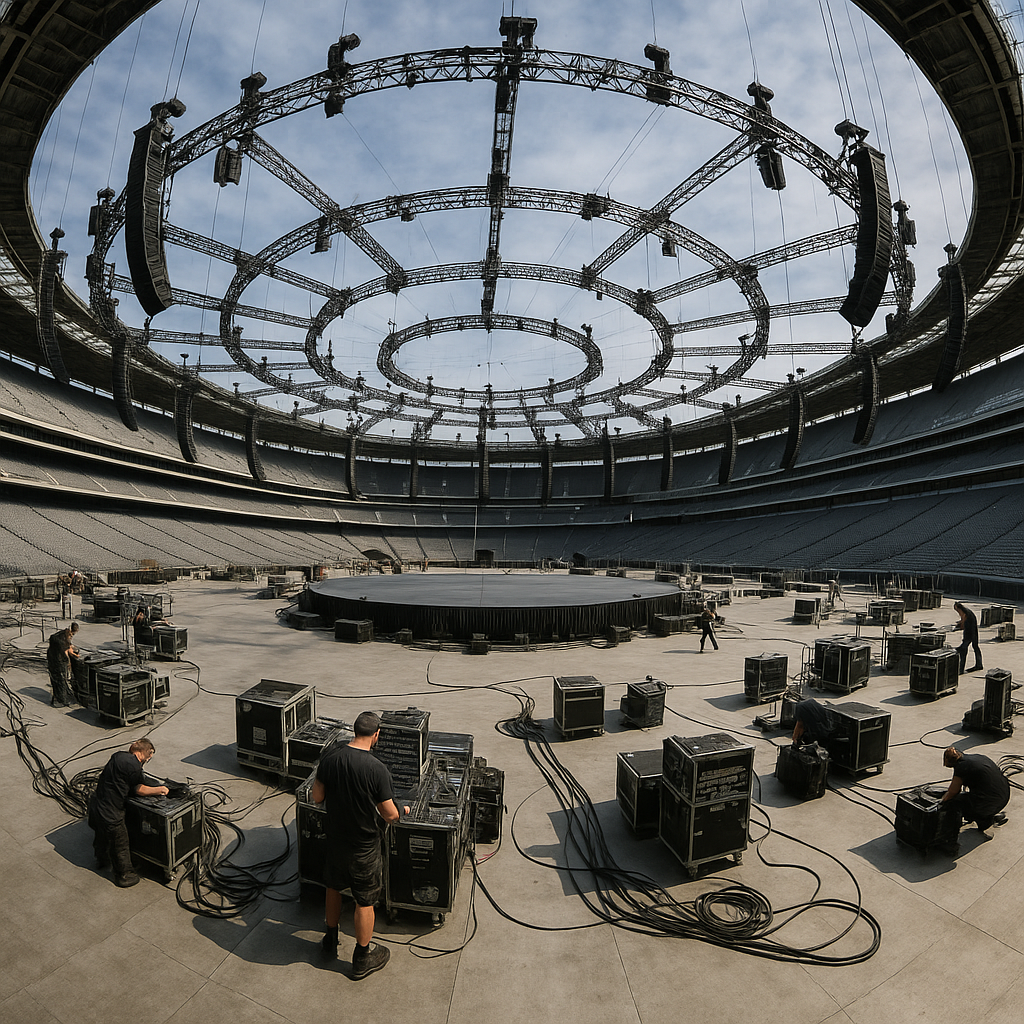
The newly announced stadium tour is scheduled for 2026 and is billed as a 360-degree production, meaning the stage will be located centrally with audience seating all around. This type of configuration demands a distributed loudspeaker approach and precise planning of time alignment and coverage.
Audio manufacturer Sennheiser is among the technology partners highlighted for the tour, supplying components that are expected to support wireless vocal transmission and in-ear monitoring. Although specific equipment lists have not been fully disclosed, the partnership indicates continued use of professional touring-grade RF systems designed for high channel counts and stable operation in challenging spectrum environments.
The production will likely involve multiple RF zones, extensive antenna distribution, and careful frequency management across the venue, especially as the performer and band move between different positions on the 360-degree stage. Information on the manufacturer’s broader touring solutions can be found on its official website at sennheiser.com.
Industry impact
Large 360-degree stadium productions have become a reference point for what is technically possible in live entertainment. They place significant demands not only on sound systems, but also on show control, wireless communication, and stage management.
For the live event technology sector, this tour underlines several ongoing trends: growing expectations for uniform audio coverage throughout a stadium, higher channel counts for wireless microphones and in-ear systems, and more robust RF planning tools. As venues and frequency allocations vary from city to city, scalable and flexible RF infrastructure is critical.
- In-the-round staging increases the number of loudspeaker hangs and delay positions needed.
- Performer mobility requires reliable wireless links over long distances and changing orientations.
- Immersive show design pushes demand for consistent sound quality in every seating block.
Manufacturers and rental partners that can demonstrate stable operation under these conditions may influence future specification choices for tours, festivals, and large corporate events.
Why this matters
For event technology professionals, the 2026 Helene Fischer stadium tour offers an example of how mainstream artists are normalising technically ambitious, 360-degree productions. What was once reserved for a handful of global stadium acts is increasingly present in regional touring markets.
This shift affects how system designers, RF engineers, and production managers plan shows. They must adapt to higher complexity in signal routing, coverage strategies, and redundancy while still working within tight load-in schedules and regulatory constraints. Lessons learned from such a tour—particularly around immersive sound coverage and large-scale wireless deployment—are likely to filter down to smaller venues and touring productions in the coming years.
As audiences continue to expect more immersive experiences, projects like this reinforce the need for close collaboration between artists, production crews, and AV manufacturers to deliver consistent results across multiple stadiums and regions.