Taman Ismail Marzuki’s Teater Besar modernises wireless workflow with Sennheiser Spectra
Background and context
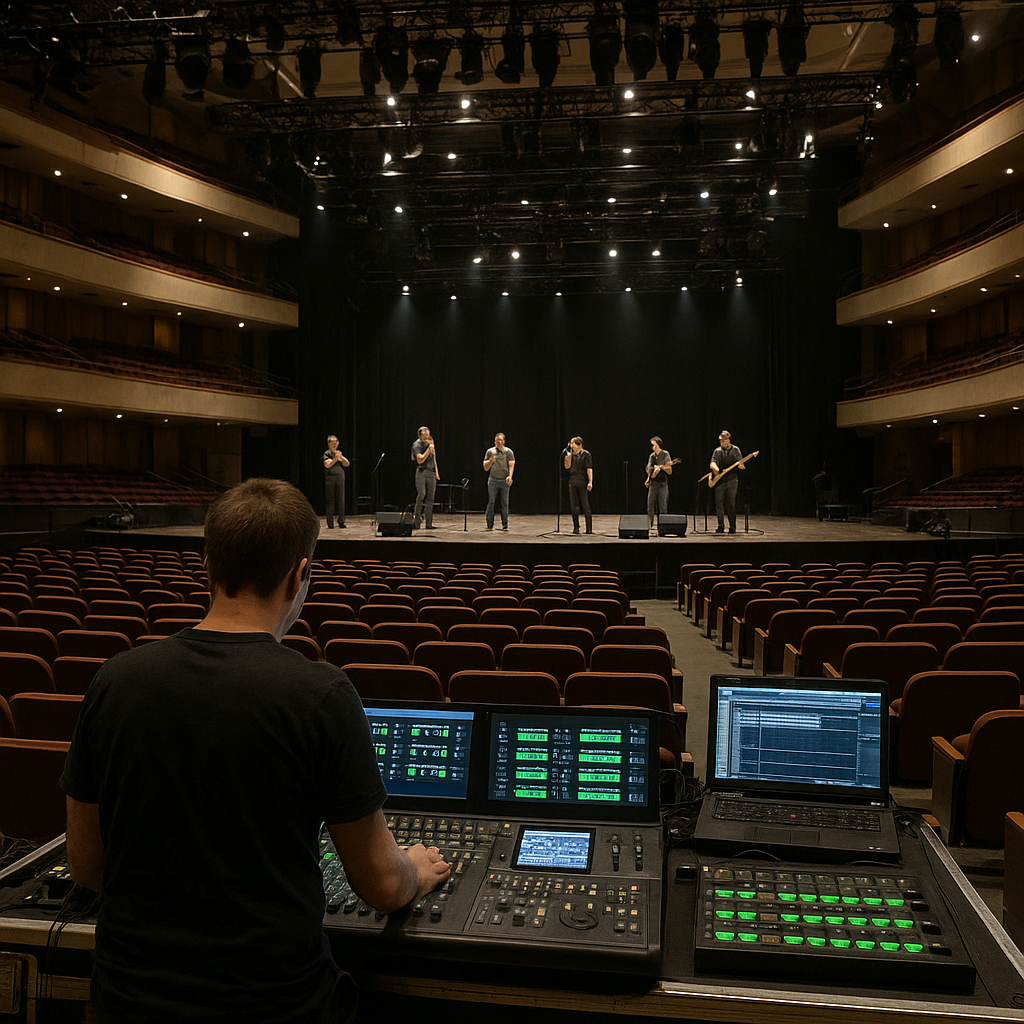
Teater Besar, the main theatre at Jakarta’s Taman Ismail Marzuki arts complex, has been undergoing a wider programme of technical renewal to support its mix of theatre, music, dance and cultural events.
As productions have become more complex and channel counts have increased, the venue’s team has been looking for ways to simplify radio microphone coordination and reduce setup time between shows.
The theatre already operated a substantial inventory of wireless systems and in-ear monitoring, but relied heavily on manual frequency planning and on-device configuration. This approach was becoming harder to sustain as the number of simultaneous performers and overlapping events grew.
Key announcement
To address these challenges, Teater Besar has implemented Sennheiser Spectra, a software platform designed for centralised control and monitoring of wireless audio systems.
The software is being used to plan and coordinate RF frequencies, supervise multiple wireless channels in real time, and provide operators with a consolidated view of all connected devices during rehearsals and performances.
According to the manufacturer, Spectra allows users to visualise spectrum usage, check device status and adjust key parameters from a single interface, instead of navigating individual hardware units. At Teater Besar, this is intended to streamline workflows for audio staff responsible for managing a large pool of transmitters and receivers.
The integration forms part of a broader effort to standardise wireless audio operations across the venue, with the goal of making it easier for both in-house teams and visiting productions to work within the same technical framework. Further details on Spectra’s feature set are available via Sennheiser’s official product information pages.
Industry impact
The move by a high-profile public venue in Indonesia highlights a wider industry trend: theatres and live event spaces are increasingly treating RF coordination as a critical part of production planning rather than a last-minute technical task.
With more events relying on dense wireless deployments—spanning microphones, in-ear monitors and control networks—there is growing interest in software tools that can manage this complexity and reduce the risk of dropouts or interference.
- Centralised RF management is becoming standard practice in larger venues and broadcast environments.
- Software-driven workflows are helping teams react faster to unexpected spectrum issues during live shows.
- Investment in RF tools is increasingly seen as necessary infrastructure, not a specialist add-on.
Teater Besar’s adoption of Spectra may encourage other regional theatres and cultural centres to reassess how they handle wireless planning, especially in markets where spectrum conditions are changing and regulatory environments are tightening.
Why this matters
For event technology professionals, the case illustrates how software-led RF management can translate into practical benefits: shorter setup times, more predictable performance and clearer oversight of complex wireless environments.
In venues that host varied programming—from spoken word to large-scale musical productions—the ability to reuse a consistent wireless workflow can improve both technical reliability and staff efficiency. Visiting engineers also stand to benefit from arriving at a venue where RF infrastructure and monitoring tools are already in place.
As spectrum congestion continues to be a concern in dense urban areas like Jakarta, structured RF coordination is likely to become an operational requirement rather than an option. Teater Besar’s decision to formalise its wireless workflows with Sennheiser Spectra reflects how theatres are adapting to that reality, and points to a future in which software-based RF tools are embedded in the day-to-day operations of most professional event spaces.